Ngā Mānukanuka o te Iwi (Māori
Committee)
Open Agenda
|
Meeting Date:
|
Friday 10 May 2024
|
|
Time:
|
11.00am
|
|
Venue:
|
Small Exhibition Hall
War Memorial Centre
Marine Parade
Napier
|
|
|
Livestreamed via Council’s Facebook page
|
|
Committee Members
|
Acting Chair: Mayor Kirsten Wise
Council Kaumātua / Committee Chair (vacant)
Mana Ahuriri Trust (Evelyn Ratima)
Maungaharuru-Tangitū Trust (Coralee Thompson)
Moteo Marae (Maureen Box)
Petane Marae (Shayann
Raihania)
Pukemokimoki Marae (Tiwana Aranui)
Tangoio Marae (Diana Taunoa)
Timikara Marae (Kirk Leonard)
Waiohiki Marae (Joe Tareha)
Wharerangi Marae (Tipene Cottrell)
Deputy Mayor Annette Brosnan
Councillor Keith Price
Councillor Sally Crown
Councillor Richard McGrath
|
|
Officer Responsible
|
Pou Whakarae (Mōrehu Te Tomo)
|
|
Administration
|
Governance Team
|
|
|
Next Ngā Mānukanuka o te Iwi (Māori
Committee)Meeting
Friday 26 July 2024
|
Ngā Mānukanuka o te Iwi (Māori
Committee) - 10 May 2024
- Open Agenda
2022-2025
TERMS OF REFERENCE - NGĀ MĀNUKANUKA O TE IWI
(MĀORI
COMMITTEE)
|
Reports to:
|
Council
|
|
Chairperson
Deputy Chairperson
|
Kaumātua or Mana Whenua Representative
Elected Member
|
|
Membership
|
Mayor of Napier
Chair off Future Napier Committee
Chair of Sustainable Napier Committee
Chair of Napier People & Places
Committee
Chair of Prosperous Napier Committee
Petane Marae
Representative
Waiohiki Marae
Representative
Moteo Marae
Representative
Timikara Marae
Representative
Tangoio Marae
Representative
Wharerangi Marae
Representative
Pukemokimoki Marae
Representative
Mana Ahuriri Trust
Representative
Maungaharuru-Tangitū
Trust Representative
|
|
Quorum
|
8
(to be made up of no less than 5 mana whenua representatives and 3
Councillors)
|
|
Meeting frequency
|
Quarterly
|
|
Officer responsible
|
Te Pou Whakarae
|
Ngā Mānukanuka o
te Iwi (Definition)
The
anxiousness of people. The Committee deals with people and projects that
strive towards their aspirations, and deal with all types of anxieties of
deadlines, spreadsheets, correct data, research, all these elements they bring
to the table as well as the knowledge or matauranga gained through the process.
Membership
·
Mana whenua representatives will be
appointed by mana whenua entity.
·
Elected Committee Members:
o
Mayor of Napier,
o
Chair of the Future Napier
Committee,
o
Chair of the Sustainable Napier
Committee,
o
Chair of the Napier People &
Places Committee,
o
Chair of the Prosperous Napier
Committee.
·
The Council Kaumātua will be
offered the Chair post at the start of the triennium. If the Kaumātua
declines, the Chair will be elected from the mana whenua representatives
appointed to the Committee.
·
The Deputy Chair will be elected
from the Elected Members of the Committee at the beginning of the triennium.
Moemoeā (Vision)
Whakataukī / Whakatauākī
The Ngā Mānukanuka o te Iwi Committee has
been established by Council to continue the development of strategic and
sustainable relationships with Ahuriri Māori. Council shall meet the
intent and spirit of the Council’s obligations set out in the legislation
more particularly the obligations of the Local Government Act 2002;
·
Towards establishing and
maintaining processes that provide opportunities for Māori to contribute
to the decision processes of Council.
·
Fostering the
development of Māori capacity to contribute to these processes.
·
The provision of
information to assist Māori contribution to Council’s activities.
The Council wishes the Committee to reflect a spirit of
partnership between the Council and Hapori Māori, to contribute
effectively to the Council’s activities. The Council will require the
Committee to assist with the development of an integrated policy framework
(based on Te Tiriti o Waitangi Principles) for the Council aimed at delivering
effective governance, engagement and service delivery for Council’s
Māori Communities.
Whainga
(Purpose)
The purpose of the
Ngā Mānukanuka o te Iwi Committee is to:
·
Advocate on behalf of
Mana/Tangata whenua to local, regional and national bodies as appropriate. This
is in addition to Council’s responsibility to engage directly with
Mana/Tangata whenua;
·
Consider governance
issues relating to Council obligations to tangata whenua;
·
Investigate and report
to the Council on any issues that the Ngā Mānukanuka o te Iwi
Committee considers necessary that may have an implication for tangata whenua.
·
To nominate from among
its members representatives whom it considers appropriate for the Council to
appoint as voting members on the:
− Napier People and Places Committee
− Prosperous Napier Committee
− Sustainable Napier Committee
− Future Napier Committee.
− Audit and Risk Committee
Pou (Objectives)
1.
Ensure that every
decision in relation to Council activities takes into consideration the
relationship to Māori culture and traditions (refer Local Government Act
2002 and Resource Management Act 1991)
a.
Works with Council and
officers to ensure appropriate and timely opportunities to contribute are
consistently provided to the Committee, including through review and
recommendations on formal reports, informal discussions at wānanga or
working with officers at a project level
b.
Works with officers to
ensure that clear appropriate processes are developed and implemented that
facilitate the Committee being able to meet its mandate.
2.
Raise and make
recommendations to Council on matters of importance to the Māori residents
of Ahuriri
3.
Provide feedback to
Council on ways that relationship and capability to engage on Council-related
matters can be built with and within the Māori communities of Napier.
a.
Works with Council and
officers in developing Māori capacity to contribute to Council activities
Notes
As well as specific hui and wānanga of this
Committee, members will be invited to attend Council workshops, standing
committee meetings and Council meetings.
The
Ngā Mānukanuka o te Iwi Committee can nominate independent advisors
to the Committee as required. Advisors have no voting rights.
Ngā Mānukanuka o te Iwi (Māori
Committee) - 10 May 2024
- Open Agenda
ORDER OF BUSINESS
Karakia
Apologies
Evelyn Ratima and Kirsten Wise
Conflicts of interest
Public forum
Announcements by the Chairperson
Announcements by the management
Confirmation of minutes
That the Minutes of the Ngā
Mānukanuka o te Iwi (Māori Committee) meeting held on Friday, 15
September 2023 be taken as a true and accurate record of the meeting......................................................... 63
Agenda items
1 Te Aka
Mahi Toi Update................................................................................................. 7
2 Draft
Housing Strategy.................................................................................................. 18
3 Update
on the Waka Hub Project.................................................................................. 20
4 Proposed
legislation - Reinstatement of the pre-2021 binding poll provisions for
Māori Wards 27
5 Representation
Review Update..................................................................................... 31
6 Te Waka
Rangapū Strategy 2024................................................................................. 43
7 Agenda
Items for Ngā Mānukanuka o te Iwi Komiti....................................................... 61
Updates from Committee Representatives
Updates from Pou
Whakarae
General business
Recommendation to
Exclude the Public
Karakia Whakamutunga
Ngā Mānukanuka o te Iwi (Māori
Committee) - 10 May 2024
- Open Agenda Item
1
Agenda Items
1. Te
Aka Mahi Toi Update
|
Type of Report:
|
Information
|
|
Legal Reference:
|
N/A
|
|
Document ID:
|
1749207
|
|
Reporting Officer/s & Unit:
|
Darran Gillies, Strategic Programmes
Manager
Hilary Prentice, Māori Partnership
Manager - Te Kaiwhakahaere Hononga Māori
Alix Burke, Strategic Programme
Coordinator
|
1.1 Purpose
of Report
To update Ngā Mānukanuka o te iwi committee on
the development of the mahi toi for the Te Aka project.
1.2 Background
Summary
With the endorsement of the Preliminary
Design of Te Aka, and approval to proceed into the next stages of the
Architectural Design process, the design team have commenced work on the
Developed Design.
In Developed Design the process of
co-design with Mana Whenua focuses on detailing the opportunities for mahi toi
through the design, our Mana Whenua design lead will oversee this. This paper
outlines the key opportunities, how they link to the cultural narrative, the
brief, materials, and approach to executing the opportunities within the
building itself (built form) and the surrounding public area (public
realm).
The Cultural
Narrative
TE AKA
He hononga
tapu a Te Aka i waenga i a Papatūānuku me Ranginui.
Koia ko te
hononga i te takiwā hiranga o runga ki te takiwā ōkiko o raro.
He mea whakaatu te pae o runga i te moemoeā, te whakaāio wairua, me
te mātauranga, ā, hei tā te pae o raro ko te pūahoaho, te
kōrerorero, me te auahatanga.
He wāhi e
kitea ana ngā tūnekenekehanga a Ahuriri, i hīia rā e
Rūaumoko te whenua i te moana. Ka puta ko te ngahere o Tangaroa, ka
whakaarihia he waka huia hei pupuru, hei whakahaumaru hoki i ngā taonga i
te pae tiketike rawa.
He wāhi
tākaro hoki a Te Aka mā te hinengaro, te tinana, te wairua me te
whānau. He whakarite hoki i te whiri i ngā aho rau o te
mātauranga i waihangahia mai ai i te wairua o te mahi ngātahi.
Nā
ēnei whakaaro me ēnei ariā katoa ka hua mai ai a Te Aka, ā,
ka kitea i tana whakahoahoatanga mai
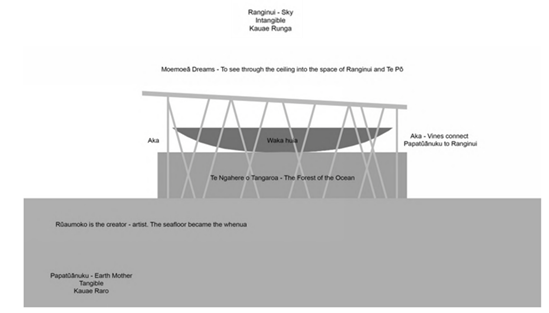
Te Aka is the
sacred connection between Papatūānuku and Ranginui.
It is the link
between the space of excellence above and the space of physical manifestation
below. The upper level represents dreaming, meditation, and knowledge and the
lower level represents clarity, conversation, and creativity.
Ahuriri
(Napier) is a site of movement, where Rūaumoko uplifted whenua from the
ocean. The
forest of
Tangaroa appeared and presented a waka huia where taonga are stored and
protected at the highest level.
Te Aka is also
a playground for the hinengaro (mind), tinana (body), wairua (spirit), and
whānau (family). It is a metaphor for weaving together the multiple
threads of knowledge that is built on the spirit of collaboration.
Te Aka is
based on these concepts and elements and this will be reflected in its design.
Mahi Toi Opportunities
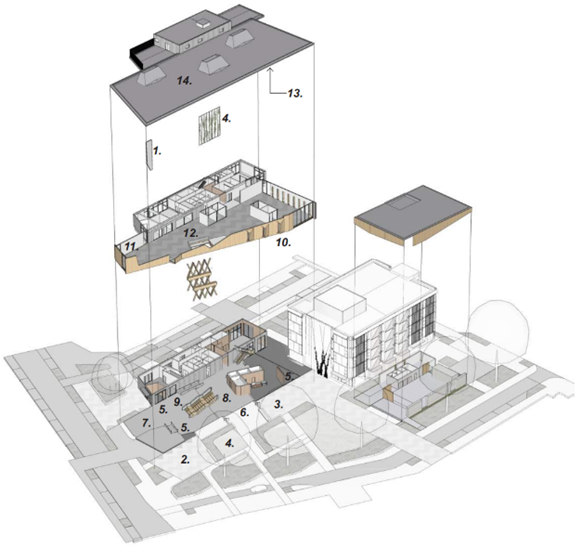
The diagram above list the key mahi toi opportunities, and
they are the described in detail in the table below.
Papatūanuku & Ruaumoko -
Outdoor Spaces
|
Mahi Toi
Opportunity
|
|
1 Celebrated
corner “pou” artwork supporting northeast corner of the roof
|
|
BRIEF
|
|
This artwork serves
as a vertical marker for the arrival space, located at the front left of the
building. It embodies the Te Aka narrative, symbolising a vine and pathway of
knowledge, illustrating the connection between Papatūānuku (the
ground) and Ranginui (the ceiling of the library). The piece also
incorporates the aka matua narrative of Ngā Kete o Te Wānanga. The
design will utilise the visual language of the area while introducing new
elements. The structure could have two sides, presenting the opportunity for
two stories. Such as Tāne ascending into the upper level of Te Toi o
Ngā Rangi to acquire knowledge on one side, and then return down to the
whenua, where ideas are planted and grown. The work must be dynamic, in
reference to Te Matau a Māui wharenui at Matahiwi marae
|
|
Designer/ Artist
|
Curated by the Mana
Whenua Design lead with the Mana Whenua Design team with technical support
from the Architectural Design team
|
|
Materials
|
Wood & Steel
|
|
Method
|
|
Strategy for ground,
top, and fixing points. Lighting requirements/strategy (ground and
roof). Developed Design Objective: Determine the general shape of
the element and construction materials. Formulate strategies for the ground,
top, fixing points, and lighting. Process: The artist will design
the work and collaborate with the team to bring the final work to life. The
design will be delivered as a vector file
|
|
Mahi Toi
Opportunity
|
|
2. Moremore -
Arrival Space
|
|
BRIEF
|
|
Create a
representation of the kaitiaki Moremore embedded into the ground paving.
Moremore acts as a guardian in the space of arrival and gathering,
complementing the vertical artwork Te Aka
|
|
Designer/ Artist
|
Curated by the Mana
Whenua Design lead with the Mana Whenua Design team with technical support from
the Architectural Design team
|
|
Materials
|
Material: Vapour
blasted, Paving
|
|
Method
|
|
Currently testing the best and
cost-effective methods for delivering this design element.
|
|
Mahi Toi
Opportunity
|
|
3. Hard -
Landscape
|
|
BRIEF
|
|
Stencilled grit/water
blasted representations of whakapapa of the site, and past activities such as
collecting kai.
· Terrace walls – form/finish to express
Rūaumoko.
· Lighting – integration of feature
lighting to help to tell a story.
· Urban play – spaces and elements to
encourage playful learning, discovery and interaction.
· Paving design to enhance the narrative
Incorporate
representations of the site's whakapapa into the landscape, drawing
inspiration from Rūaumoko. The design pays homage to objects such as the
mussel shells left on the land post the 1931 earthquake, symbolising the
whenua rising from the moana. The visual language of the landscape will
seamlessly transition into the building. Details: Inspiration:
Rūaumoko, Mussel shells post-1931
|
|
Designer/ Artist
|
Curated by the Mana
Whenua Design lead with the Mana Whenua Design team with technical support
from the Architectural Design team
|
|
Materials
|
Planting, mixed hard
surfaces
|
|
Method
|
|
The design will also reflect a space that
is fully accessible to all users, easy to navigate with plenty of places to
sit.
|
|
Mahi Toi
Opportunity
|
|
4. Soft Landscape
Papatūānuku - Whenua
|
|
BRIEF
|
|
Planting.
Wai tai to Wai Māori. Papatūānuku. Restore the native
landscape.
Enhancements to the planting, seating and
whenua to represent Papatūānuku, Rūaumoko, and wai.
Climbing vine - along the northern
frontage on knotted support wire
|
|
Designer/ Artist
|
Curated by the Mana
Whenua Design lead with the Mana Whenua Design team with technical support
from the Architectural Design team
|
|
Materials
|
Planting
|
|
Method
|
|
Reintroduce natives
such as the Mokimoki fern. The design will also play
an important part in how we manage water on-site in stormwater retention and
detention.
|
|
Mahi Toi Opportunity
|
|
4a. Climbing Vine
|
|
BRIEF
|
|
Create a design for the climbing vine frame
|
|
Designer/ Artist
|
MWDT, AAL, BM & DT
|
|
Materials
|
This is being
tested in safe design work.
|
|
Method
|
|
Strategy for ground, top, and fixing points. Lighting
requirements/strategy (ground and roof). Developed Design
Objective: Determine the general shape of the element and construction
materials. Formulate strategies for the ground, top, fixing points, and
lighting. Process: The artist will design the work and
collaborate with the team to bring the final work to life. The design will be
delivered as a vector file
|
Interior
Te Ngahere o Tangaroa Ground Floor
|
Mahi Toi Opportunity
|
|
5. Entrances. Doors
|
|
BRIEF
|
|
Carving Opportunity
|
|
Designer/ Artist
|
The selection of a local Master Carver(s)
Curated by the Mana Whenua Design lead with the Mana
Whenua Design team with technical support from the Architectural Design team
|
|
Materials
|
Timber
|
|
Method
|
|
A
traditionally carved work. Both placement and execution of design is critical
in expressing the narrative. The ongoing care of this work is also critical
to the design process.
|
|
Mahi Toi Opportunity
|
|
6. Windows
|
|
BRIEF
|
|
vinyl or
ceramic frit artwork along the side on the building. This work could also
wrap around other areas of the first floor.
|
|
Designer/ Artist
|
Curated by the Mana Whenua Design lead with the Mana Whenua
Design team with technical support from the Architectural Design team
|
|
Materials
|
Wood & Steel
|
|
Method
|
|
This requires
more exploration as we move through the developed design stage of the
process.
|
|
Mahi Toi Opportunity
|
|
7.
General Interior finishes
|
|
BRIEF
|
|
Wherever
practicable and cost effective, enhance interior design with design that
supports the cultural narrative
|
|
Designer/ Artist
|
Curated by the Mana Whenua Design lead with the Mana
Whenua Design team with technical support from the Architectural Design team
|
|
Materials
|
Vinyl, autex,
carpet and other finishes
|
|
Method
|
|
Developed
Design focuses on in the interior layout, making sure it works well for the
intended users. Balancing shelving plans for books, people flow and
expressing the narrative.
|
|
Mahi Toi Opportunity
|
|
8. - Childrens area. Ground floor
|
|
BRIEF
|
|
Design for the children's area based on the protective
space of Te Ngahere o Tangaroa - The Forest of the ocean. Use the forest and
plant life such as Rimurapa from the ocean to create a lush, warm, protective
space for children to read, discover and play. Incorporate playful seating
|
|
Designer/ Artist
|
Curated by the Mana Whenua Design lead with the Mana
Whenua Design team with technical support from the Architectural Design team
|
|
Materials
|
Cross-laminated timber. Autex
|
|
Method
|
|
Strategy for ground, top, and fixing points. Lighting
requirements/strategy (ground and roof). Developed Design
Objective: Determine the general shape of the element and construction
materials. Formulate strategies for the ground, top, fixing points, and
lighting. Process: The artist will design the work and
collaborate with the team to bring the final work to life. The design will be
delivered as a vector file
|
|
Mahi Toi Opportunity
|
|
9. Stairs - Poutama
|
|
BRIEF
|
|
Utilise toi to enhance the stairs as the poutama -
pathway of knowledge to the Waka Huia level.
|
|
Designer/ Artist
|
Curated by the Mana Whenua Design lead with the Mana
Whenua Design team with technical support from the Architectural Design team
|
|
Materials
|
Wood & Steel
|
|
Method
|
|
Strategy formed for the ground, top and fixing points. +
Lighting requirements/strategy.
|
|
Mahi Toi Opportunity
|
|
10. Waka huia - first floor
|
|
BRIEF
|
|
Design the first floor as a symbolic waka huia, elevated
high within the whare, protected by Te Ngahere o Tangaroa - The Forest of the
Ocean. The final design will be a harmonious blend of cultural
symbolism and practical considerations, creating a first floor that serves as
a symbolic waka huia, elevated within the whare and resilient to external
challenges. It will provide a functional space for the collections in an
elevated environment. The waka huia design must consider how it
transitions from inside to outside, and the future challenges with the
exterior such as the weather, to preserve the integrity and life of the
external part of the waka huia over time. Material: CNC routered,
laser cut, or printing on wood. Process: The artist will design the
work and collaborate with the team to bring the final work to life. The
design will be delivered as a vector file.
|
|
Designer/ Artist
|
Curated by the Mana Whenua Design lead with the Mana
Whenua Design team with technical support from the Architectural Design team
|
|
Materials
|
Wood & Steel
|
|
Method
|
|
The waka huia design must consider how it transitions
from inside to outside, and the future challenges with the exterior such as
the weather, to preserve the integrity and life of the external part of the
waka huia over time. Material: CNC routered, laser cut, or
printing on wood.
|
|
Mahi Toi Opportunity
|
|
11. Waka huia - windows
|
|
BRIEF
|
|
Create distinctive artworks for each end of the waka
huia, drawing inspiration from the heads found at the ends of customary
Māori waka huia. The primary source of inspiration for the
artworks is the intricate and culturally significant heads adorning the ends
of the waka huia. These heads are symbolic and carry historical and spiritual
significance. The artworks must ensure unobstructed views through
both windows, offering clear sightlines towards the Kaweka Ranges (whenua)
and across the ocean (moana) towards Te Mahia and Waikawa (Portland Island).
They will incorporate the significance of the Kaweka Ranges and the ocean
into the kaupapa, ensuring that the design aligns with the cultural context
and values associated with these viewpoint
|
|
Designer/ Artist
|
Curated by the Mana Whenua Design lead with the Mana
Whenua Design team with technical support from the Architectural Design team
|
|
Materials
|
Ceramic print
|
|
Method
|
|
the artist will design the work and collaborate with the
team to bring the final work to life.
|
|
Mahi
Toi Opportunity
|
|
12. Interior of waka huia
|
|
BRIEF
|
|
A creative response to the interior of
the waka huia. Talking to keeping taonga safe and accessible to all that use
that space.
|
|
Designer/ Artist
|
Curated by the Mana Whenua Design lead with the Mana Whenua
Design team with technical support from the Architectural Design team
|
|
Materials
|
Wood & Steel
|
|
Method
|
|
Developed Design focuses on in the
interior layout, making sure it works well for the intended users. Balancing
shelving plans for books, people flow and expressing the narrative.
|
|
Mahi Toi Opportunity
|
|
13 Ranginui - Celestial Star Map
|
|
BRIEF
|
|
Create a celestial star map on the ceiling which is
specific to the site and connects to Ātea a Rangi and the waka, Te Matau
a Māui. The ceiling is a representation of the celestial star map, and
Ranginui - the sky, where Tāne entered into Te Toi o Ngā Rangi to
acquire Ngā Kete o Te Wānaga - The Three Baskets of
Knowledge. The celestial star map will blend with the with
patterns on the waka huia. The ceiling with also refer to the lid of the waka
huia. Materials: Cross-laminated timber, Autex, lighting
|
|
Designer/ Artist
|
Te Kaha Hawaikirangi and Te Pō (celestial
navigators of Te Matau a Māui). Curated by the Mana Whenua Design lead
with the Mana Whenua Design team with technical support from the Architectural
Design team
|
|
Materials
|
Materials: Cross-laminated timber, Autex, lighting
|
|
Method
|
|
Strategy for ground, top, and fixing points. Lighting
requirements/strategy (ground and roof). Developed Design
Objective: Determine the general shape of the element and construction
materials. Formulate strategies for the ground, top, fixing points, and
lighting. Process: The artist will design the work and
collaborate with the team to bring the final work to life. The design will be
delivered as a vector file
|
|
Mahi Toi Opportunity
|
|
14. Ngā Kete o Te Wānanga - The Baskets of
Knowledge. Three skylights
|
|
BRIEF
|
|
Utilise the dynamic skylight design to create artworks
which represent Ngā Kete o Te Wānanga - The Baskets of knowledge,
Te Kete Tuauri, Tuatea, and Aronui. The artworks must express each unique
quality of each kete. The works must also utilise the sunlight and night
within the design. The works must utilise the ability to project shadows and
patterns. The artworks must ensure unobstructed views through
both windows, offering clear sightlines towards sky
|
|
Designer/ Artist
|
Curated by the Mana Whenua Design lead with the Mana
Whenua Design team with technical support from the Architectural Design team
|
|
Materials
|
Ceramic print, laser cutting, and print.
|
|
Method
|
|
To be
developed during Developed Design as critical elements articulating the
narrative
|
1.3 Issues
N/A
1.4 Significance
and Engagement
Multiple
studies and community consultations have been conducted since 2017 and
concluded that Council services and a Central Library should return to the
Civic Precinct. The 2021- 2024 Long-Term Plan outlines the funding for
the Library and Council Chambers.
The broader
public realm first outlined within the 2021 Master Plan (LCAP) has not been
fully budgeted for and could be considered as a consultation item with the next
LTP.
The Advisory
Group was initially established to develop the Civic Precinct Framework and
carried through the development of the Library and Civic Area Plan, the Design
Brief and Business Case development and to the Concept Design stage. The group
is chaired by Deputy Mayor Annette Brosnan and its membership has been fairly
fluid, including three further Elected Member representatives, Mana Whenua,
representatives from Hawke’s Bay Regional Council, Ngā
Mānukanuka o te Iwi, and Friends of the Library, Ministry of Justice and
council officers.
The Advisory
Group have worked with the design team through multiple wānanga workshops
and will continue to do so as the project progresses through the design stages.
The communication
and engagement plan will be refreshed to make sure that we continue to inform
and engage the wider public about this high-profile project. The project
webpage continues to be updated with relevant information.
A video has been
developed to showcase the project and will go onto Council social media
platforms after the approval of this paper.
1.5 Implications
Financial
The Mahi Toi opportunities are
managed within the overall budget for the project with the design work covered
within the professional fees for the project, and the individual physical items
covered with the Quantity Surveyors ongoing estimates.
Social & Policy
Mana Whenua
have been engaged with the project since the master planning stage and a
co-design approach was tentatively developed as we progressed through the
subsequent project stages and gateways.
Working with
Te Waka Rangapū and with Mana Whenua the role of a Mana Whenua Design Lead
was created to support the success of the co-design process. With the
appointment of a Mana Whenua Design Lead, an open and productive dialogue has
been developed through all elements of the process with Mana Whenua. The
ensuing cultural narrative has set the foundations of the concept from the
ground up and seen it weave through the whole design process.
Risk
A programme of Te
Aka size and complexity comes with many potential risks. These are being
managed through a robust risk process, both at the project and programme level.
The risk is
identifying and securing the right skill and expertise to delivery these unique
elements. This will be mitigated by the Mana Whenua Design lead acting as
curator of the process to ensure the process is well managed between design
conception and execution, either by the main contractor or individual
artisans.
Most of the
design and execution of the work with be covered by either the current design
engagement or variations to, and the main contractor procurement. For any work
that sits out with this established mechanism for delivery will be covered by a
Mahi Toi Procurement Plan. That plan will list out those particular activities,
and balance the need to source unique expertise, ensure a high level of
transparency and empower the project team to deliver the best outcomes.
1.6 Options
The options available to Council
are as follows:
1. Receive
the report updating the development of the mahi toi for the Te Aka project.
1.7 Attachments
Nil
Ngā Mānukanuka o te Iwi (Māori Committee) - 10 May
2024 - Open Agenda Item
2
2. Draft
Housing Strategy
|
Type of Report:
|
Operational
|
|
Legal Reference:
|
N/A
|
|
Document ID:
|
1752317
|
|
Reporting Officer/s & Unit:
|
Anne Bradbury, Manager Community
Strategies
|
2.1 Purpose
of Report
This report discusses the Draft Housing Strategy and next
steps to finalise the strategy.
|
|
Officer’s
Recommendation
The
Ngā Mānukanuka o te Iwi (Māori Committee):
a) Note the
Draft Housing Strategy (Doc Id 1742977) and recommend Officers continue to
work with key partners and stakeholders to finalise the strategy.
b) Direct Officers
to bring the Housing Strategy back to Ngā Mānukanuka o te Iwi to
recommend the strategy to go to Council for adoption in October 2024.
|
2.2 Background Summary
In 2022
Council completed a Section 17A of the Local Government Act 2002 review of our
housing portfolio and on 18 May 2022 made a resolution to develop a Housing
Strategy, amongst other things. This report discusses the draft
Housing Strategy that has been developed.
2.3 Draft
Housing Strategy
A draft
Housing Strategy has been developed, find attached the draft strategy (Attachment
1). The draft strategy outlines the role and focus that Council plays in
the housing space from rough sleepers through to full home ownership.
The strategy
was developed by undertaking desk top research and reviewing the Councils
documents and reports. Hui and interviews were undertaken with a local
Māori housing provider and other key stakeholders that brought
perspectives from the Council, local developers, central government and
community housing. This helped shape the draft strategy.
The Council
currently acts in three focus areas:
1. Focus 1 – as a connector and advocate
to help with support to lift households out of homelessness.
2. Focus 2 - as a connector, an advocate and a
housing provider to ensure there are sufficient non-market housing options that
cannot afford private rental or home ownership.
3. Focus 3 – as an infrastructure
provider, a regulator and a landowner to help enable housing across greenfield
and brownfield developments.
Next Steps
The Three-Year
Plan consultation document had a section on our community housing. At the
time of writing this report the consultation period had not ended but the responses
to the consultation will be used to feed into the draft strategy.
Council
Officers will engage with key partners and stakeholders to finalise the
strategy over the coming months. Officers would welcome feedback from
this committee on the strategy. The final version of the strategy will be
brought back to Ngā Mānukanuka o te Iwi to recommend for approval to
Council. We are aiming to take the Housing Strategy to Council for
approval in October 2024.
2.4 Significance
and Engagement
N/A
2.5 Implications
Financial
N/A
Social & Policy
The Housing
Strategy will impact on our wider community as it will provide strategic
direction for Council on the focus areas that Council plays a role in.
Risk
N/A
2.6 Options
The options available to Council
are as follows:
a) Preferred option: Note
the Draft Housing Strategy and recommend Officers continue to work on the
strategy through submissions from the Three Year Plan and continued work with
key stakeholders.
b) Note the draft Housing Strategy and
recommend to Council to approve the strategy now before the Three Year Plan
consultation and further work with our key stakeholders has been carried out.
2.7 Development
of Preferred Option
Officers
recommend Option a, our preferred option, to note the strategy and continue to
work on it. The consultation on the Three-Year Plan will help to inform the
draft strategy as the submissions will help inform how we target our housing
provision. This consultation will help clarify the Council’s role and
focus in the housing space.
2.8 Attachments
1 Draft
Housing Strategy (Doc Id 1742977) (Under
separate cover 1)
Ngā Mānukanuka o te Iwi (Māori Committee) - 10 May
2024 - Open Agenda Item
3
3. Update
on the Waka Hub Project
|
Type of Report:
|
Information
|
|
Legal Reference:
|
N/A
|
|
Document ID:
|
1753340
|
|
Reporting Officer/s & Unit:
|
Georgina King, Team Leader City Design
and Urban Renewal
|
3.1 Purpose
of Report
The purpose of this report is to provide
an update of the Waka Hub project and to seek endorsement from Nga
Mānukanuka o te Iwi on the location for the new Waka Hub.
|
|
Officer’s
Recommendation
The Ngā Mānukanuka o te Iwi (Māori Committee):
a. Endorse
the ‘Preferred Site’ adjacent to the Napier Sailing Club for the
new Waka Hub and permanent mooring for Te Matau-a-Maui waka.
b. Endorse
the development of a Concept Design for the Waka Hub and mooring(s) for waka
hourua.
|
3.2 Background Summary
The idea of a
Waka Hub was first identified and included in the Ahuriri Estuary and Coastal
Edge Masterplan in 2018 as an Initiative. This identified an opportunity to
transform an area within the Inner Harbour to accommodate a permanent mooring
for waka hourua, whilst providing opportunities to tell of the area’s
rich history and culture. Also discussed was the opportunity to include improved
stormwater quality initiatives.
The Ahuriri
Estuary Masterplan underwent significant stakeholder and public engagement and
was written in partnership with Mana Ahuriri Trust (a pre-Treaty settlement
entity at the time). The Waka Hub initiative received a significant level of
support from both stakeholders and the general public, and funding for this
initiative was included in the Long-Term Plan 2021-2031.
In 2019 The
Inner Harbour Plan developed in greater detail all the initiatives proposed in
the Ahuriri Estuary & Coastal Edge Masterplan for the Inner Harbour,
including concepts for the Waka Hub at the Iron Pot. Significant consultation
with mana whenua and key stakeholders was undertaken as part of this process.
The Inner Harbour Plan was adopted in May 2022 and later that year Council was
awarded $2.2 million from the Better Off Fund to fund the urban realm
associated with the future Waka Hub.
Project Objective
The objective
behind this initiative is to celebrate our unique culture of celestial
navigation and to provide opportunity for those visiting our City to learn
about what makes us special.
Te
Matau-a-Māui, our Napier-based ocean-voyaging waka hourua (double-hulled
canoe), is currently berthed at the southern end of the Inner Harbour, tucked
at the end of the commercial fishing wharf. The fixed mooring and lack of
secure access is a regular catalyst for damage and vandalism to the waka with
increasing frequency.
Dedicated
space and facilities for visitors viewing and boarding/offloading the waka is
restricted, and there is no space for ceremonial activities, demonstrations
associated with the waka, or room for educational story-telling in its current
location. The current mooring has no shelter from the elements and there are no
toilet facilities for crew or visitors in this location.
With the waka
currently berthed to a standard-format wharf, immediately adjacent to a working
fishing wharf and road, the visitor experience in this location is also very
poor. Currently those wishing to visit or board Te Matau-a-Māui for an
excursion do not have a sheltered, safe, usable place to gather for briefings
prior to embarking. The gathering area is not defined, is exposed to the
elements, and there are no toilet facilities close by. The Trust has provided a
small storyboard at the site for visitors who chance upon the waka, but with
space being limited, the scale of this story-telling is severely restricted.
Ultimately
providing a purpose-built facility that celebrates celestial navigation,
accommodates easy passage for waka hourua, and which is easily accessible to
the public is the objective. It is proposed that the Waka Hub include some form
of public space that allows visitors closer to the water’s edge and
provides adequate space for gathering, ceremonial activities, and sheltered
recreation space. A securely accessed floating pontoon associated with the Waka
Hub would provide appropriate mooring for Te Matau-a-Māui and be able to
accommodate additional visiting waka if and when required.
A standalone
Wharewaka with modern story-telling panels will provide shelter to visitors and
locals, as well as space for demonstration and teaching. Incorporated into the
wider Waka Hub will be toilet and changing/shower facilities, however these
will likely be independent of the whare itself.
An Important Co-Design Project
It has been
important to Council from the outset that this project follow a co-design
process, working in partnership with Ātea a Rangi Trust to deliver this
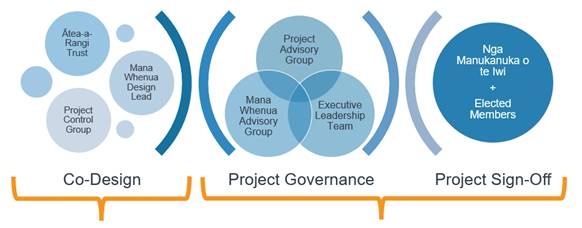
exciting initiative. The Project Governance Structure (below) reinforces our
partnership with Ātea a Rangi Trust at the centre of this project and
supports the delivery of the design of the Waka Hub and the execution of the
co-design process.
Summary of
Project to Date
· Hui with Mana Whenua Advisory Group (MWAG) at key gateway points in
the project (Oct 22 - ongoing).
· Atea a Rangi Trust commence working with Council as Project Partners
to develop the design brief, work through site selection, and co-design the
Design Concept for the Hub (July 22 - ongoing)
· Beca were appointed as Project Managers to coordinate procurement
and coordinate the design process for the Waka Hub (Aug 23 - ongoing).
· WSP Optioneering Report prepared. Assessed the viability of the Waka
Hub at the Iron Pot and associated rough order costs (Aug. 23)
· $3.3million set aside in the 3yr Plan for Waka Hub to complement
$2.2 million of Better Off Funding for urban realm associated with the Waka Hub
(LTP adoption 27 June, 2024)
· Multi Criteria Analysis of viable Waka Hub locations within the
Inner Harbour (Jan – March 24)
· Hui with Napier Sailing Club and the Trust about accommodating the
Waka Hub on the parcel of land adjacent & straddling their lease boundary
(April 24). Unanimous agreement in Principle obtained.
· Confirmation of site selection for the Waka Hub (April 24), with
endorsement from Mana Ahuriri and Napier Sailing Club
Next
Steps
· Procurement
of Design and Engineering Services for Waka Hub Design
· Endorsement
of Concept Design for the Waka Hub by Nga Mānukanuka o te Iwi before going
to Council.
· Information
will be shared through Panui ki te Marae to encourage feedback on the project
and concept design.
· Key
stakeholders will be contacted directly and offered the opportunity to meet
with Council staff and Trust representatives to discuss the project and the
concept design.
· Nearby
residents will be sent information and encouraged to attend a drop-in to seek
further information about the concept design, and also encouraged to provide
online feedback.
3.3 Issues
An
Optioneering Report evaluating the feasibility of various Waka Hub locations
within the Iron Pot estimated costs for construction which far exceeded the
project budget allocated in the LTP and Better Off Funding combined. The
primary contributor to these estimates being the enabling works required to
undertake construction in this location.
In light of
the significant budget shortfall to construct the Waka Hub at the Iron Pot and
potential reprioritisation of capital works within Council’s LTP, it was
decided that a Multi Criteria Analysis (MCA) be undertaken to evaluate possible
locations for the Waka Hub.
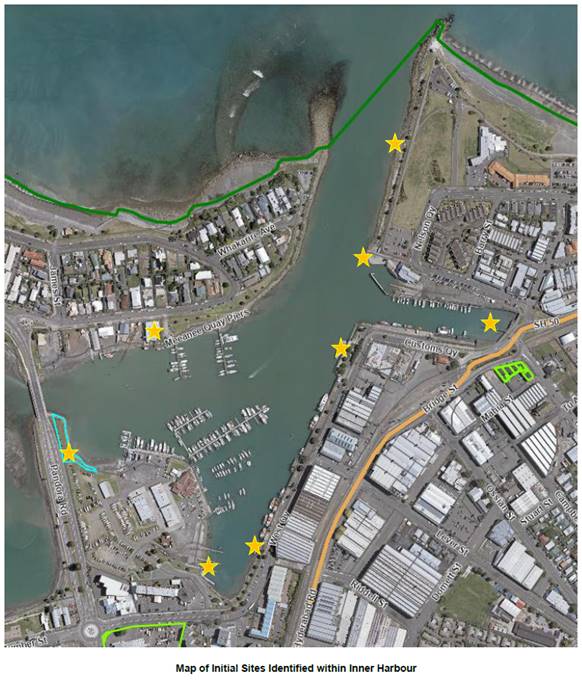
Eight sites
were identified by Ātea a Rangi Trust as potential locations for the Waka
Hub (please refer to map below). Four were discounted for not meeting the
necessary Pass / Fail Criteria for ‘Manoeuvrability’ of the waka on
the water, and a fifth (the existing mooring for the Waka Hub) was discounted
as the site location did not pass the necessary ‘Site Size’
criteria.
The most
viable sites were evaluated against a series of weighted criteria previously
established between Ātea a Rangi Trust and Council, and a short list of
the highest ranking, therefore preferred, sites were then run through further
assessment to consider the likely costs and constraints associated with
developing a Waka Hub at each of the sites. These were:
· Cost.
What are the estimated costs associated with development? Is developing the
Waka Hub in this location financially viable based on the current budget?
· Infrastructure.
Are enabling works required to develop the Waka Hub in this location?
The costs
& infrastructural constraints information used to inform this assessment
was a combination of information and structural assessments undertaken by
Advisian as part of the Inner Harbour Master Plan, and Engineering expertise
and desktop assessment provided by Beca. The scoring for the Preferred Sites is
as follows:
|
Final Results
|
Napier Sailing Club
|
705 Meeanee Quay
|
|
Stage 1
Result:
|
88.75
|
75.25
|
|
Stage 2
Result:
|
55
|
67.5
|
|
Resultant
Score
|
143.75
|
142.75
|
The Napier Sailing Club site (a location immediately adjoining the
Napier Sailing Club) scored the highest overall and is the preferred site for
the development of the proposed Waka Hub. It is noted that this location is
Ātea-a-Rangi Trusts preferred site as it aligns with their kaupapa and Te
ao Māori principles of cultural connection and Mauri Tū, whilst
having the added benefit of offering a greater visual presence than the 705
Meeanee Quay site
3.4 Significance and Engagement
To date there
has been very positive engagement from our Mana Whenua partners. Initial
meetings introducing the Waka Hub initiative to our Mana Whenua partners were
undertaken in 2022 and were well attended. The Project Team also held a full
wānanga day early in the project to draft the Design Brief for the Waka
Pavilion. Attending that kaupapa was Lee Grace, Joe Reti, Israel Birch, Piripi
Smith, and Te Kaha Hawaikirangi. This document forms the basis for the design
of the Wharewaka - the heart of the Waka Hub - and the centre piece of the Waka
Hub itself.
The first Mana
Whenua Advisory Group (MWAG) Hui was held in October 2023. Representatives from
Ātea a Rangi Trust, Ngati Pārou, Mana Ahuriri Trust, Maungaharuru
Tangatu Trust, Ngā Mānukunuka o te Iwi, and Ngati Kahungunu were invited.
The focus of this Hui was to discuss how the MWAG representatives would like
Council to undertake co-design and provide feedback on how they would like to
collaborate with us in this mahi with regard to kōrero and wānanga.
It was endorsed at that hui that Ngā Mānukanuka o te Iwi is an
appropriate and key ‘gateway approval point’ for all design stages
prior to progressing to Council for decision.
This matter
will be of high interest to Mana Whenua and will likely be of high interest to
both stakeholders and residents near to the preferred location. It is also
acknowledged that specific groups (including but not limited to supporters of
the work of the Trust, other waka hourua, Napier Sailing Club, Harbour Master,
Surf Life Saving clubs, fishing industry, recreational boat users, berth
holders) will have an extra level of interest in this project.
Effort will be
made to encourage these groups to provide feedback on the concept design.
Targeted communications and engagement will also be implemented with Mana
Whenua, key stakeholders, and nearby residents to encourage feedback on the
concept design.
3.5 Implications
Financial
Budget for the Waka Hub is
reliant on the following:
· $2.2mill
from the Better Off Fund (BOF).
· $3.3mill in
the proposed 3-Yr Plan
Social & Policy
Shared spaces
foster a sense of community and collaboration among users, encouraging
interaction and the exchange of ideas. Co-habitation of the Sailing Club site
with the Waka Hub further amplifies these benefits, promoting synergy between
different user groups, maximising the utilisation of waterside resources, and
potentially diversifying offerings to attract a broader audience.
Sharing
services such as a toilet block, storage facilities, car parking, and teaching
spaces offers numerous advantages, notably in terms of cost-effectiveness,
streamlined operations, and enhanced convenience. By centralising these
amenities, resources can be utilised more efficiently, reducing redundancies
and overall expenses.
Additionally,
shared facilities can facilitate joint events, training sessions, and resource
sharing, ultimately enriching the overall experience for all participants while
promoting the sustainable use of the site's resources.
Risk
In 2022 Council
were granted $2.2 million from the Better Off Fund (BOF) which was set aside
for this project. An additional $3.3million has been earmarked for the Waka Hub
in the proposed 3-Year Plan, however at this stage that funding has not yet
been approved by Council.
In order to
appropriately support the kaupapa of wakatere waka (celestial navigation) and
develop the Waka Hub into the tourism destination that it was intended, the
full project budget of $5.5million will be required. Beca estimate the
‘high level cost’ to develop the site adjacent to the Napier
Sailing Club into a Waka Hub is $6.21million (allowing for a 50% contingency)
which includes the physical construction costs, preliminary and general
allowance, as well as professional fees (Design, Engineering, and Project
Management).
The greatest risk
to the project will be funding. The impact of a reduced budget would negatively
impact Council’s relationship with mana whenua (reputational risk).
Additionally a reduced budget would mean having to downscale the Waka Hub,
potentially affecting the size and scale of facilities (ie. length of pontoon,
reduced investment in the Wharewaka and integrated educational storytelling
resources, etc) and / or having to undertake the development in stages thereby
prolonging disruption to both the Napier Sailing Club and the surrounding area
(including Pandora Road).
3.6 Options
The options
available to Council are as follows:
a. Endorse
the ‘Preferred Site’ adjacent to the Napier Sailing Club for the
new Waka Hub and permanent mooring for Te Matau-a-Maui waka.
b. Endorse the
development of a Concept Design for the Waka Hub and mooring(s) for waka
hourua.
3.7 Development
of Preferred Option
Council remains
committed to designing a world class Waka Hub in the Inner Harbour. The aim of
this project continues to be to create a vibrant and attractive destination
that celebrates the significance of wakatere waka to Aotearoa, elevating this
important kaupapa and enhancing the tourism potential of the area.
We are seeking endorsement from Ngā
Mānukanuka o te Iwi to locate the future Waka Hub adjacent to the Napier
Sailing Club, and to progress to the procurement of Design
Services for the development of a Concept Design for the Waka Hub in
this location.
3.8 Attachments
1 NCC
Ironpot Waka Hub Design Brief 2022 (Doc Id 1754452)
(Under separate cover 1)
2 Waka
Hub Site Feasibility Assessment (Doc Id 1754453)
(Under separate cover 1)
3 Waka
Hub Project Letter of Support (Doc Id 1754454)
(Under separate cover 1)
Ngā Mānukanuka o te Iwi (Māori Committee) - 10 May
2024 - Open Agenda Item
4
4. Proposed
legislation - Reinstatement of the pre-2021 binding poll provisions for
Māori Wards
|
Type of Report:
|
Information
|
|
Legal Reference:
|
Local Electoral Act 2001
|
|
Document ID:
|
1752917
|
|
Reporting Officer/s & Unit:
|
Anna Eady, Team Leader Governance
|
4.1 Purpose
of Report
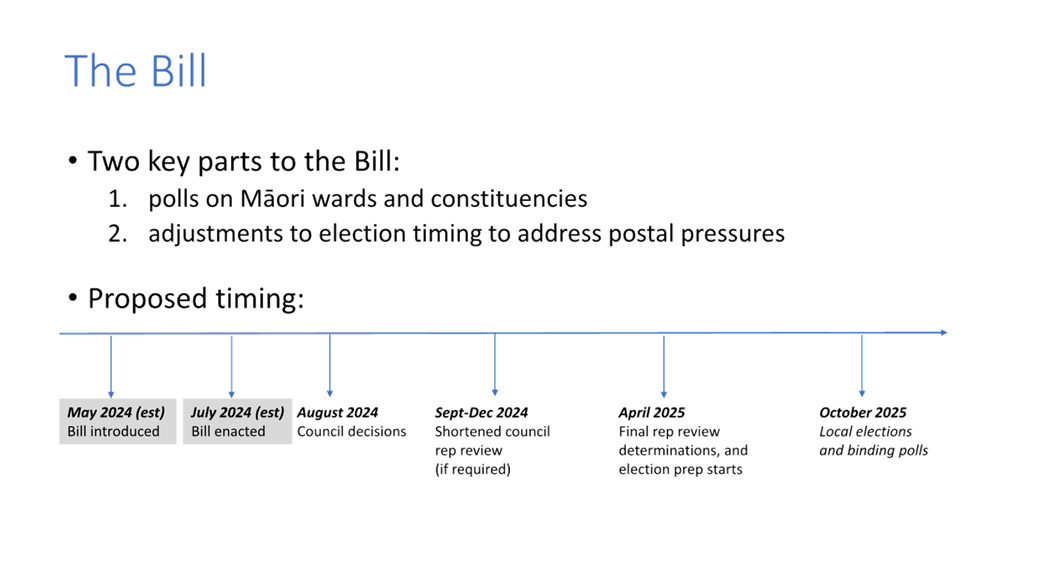
To inform the Committee of the proposed
legislation to reinstate the pre-2021 binding poll provision for the
establishment of Māori wards, and what the options are for Napier City
Council (NCC) once the legislation is enacted at the end of July 2024.
|
|
Officer’s
Recommendation
The
Ngā Mānukanuka o te Iwi (Māori Committee):
a. Receive
the report for information: Proposed legislation – Reinstatement of the
pre-2021 binding poll provisions for Māori Wards.
|
4.2 Background Summary
Reinstatement
of the pre-2021 binding poll provisions
In 2021, the
government of the day amended the Local Electoral Act 2001 to remove all
mechanisms for binding polls to be held on whether Māori wards would be
established by a local authority. In light of this change in legislation, and
in consultation with the community, NCC resolved to establish Māori wards
for the 2025 local elections.
It has just
been announced by the current government that they will introduce a Bill in the
next few months to restore binding polls on the establishment of Māori
wards. Previously a binding poll meant it was a decision that could not be
overturned for two election cycles. We do not know yet if this will be the case
again.
It is expected
the Bill will be enacted by the end of July 2024. NCC will have an opportunity
to make a submission to the select committee on the draft Bill.
This change
means councils will be able to initiate binding polls on Māori wards and
electors will be able to petition their council to hold a binding poll.
Petitions will likely need to meet the 5% of residents in support threshold to
be successful to demand a poll, which was the previous legislated setting. A
poll will likely need 50% support to be successful; again, this was the
previous legislated setting.
Napier City
Council’s options
The Bill will
provide some transitional arrangements and options for councils like NCC, which
resolved to establish Māori wards in 2025 without a binding poll being
conducted.
· Option
A – resolve to rescind the decision to create the Māori wards by
council resolution (to take effect at the 2025 election). The Department of
Internal Affairs (DIA) has anticipated these decisions will be able to be made
in August and early September this year.
· Option
B – hold a binding poll on the question of Māori wards at the 2025
local election (to take effect at the 2028 local election).
Local
elections timeframes
The Bill will
also make changes to some of the statutory timeframes for the 2025 local
elections in response to advice from New Zealand Post. The voting period will
extend from 22.5 days to 32.5 days and the postal delivery period for voting
papers will increase to 14 days.
4.3 Issues
Option A
If NCC
resolved to rescind its decision on Māori wards there are two options in
terms of a representation review process. We can either complete a shortened
representation review by the beginning of April 2025, which the Bill will
provide for, and then it is indicated that the next full representation review
would not be required until 2030/31. Or an alternative option, if officers can
show that conducting a shortened representation review is too challenging, is
that NCC can continue with the representation arrangements currently in place
for the purpose of the 2025 local elections, despite not having conducted a
representation review for two terms. This option would require a full representation
review prior to the 2028 local elections.
The DIA will provide further
advice about the shortened representation review process once details are
known.
The Local Government Commission
advises a decision to rescind the decision to establish Māori wards is
likely to bind NCC to that position for two triennial elections, however that
will not be confirmed until the legislation is enacted.
Option B
If NCC decides
not to rescind its decision on Māori wards, officers would continue with
the representation review that is currently underway and it would establish
Māori wards for the 2025 election. It would also have to hold a binding
poll at the 2025 election on the retention of Māori wards.
If the result
of the binding poll was to retain Māori wards, nothing else would be
required from NCC.
If the result
of the binding poll was to disestablish Māori wards, then officers would
need to conduct another full representation review prior to the 2028 local
elections.
It is
important to note, that as the proposed Bill is currently being drafted and
will then have to go through a Select Committee process, there may be changes
in the enacted legislation from what was announced on 4 April 2024. Councils
cannot make any decisions in regards to this proposed legislation, or take any
actions under the transitional arrangements until the legislation is passed.
4.4 Significance and Engagement
NCC previously
undertook a comprehensive exercise to consult with the community on Māori
wards in 2021. It received 1,314 submissions, with 20% of those submitters
identifying as being on the Māori electoral roll. 45% of the total
submissions were in favour of establishment of Māori wards. Of those on
the Māori electoral roll 95.1% were in favour. 54.4% of total submissions
were against the establishment of Māori wards. 0.6% answered
‘Don’t know’. In the context of consultation, this is
considered a relatively even split.
The Māori
Wards Hearing Council meeting was spread across three days. 32 individuals and
groups attended the Hearing to speak to their submission, and they all spoke in
favour of establishing Māori wards.
4.5 Implications
Financial
The current
representation review has an estimated total cost of $85,000 including
GST. The cost for Officer time on the project is in addition. If NCC is
required to conduct another representation review in the 2025-2028 triennium it
will be a similar cost again, although it is possible we will not need to carry
out as much pre-engagement education with the community having just been
through the process relatively recently.
The cost of a
binding poll at the 2025 local election is unknown at the publication of this
report, but an estimate is being calculated by our external Electoral Officer
currently and will be shared with elected members once known.
Social &
Policy
Nil
Risk
The enactment
of this Bill will coincide with NCC’s formal consultation on its
representation review initial proposal. This may create a lot of confusion in
the community about whether NCC is able to establish Māori wards. Officers
will endeavour to clarify the situation in community messaging.
As the Bill is
still being drafted there is a possibility that the final legislation may be
changed through the Select Committee process from what was announced. As such,
the full implications for NCC cannot be known until the legislation is enacted.
If NCC did
decide to rescind the decision to establish Māori wards for the 2025
election, it is likely it would significantly undermine NCC’s credibility
with mana whenua and tangata whenua stakeholders, who participated actively in
the decision-making process for establishing Māori wards.
4.6 Options
The options
available to the Committee are as follows:
a. Receive
the report for information: Proposed legislation – Reinstatement of the
pre-2021 binding poll provisions for Māori Wards.
4.7 Development
of Preferred Option
Officers will keep Elected Members and
Committee members up-to-date with the progress of the proposed legislation.
4.8 Attachments
1 DIA
- local election Bill timeline - April 2024 (Doc Id 1751173)
|
DIA - local election Bill timeline - April
2024 (Doc Id 1751173)
|
Item 4 - Attachment 1
|
Ngā Mānukanuka o te Iwi (Māori Committee) - 10 May
2024 - Open Agenda Item
5
5. Representation
Review Update
|
Type of Report:
|
Operational
|
|
Legal Reference:
|
Local Electoral Act 2001
|
|
Document ID:
|
1754658
|
|
Reporting Officer/s & Unit:
|
Anna Eady, Team Leader Governance
|
5.1 Purpose
of Report
To give the Komiti an update on the Representation Review
project, highlight upcoming engagement opportunities with the community, and to
receive feedback from the Komiti on the proposed options, which will be put to
the Council for consideration.
|
|
Officer’s
Recommendation
The
Ngā Mānukanuka o te Iwi (Māori Committee):
a. Receive
the report Representation Review Update.
|
5.2 Background Summary
Councils are required by the Local Electoral Act 2001 to take a fresh
look at their representation arrangements at least once every six years.
For Napier, this means consideration needs to be given to:
· How many councillors should be on council?
· How many wards should our city have, what should their
boundaries be, and what should they be named?
· Should we have a mix of both ward councillors and at-large
councillors?
· How many Māori wards and representatives should Napier
have?
· Should we establish community boards?
Whilst doing a review, councils
must provide for effective representation of communities of interest and fair
representation of electors. This is to ensure
the council is structured to best serve the interests and needs of its
community.
The term communities of interest is not defined in law and
can mean different things to different people; it can also change over time
with population changes and development of areas. One definition, which the
Local Government Commision cite is that it is a three dimensional concept which
includes
· Perceptual – a sense of belonging to a
clearly defined area/having a sense of community identity,
· Functional – the ability of the area to
meet the community’s needs for physical and human services, and
· Political – the ability of elected members
to be accessible to residents and represent their interests.
Officers undertook a community pre-engagement survey on the
questions above in late 2023, along with asking where people felt they belonged
and why. The results of the survey have helped to inform an analysis of
Napier’s communities of interest, and also respondents’ preference
for representation arrangements in Napier.
Key findings of the survey and analysis were:
· Napier
City as a whole was identified as a community of interest by 55% of
respondents, with geographical features like the Marine Parade, and local
history being identified as giving a sense of belonging.
· 26%
of respondents felt most connected to their suburb, and across different
neighbourhoods there was a strong emphasis on community ties.
· Only
5% of respondents felt a sense of belonging to
their ward. However, 70% correctly identified their ward.
· There
is little appetite for a larger council, most preferred status quo or
a smaller council.
· Most
survey respondents preferred the ward system (32%) rather than a mixture of
wards and at large representation (22%) with top reasons being:
o Local
representation/greater knowledge,
o Works
well / happy with it,
o Better
access to councillors/ live in the area they represent.
· The
current ward system broadly accommodates communities of interest.
· There
is a lot of development across the city, potentially altering communities of
interest.
· Ahuriri
ward and Taradale ward share similar socio-economic stats.
· Onekawa-Tamatea
ward and Nelson Park ward share similar socio-economic statistics.
· Nelson
Park ward has suburbs which are very high on the deprivation index.
· So far feedback has been for
two Māori ward councillors in one city-wide Māori ward.
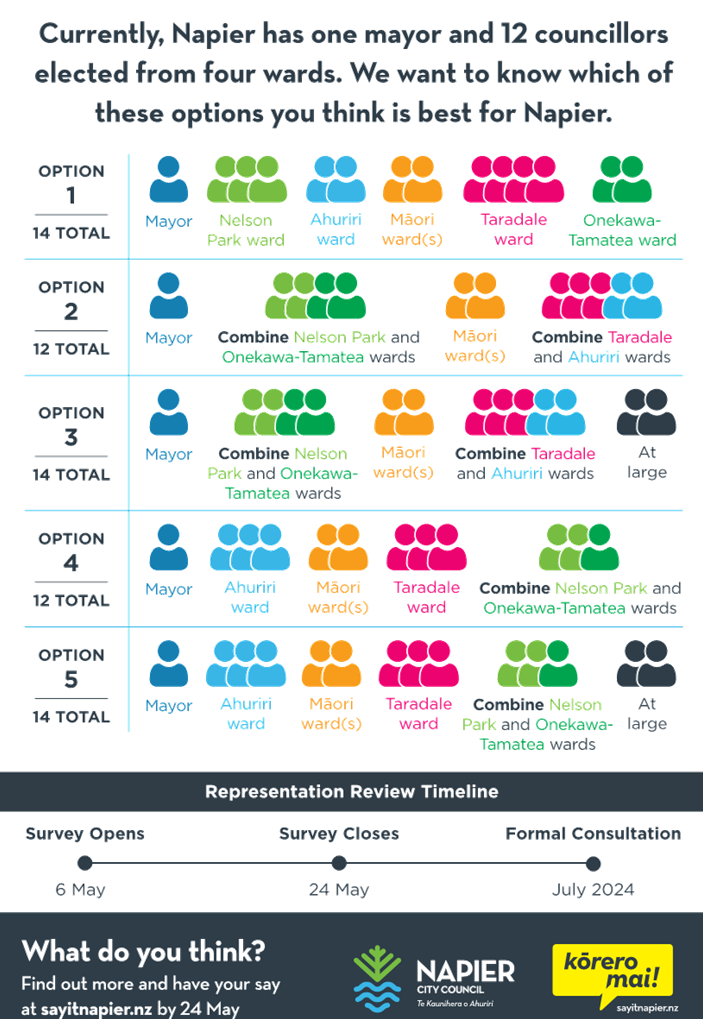
Council has considered the community’s feedback and
officers analysis and based on this the elected members have settled on five
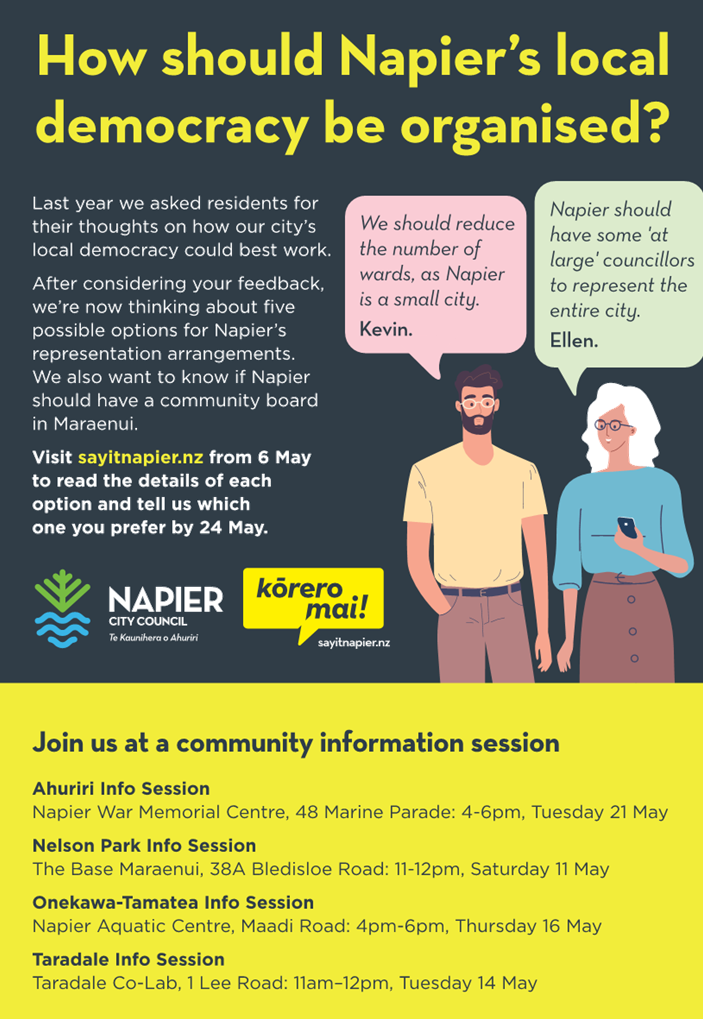
potential options for Napier’s general ward representation arrangements (see
attachment) which will be put to the community for further feedback.
All options being put to the community can
have either one Māori ward with two elected Māori ward councillors,
or two Māori wards with one Māori ward councillor in each. Officers
are proposing to have one Māori ward with two Māori ward councillors
for the following reasons.
· The two councillors can
work collaboratively.
· The ward would have a
similar number of councillors to some of Napier’s general
wards.
· Collective
responsibility.
· Easier selection process
for voters.
Two Māori wards were considered, one
smaller ward, which has a high percentage of Māori electoral population
and one larger ward with a similar percentage of Māori electoral
population. Although this arrangement would reflect where a high percentage of
the Māori electoral population lives, it may result in uneven numbers of
candidates standing in each ward, or no-one standing in one of the
wards. There is also an increased chance that a candidate gets in without
any competition.
Officers will be speaking further with
Māori about the make-up of the Māori wards, and will be welcoming
feedback about a preference. This will also go out for feedback to the whole
community in the formal consultation.
Once the community response to our May pre-engagement has
been received and analysed then an initial proposal for Napier’s
representation arrangements will be decided on by the Council and put to the
community for formal community consultation in July 2024. Submissions will be
welcomed from the community and there will be a chance for members of the
public to speak to their submission at a Council meeting before the Council
makes its final decision later in the year.
At this time there will be the opportunity
for appeals from anyone who submitted on the original proposal and fresh
objections to any amendments. Once finalised, the representation arrangements
for Napier will be in place for the 2025 Local Government election.
The other key representation
matter to be considered is whether establishing a community board would add
value and address particular issues in a particular area of Napier.
As part of the May
pre-engagement, we will be asking the community on feedback about a community
board located in the Maraenui area. The reason for this is:
· Maraenui
has the lowest voter turnout at elections. Only 18% of those enrolled on the
Māori roll voted in last election versus 42% of general roll voters.
· This
community has the lowest ward awareness. Only 13% of Maraenui resident
respondents knew their ward.
· This
community has the lowest satisfaction with democracy and governance measures.
· This
community has one of the highest deprivation ratings in Napier.
· 54%
of Maraenui survey respondents were interested in a community board.
· 53%
of Pirimai survey respondents were interested in a community board.
A community board would have a
particular focus on Maraenui and surrounds, and are there to advocate to
council on behalf of that community. They will have dedicated resources, can
have delegations which enable them to make decisions for the area, and even a
budget for small projects.
Another thing for the Council to
take into account when thinking about community boards is whether there are
already things in place that can address the reasons for a community board
listed above. Napier will have Māori ward councillors from the next
election, along with general ward councillors; there are mechanisms such as
this Komiti in place, Councillor portfolios, Council’s Community
Strategies Team and Te Waka Rangapū Team; and there are well established
community organisations and resident associations which Napier City Council
(NCC) can work with.
5.3 Issues
There may be some confusion in
the community around Māori wards due to the Government’s proposed
legislation. Officers are trying to inform the community on NCC’s options
and position in regards to Māori wards should this legislation be enacted.
Officers are having to get the
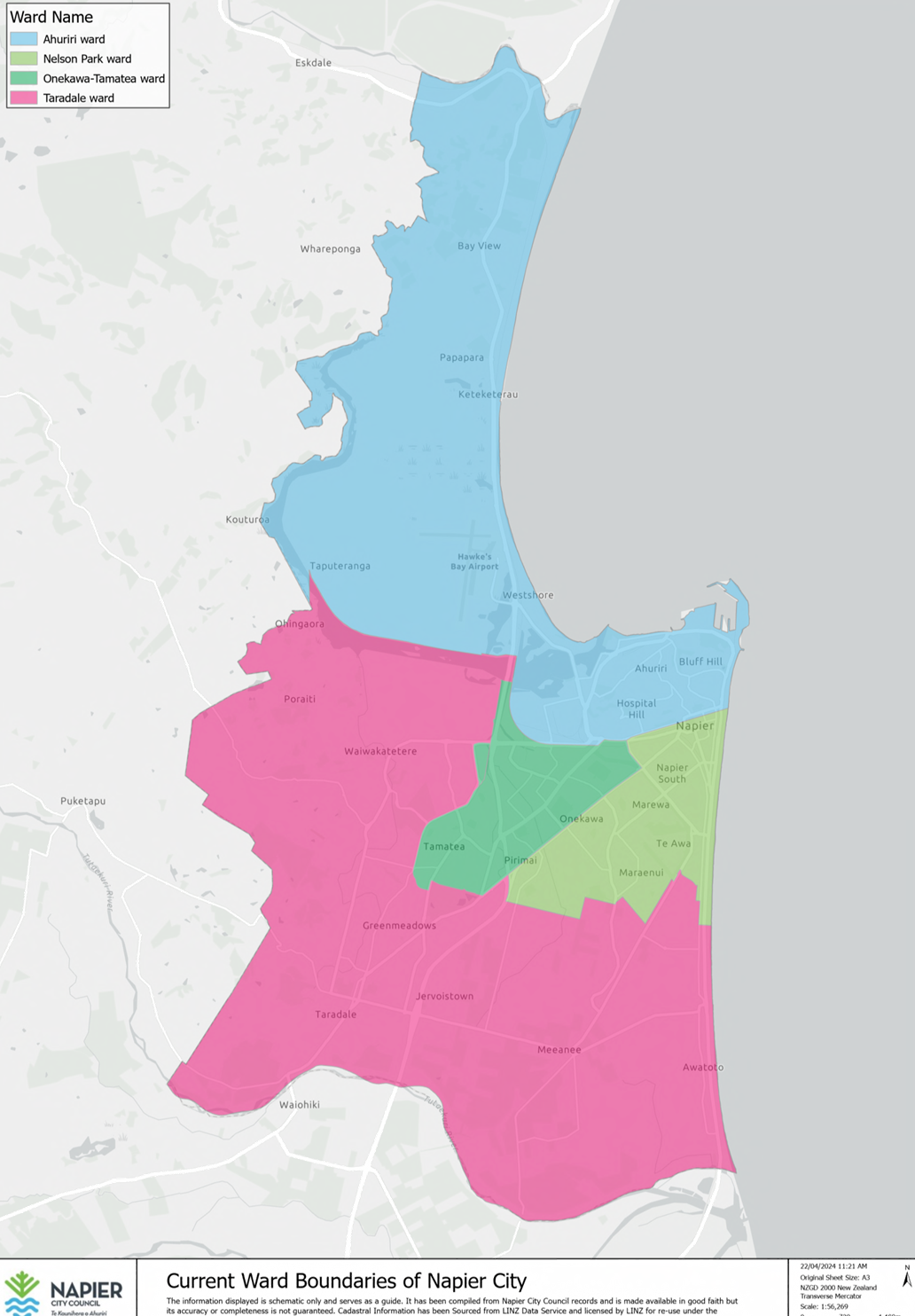
three options for ward boundaries mapped out by Statistics New Zealand (see
attached maps), and population data estimated. All elected members are
supposed to represent roughly the same amount of people. Proposed boarders may
need to be moved if the results come back showing a ward has a higher
population to councillor ratio than is acceptable. An example is one of the
variations being mapped is including Jervoistown in the Taradale General Ward
for Options 4 and 5, which makes sense to comply with the requirements of
communities of interest, however officers are not sure if this will push the
population to councillor ratio up too high.
5.4 Significance
and Engagement
Representation arrangements affect all Napier residents and
have a high degree of significance. Local authorities undertaking
representation reviews are strongly encouraged by the Local Government
Commission to carry out pre-engagement consultation with the community. This
can assist councils to identify communities of interest and gain feedback on
representation options. It enables them to consider a wider range of
representation options when developing the formal proposal.
5.5 Implications
Financial
The current representation review
has an estimated total cost of $85,000 including GST. The cost for
Officer time on the project is in addition.
Social & Policy
There are no social or policy
implications from this report.
Risk
There is a reputational risk for NCC if the representation
review process and final decisions are perceived as unfair or incomplete by the
community. The two rounds of pre-engagement are one way to mitigate this risk.
5.6 Options
The options available to Council
are as follows:
a. To receive the
report Representation Review Update.
5.7 Attachments
1 2024-04-23
Representation Review Flyer.pdf
2 2024-04-23
Proposed Option 1 General Ward Boundaries (Status Quo).pdf
3 2024-04-23
Proposed Option 2 & 3 General Ward Boundaries .pdf
4 2024-04-23
Proposed Option 4 & 5 General Ward Boundaries.pdf
|
2024-04-23 Representation
Review Flyer.pdf
|
Item 5 - Attachment 1
|
|
2024-04-23
Proposed Option 1 General Ward Boundaries (Status Quo).pdf
|
Item 5 - Attachment 2
|
|
2024-04-23
Proposed Option 2 & 3 General Ward Boundaries .pdf
|
Item 5 - Attachment 3
|
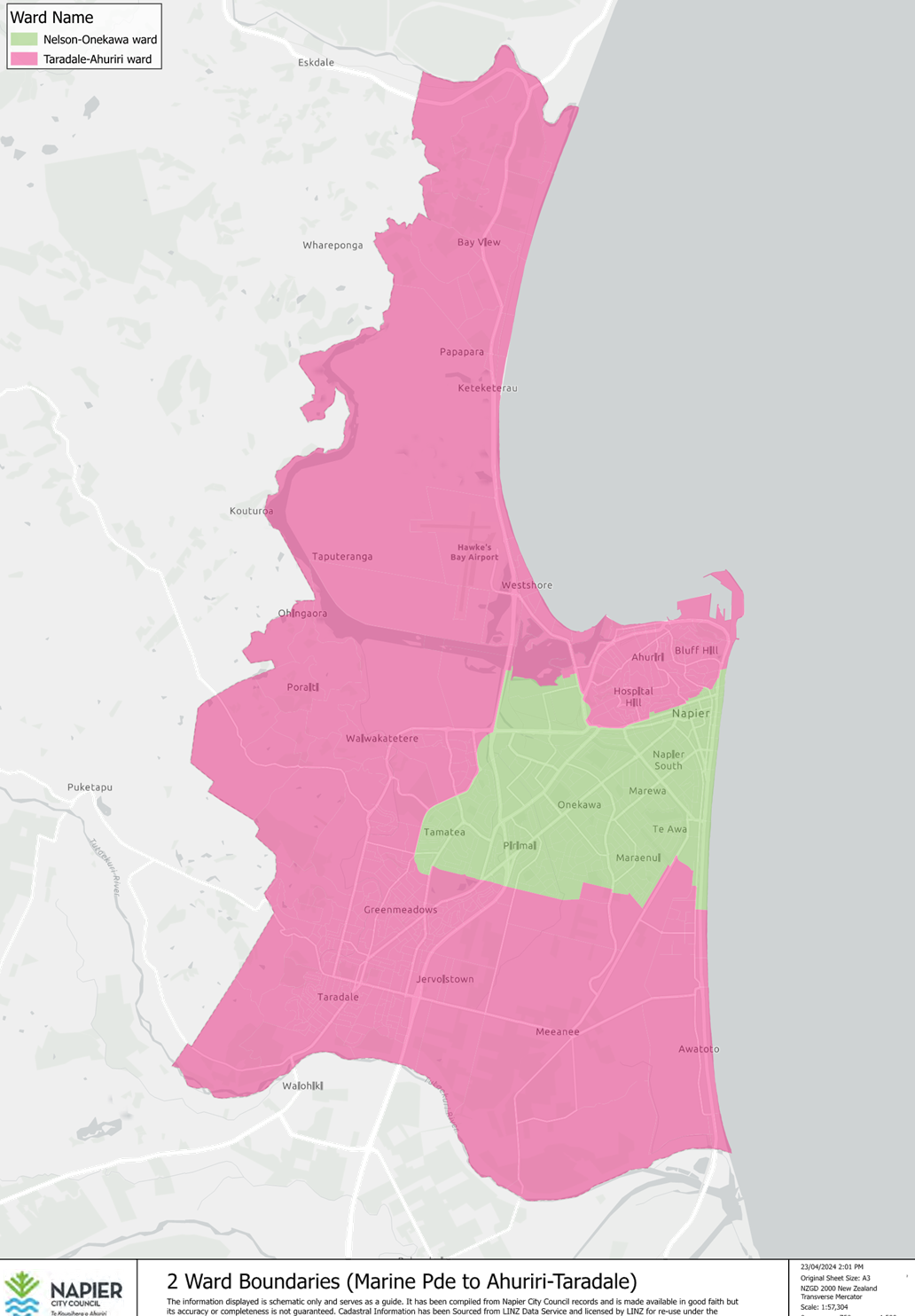
|
2024-04-23
Proposed Option 4 & 5 General Ward Boundaries.pdf
|
Item 5 - Attachment 4
|
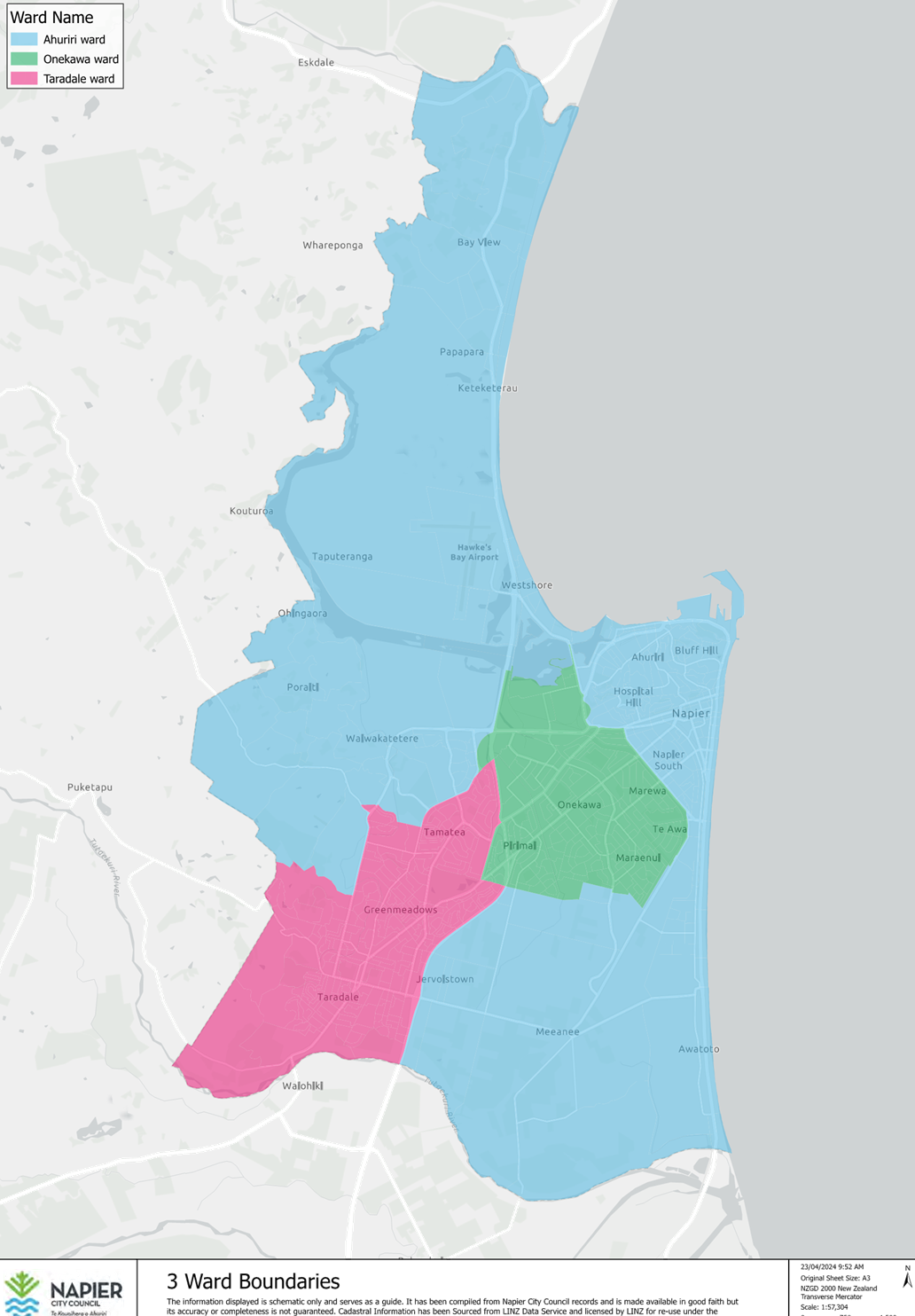
Ngā Mānukanuka o te Iwi (Māori Committee) - 10 May
2024 - Open Agenda Item
6
6. Te
Waka Rangapū Strategy 2024
|
Type of Report:
|
Operational and Procedural
|
|
Legal Reference:
|
N/A
|
|
Document ID:
|
1752840
|
|
Reporting Officer/s & Unit:
|
Mōrehu Te Tomo, Pou Whakarae
|
6.1 Purpose of Report
This purpose of this report is to
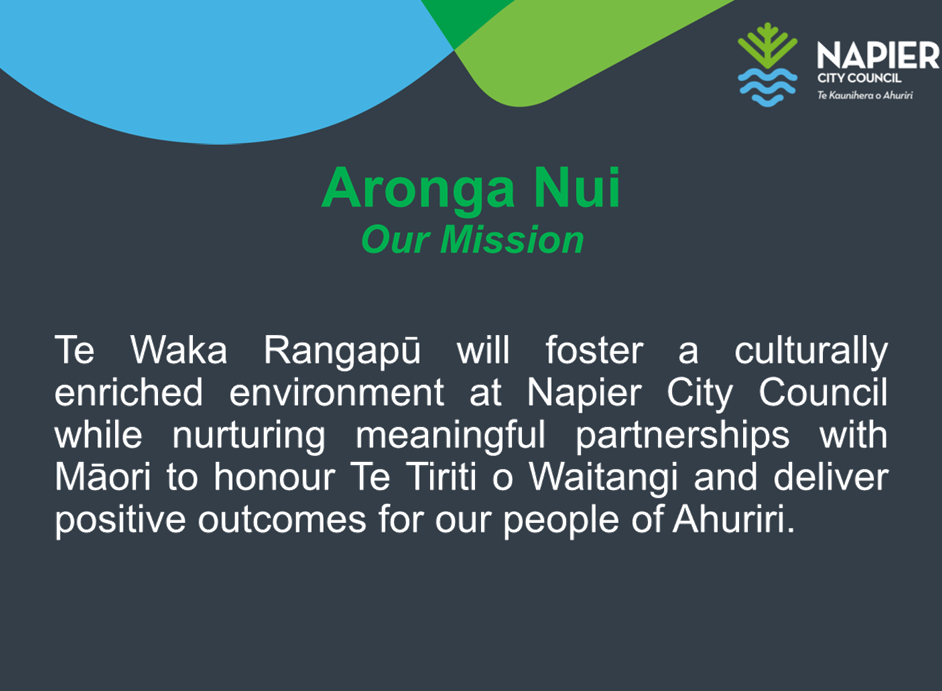
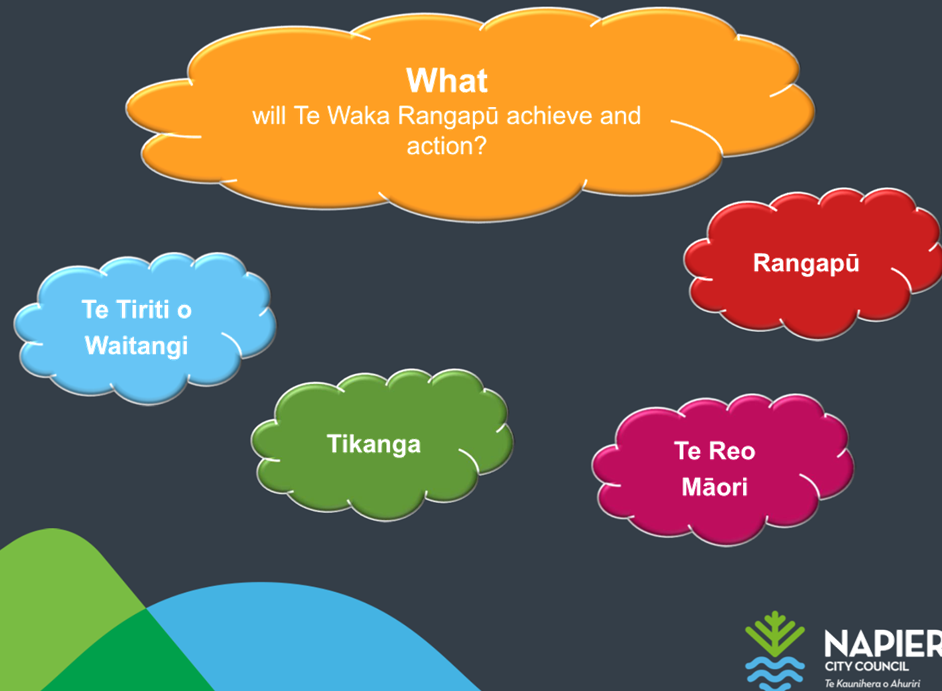
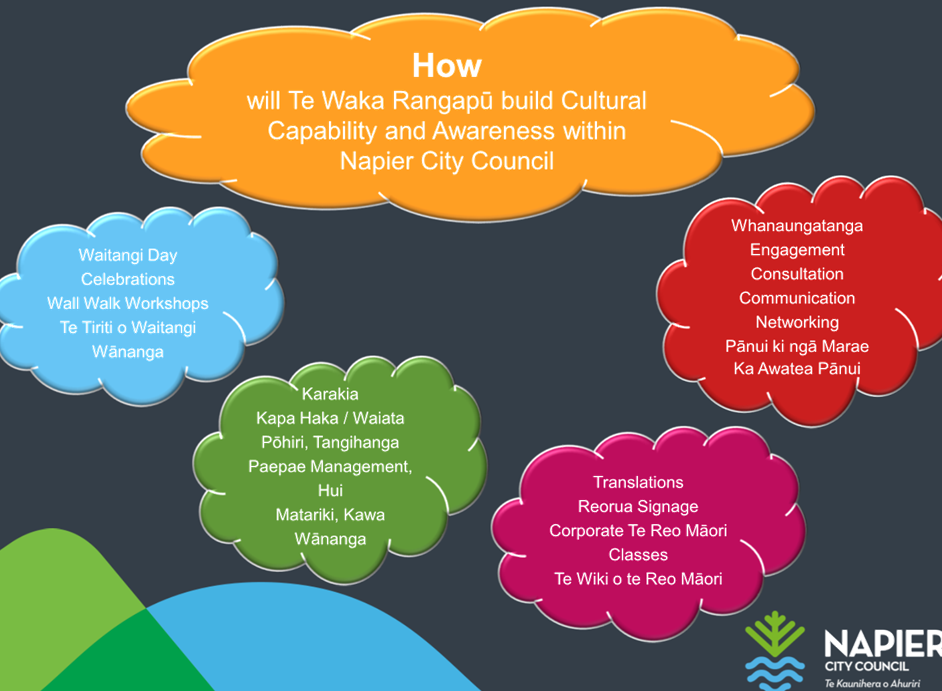
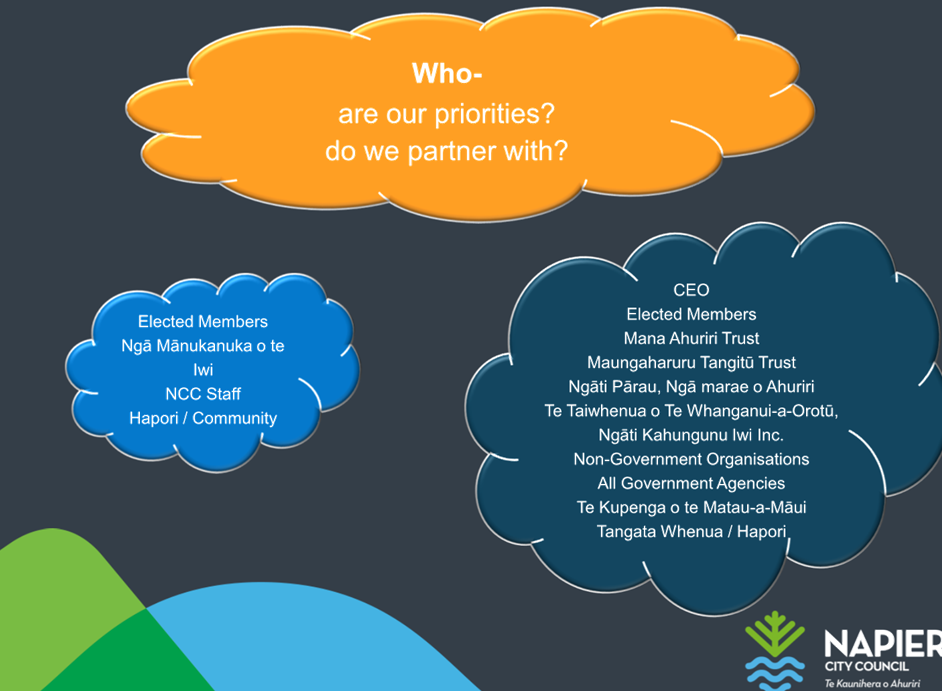
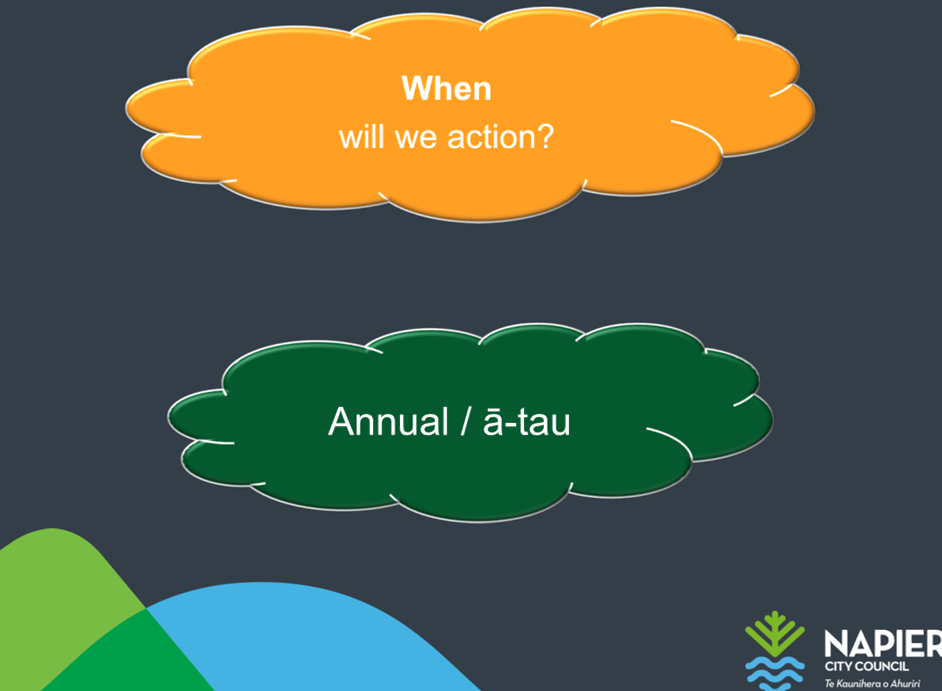
advise on Te Waka Rangapū Strategy (the Strategy).
|
|
Officer’s
Recommendation
The
Ngā Mānukanuka o te Iwi (Māori Committee):
a) Endorse
the “Te Waka Rangapū Strategy 2024.”
|
6.2 Background
Summary
Te Waka
Rangapū started in February 2021. Since then, our work has grown in
supporting internal cultural matters and building relationships with our Iwi
authorities. In the past two years, Te Waka Rangapū has been working on
our strategy to establish our direction for Napier City Council and to outline
the focus of our work.
Morehu Te
Tomo, Pou Whakarae, will talk you through the Strategy and welcome your
feedback and guidance.
6.3 Issues
No Issues
6.4 Significance and Engagement
The Strategy has been shared with
Council’s Executive Leadership Team and has their support. We are
now seeking important input from Ngā Manukanuka o te Iwi to ensure the
Strategy meets the priorities of the Komiti.
6.5 Implications
Financial
The activities set out in the
Strategy are resourced and funded though Council’s budgeting process.
Social & Policy
N/A
Risk
It is important for Te Waka
Rangapū to set a Strategy to articulate the work that they do for Council
so that all stakeholders can understand and support their work. It also
provides focus to the Te Waka Rangapū team to concentrate on the matters
of most benefit to NCC and mana whenua partners.
6.6 Options
The options available to the
Committee are as follows:
a. Endorse the Strategy, or
b. Request more information.
6.7 Development of Preferred Option
N/A
6.8 Attachments
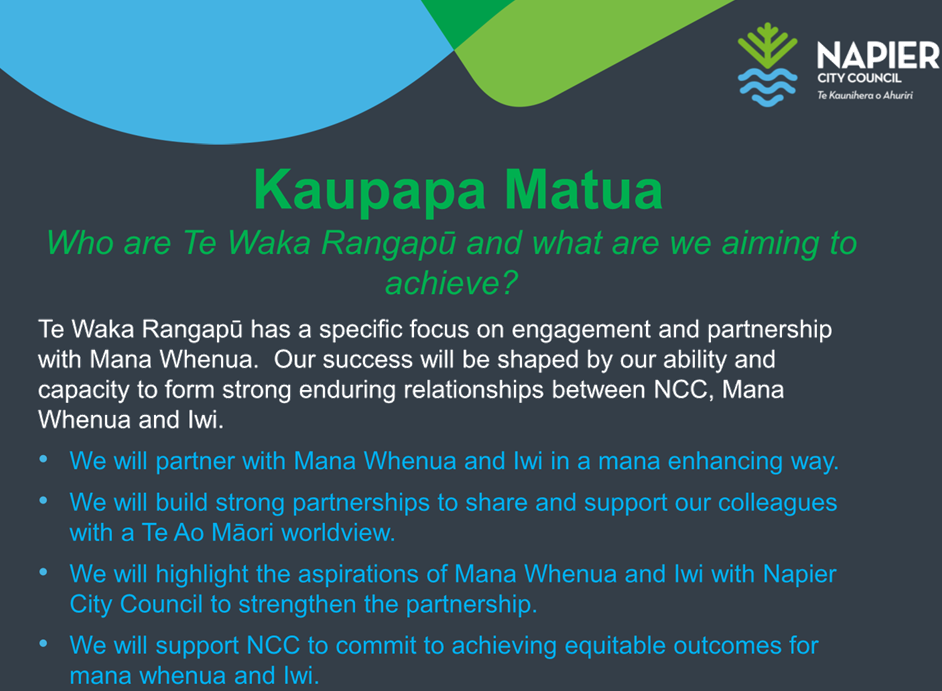
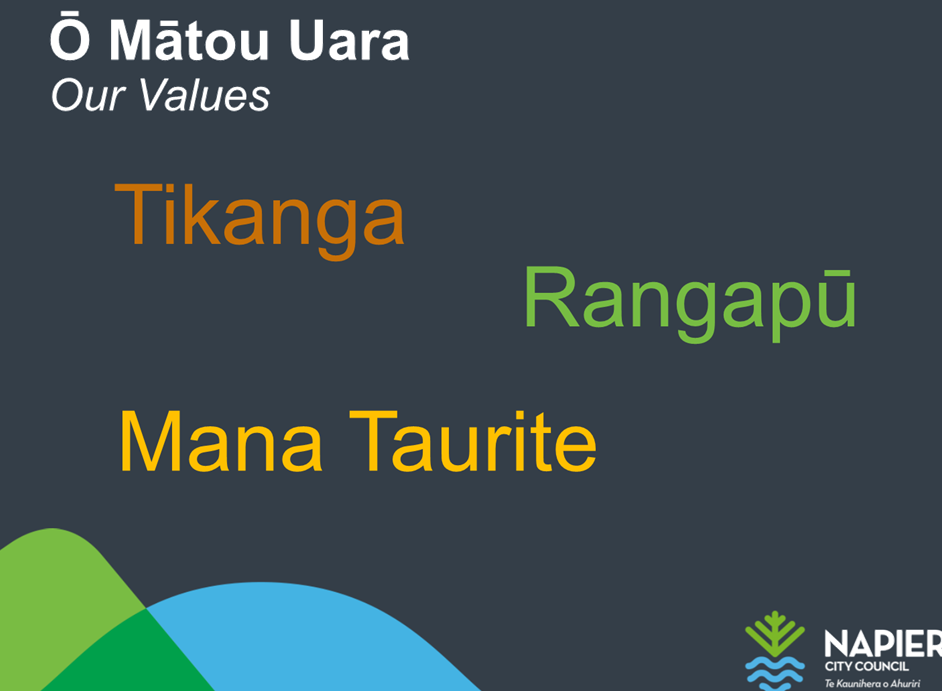
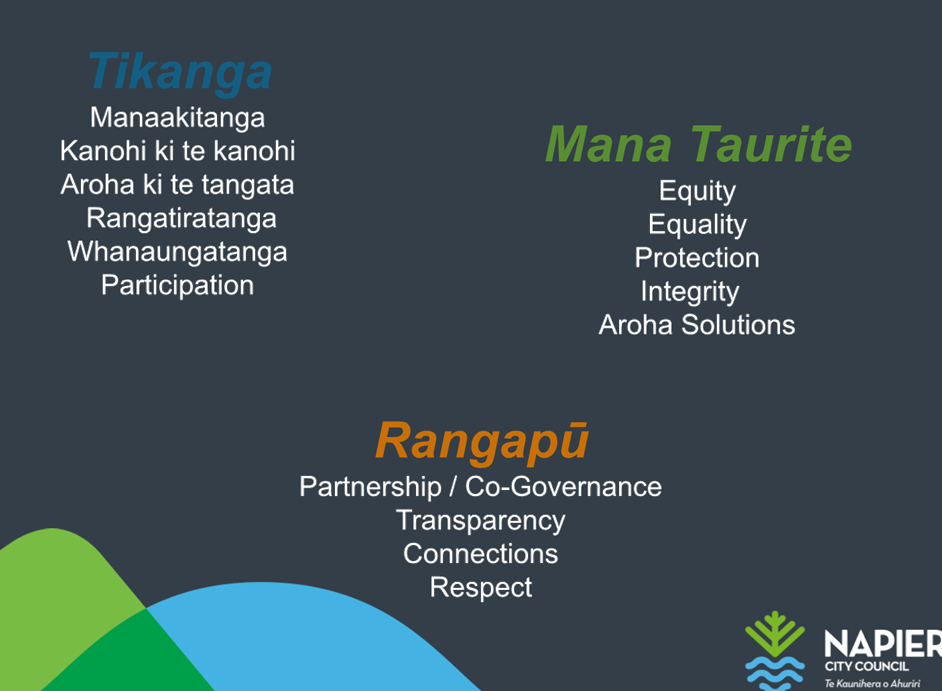
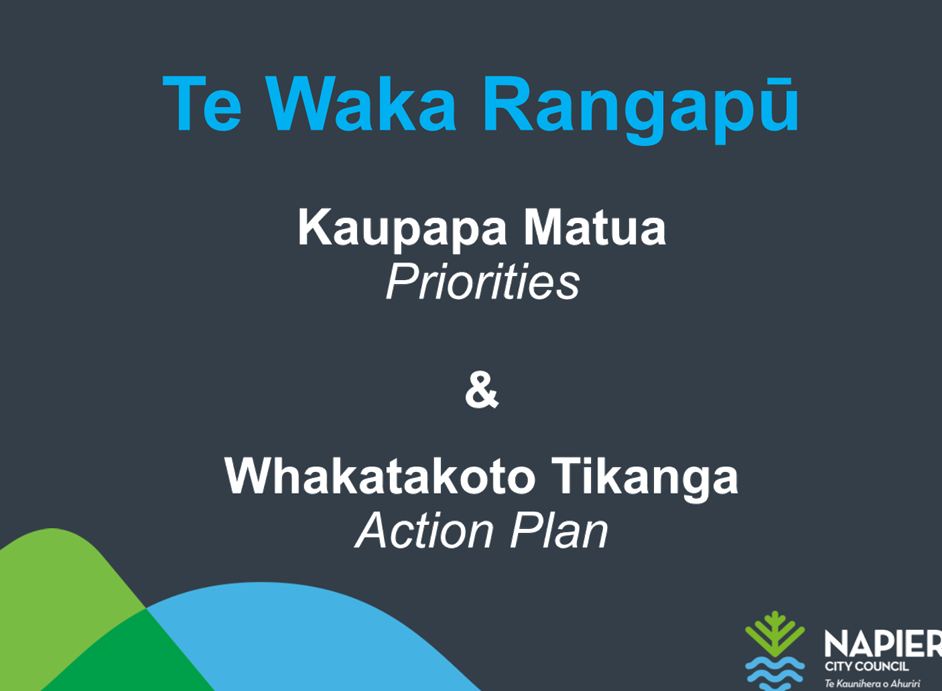
1 Te
Waka Rangapū Strategy 2024 (Doc Id 1752985)
|
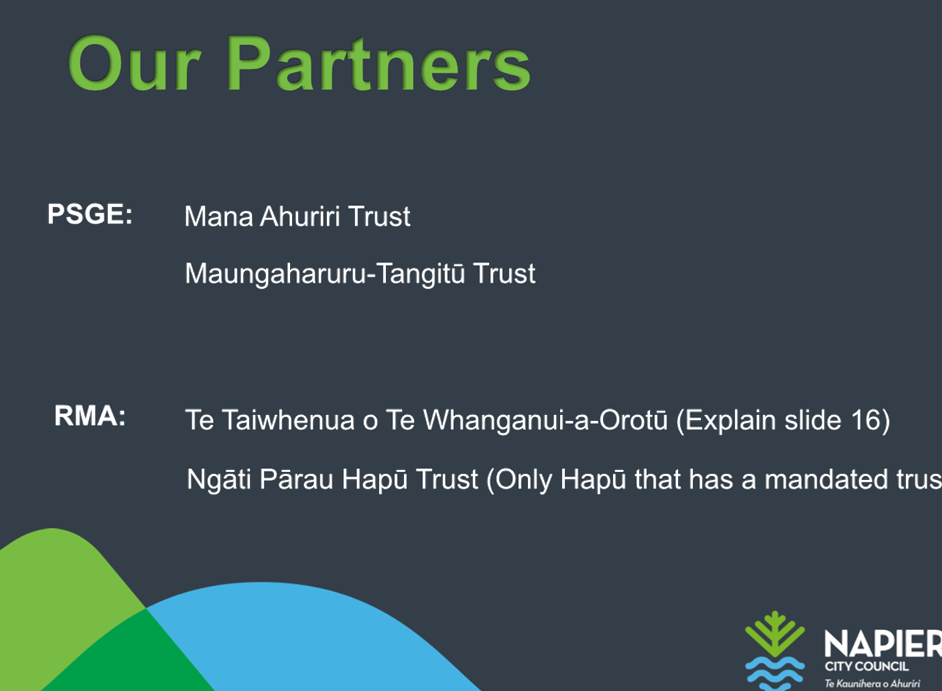
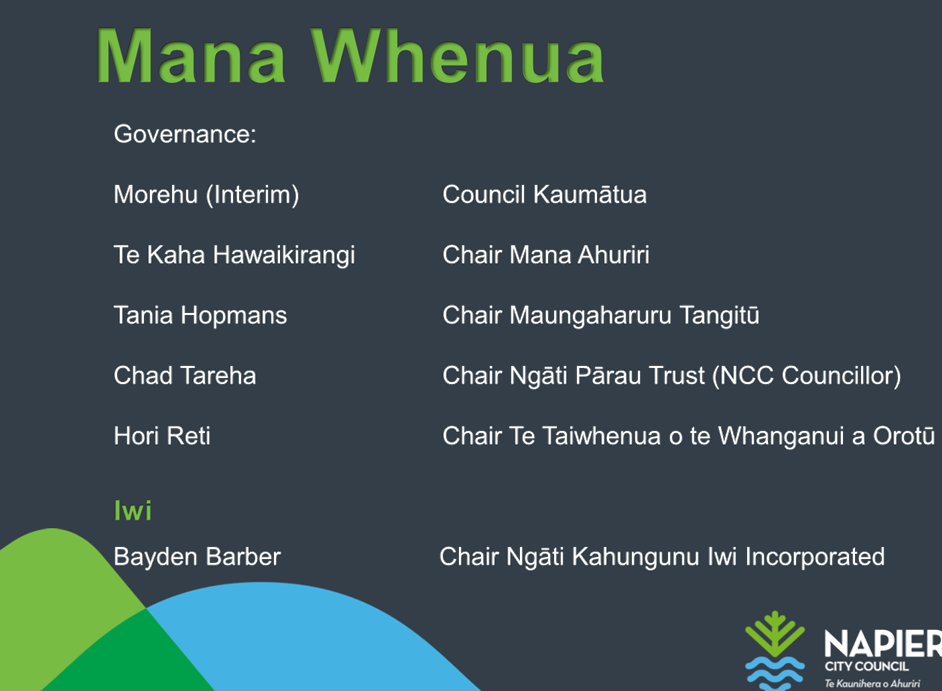
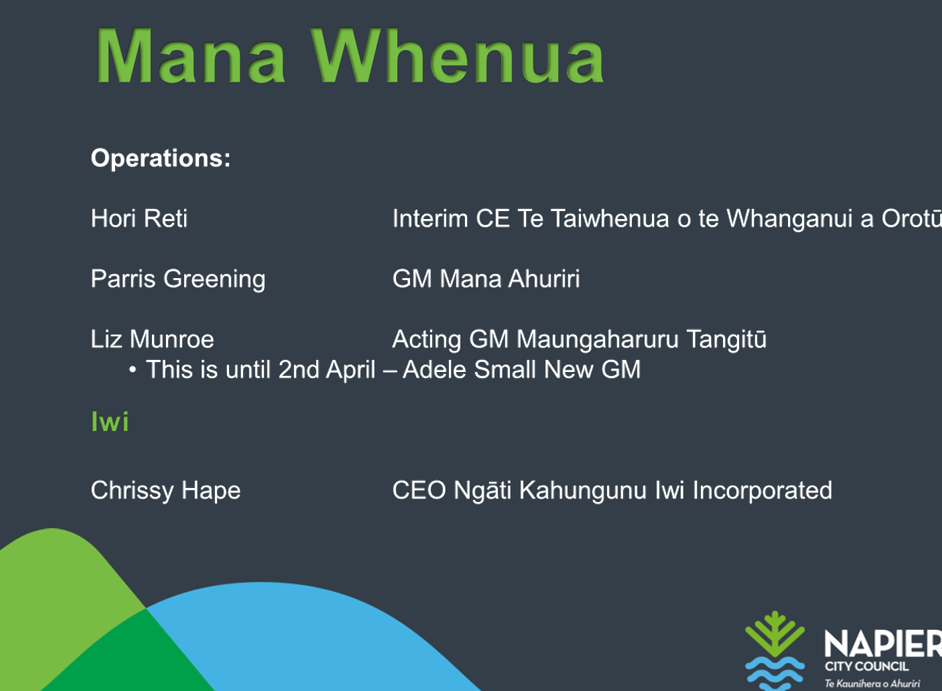
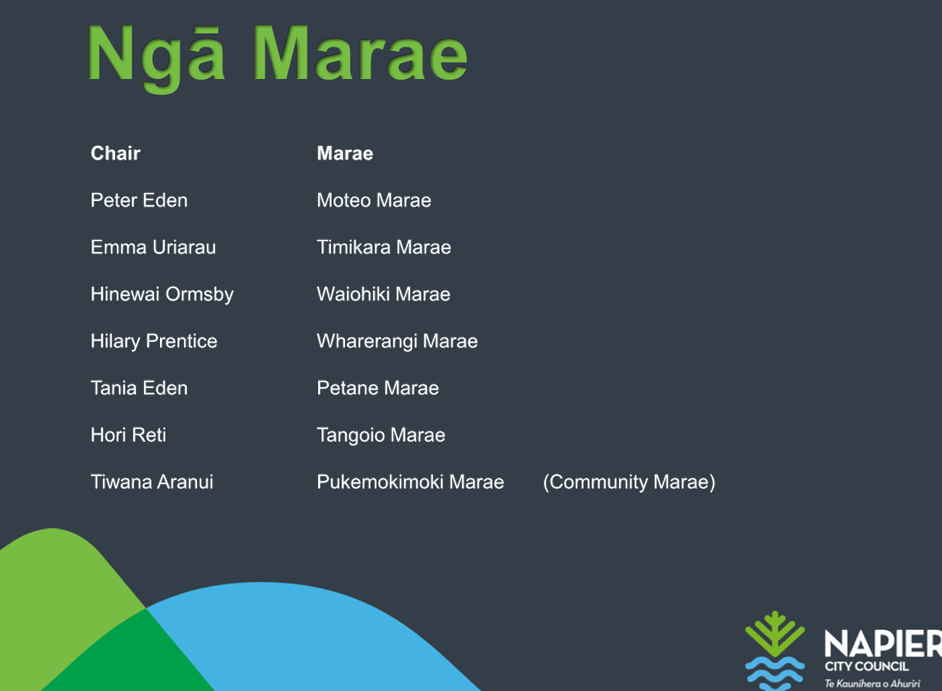
Te
Waka Rangapū Strategy 2024 (Doc Id 1752985)
|
Item 6 - Attachment 1
|
Ngā
Mānukanuka o te Iwi (Māori Committee) - 10 May
2024 - Open Agenda Item
7
7. Agenda
Items for Ngā Mānukanuka o te Iwi Komiti
|
Type of Report:
|
Operational
|
|
Legal Reference:
|
Local Government Act 2002
|
|
Document ID:
|
1753242
|
|
Reporting Officer/s & Unit:
|
Mōrehu Te Tomo, Pou Whakarae
|
7.1 Purpose of Report
The purpose of this report is to
establish the key topics and Napier City Council (NCC) projects Ngā
Mānukanuka o te Iwi Komiti members would like brought to Komiti Huis for
discussion.
|
|
Officer’s Recommendation
The Ngā Mānukanuka o te Iwi (Māori Committee):
a. Request
reports on the following subjects [and any other subjects added at the hui]
be included in the agendas for Ngā Mānukanuka o te Iwi Komiti as
relevant:
i. Housing
ii. Health
iii. Te Aka Mahi Toi & Te Aka
Operational Model
iv. Internal Cultural progress (Ka
Awatea)
v. Water Issues (Local Water Done
Well)
vi. Long Term Plan (3 Year Plan)
vii. Annual Plan
viii. District Plan
ix. Future Development Strategy
x. Representation Review
xi. Māori Wards
xii. Te Mana o te Wai
|
7.2 Background
Summary
Ngā Mānukanuka o te Iwi Komiti
agendas have evolved from including all Council and Standing Committee agenda
reports to the current setting, which is to include matters pertinent to Māori in order for the agenda to be
meaningful, and to give the appointed Komiti members the chance to bring their marae or
entities feedback on relevant issues back to the Council and NCC officers.
Officers list
of potential topics for discussion are as follows:
· Housing
· Health
· Te
Aka Mahi Toi & Te Aka Operational Model
· Internal
Cultural progress (Ka Awatea)
· Water
Issues (Local Water Done Well)
· Long
Term Plan (3 Year Plan)
· Annual
Plan
· District Plan
· Future Development Strategy
· Representation Review
· Māori Wards
· Te Mana o te Wai
It is hoped the Komiti will discuss this list and take off any subjects
they are not interested in and add missing subjects they are interested in.
7.3 Issues
N/A
7.4 Significance and
Engagement
NCC is
required by the Local Government Act 2002 to ensure it has in place processes for consulting with
Māori. Ngā Mānukanuka o te Iwi Komiti brings a Māori lens
to the matters discussed at its huis, so it is important that the reports cover
relevant subjects.
7.5 Implications
Financial
N/A
Social & Policy
N/A
Risk
N/A
7.6 Development of Preferred Option
The list from today’s meeting will
be provided to the responsible Executive Directors to ensure the direction of
this Komiti is adopted into the reporting cycle.
7.7 Attachments
Nil
Ngā Mānukanuka o te Iwi (Māori
Committee) - 10 May 2024
- Open Agenda
Ngā
Mānukanuka o te Iwi (Māori Committee)
Open Minutes
|
Meeting Date:
|
Friday 15 September 2023
|
|
Time:
|
9.30am – 12.08pm
|
|
Venue
|
Large Exhibition Hall
War Memorial Centre
Marine Parade
Napier
|
|
|
Livestreamed via Council’s Facebook
page
|
|
Present
|
Council
Kaumātua / Committee Chair (Piri Prentice)
Mana
Ahuriri Trust (Evelyn Ratima)
Maungaharuru-Tangitū
Trust (Coralee Thompson)
Moteo
Marae (Maureen Box)
Petane
Marae (Rose Hiha)
Pukemokimoki
Marae (Tiwana Aranui)
Tangoio
Marae (Diana Taunoa)
Waiohiki
Marae (Joe Tareha)
Wharerangi
Marae (Tipene Cottrell)
Mayor
Kirsten Wise
Sustainable
Napier Committee Chair (Councillor Price)
Napier
People & Places Committee Chair (Councillor McGrath)
Prosperous
Napier Committee Chair (Councillor Crown)
|
|
In
Attendance
|
Pou Whakarae (Mōrehu Te Tomo)
Chief Executive (Louise Miller) [via Zoom]
Executive Director Infrastructure
Services (Russell Bond)
Excutive Director Community Services (Thunes Cloete)
Acting Executive Director City
Strategy (Darran Gillies)
Manager Water Strategy (Phil
Kelsen)
Libraries Manager (Nicola Saunders)
[via Zoom]
Manager City Development (Paulina
Wilhelm)
Māori
Partnership Manager - Te Kaiwhakahaere Hononga Māori (Hilary Prentice)
Māori
Partnership Manager - Te Kaiwhakahaere Hononga Māori (Jackie Ham)
Manager City Development
(Paulina Wilhelm)
|
|
Also
in Attendance
|
Tangoio
Marae Chair (Hori Reti)
Mana
Whenua Te Aka Design Lead (Israel Birch)
Director,
Athfield Architects (Jon Rennie)
|
|
Administration
|
Governance
Advisor (Anna Eady)
|
Ngā Mānukanuka o te Iwi (Māori
Committee)
– Open Minutes
Table of Contents
Order of Business Page
No.
Karakia. 4
Apologies. 4
Conflicts of interest 4
Public forum.. 4
Announcements by the Chairperson. 4
The item previously published as public excluded,
“Notification of Proposed District Plan”, no longer meets the
grounds under the Local Government Official Information and Meetings Act 1987
to withhold the information from the public, and as such will be heard in the
Open meeting. 4
Announcements by the management 4
Confirmation of minutes. 5
Agenda Items
1. Te
Aka Cultural Narrative. 6
3. Notification
of Proposed District Plan. 7
2. Uplift
Item - Nomination of Appointed Member to a Member of Sustainable Napier and
Future Napier Committees. 8
Updates from Committee Representatives. 9
Updates from Pou Whakarae. 13
Order of Business
Karakia
The meeting was opened with a
karakia and waiata.
Apologies
Tipene Cottrell / Tiwana Aranui
That the apologies from Deputy Mayor Brosnan and Kirk Leonard,
Timi Kara Marae representative, be accepted.
Conflicts of interest
Item one - Tipene Cottrell
identified he is a representative on the mana whenua project group for the Te
Aka project.
Public forum
Nil
Announcements by the Chairperson
The item previously
published as public excluded, “Notification of Proposed District
Plan”, no longer meets the grounds under the Local Government Official
Information and Meetings Act 1987 to withhold the information from the public,
and as such will be heard in the Open meeting.
Announcements by the management
Russell Bond and Phil Kelsen gave
an update on key Napier City Council (NCC) wastewater projects and responded to
questions from the Committee.
·
The Wastewater Treatment Plant (WWTP) is fully operational. The
project team is now working on the permanent rebuild and facility resilience
options.
·
The WWTP Storage Project is due to start as soon as the tender is
awarded. This will be building storage tanks for wastewater during high flows
and bad weather. This is a precursor project for the Outfall Pipe replacement
project. The tanks will be able to hold wastewater for approximately eight to
ten hours.
·
The Outfall Pipe replacement project is in the second year of the
consenting and design phase. The project should be completed in the next three
to four years.
·
The current consent for discharging wastewater into the ocean is
due for renewal in the next few years, as such, upgrades to existing wastewater
treatment to meet new consenting requirements will be the next big wastewater
project.
·
NCC has done work to identify which businesses generate
tradewaste and to educate them about the risks to Ahuriri/Napier’s
waterways. Monitoring of tradewaste spills occurs on a catchment basis.
·
Recently there was a tradewaste spill from Fresh Meats in
Pandora. 20,000 litres of untreated waste got discharged into the Thames Tyne
waterway which leads through to the Ahuriri Estuary. NCC was able to close the
spill gates and isolate the spill before the majority of it reached the
Estuary. NCC and Hawke’s Bay Regional Council (HBRC) are working through
an enforcement process for this spill and an abatement notice was issued. Part of
that notice is for the company to improve the containment of tradewaste on
site.
·
There is a report being written about tradewaste spills over the
last five years which will be available to the public once completed.
·
Te Komiti Muriwai o Te Whanga are stakeholders in a number of
NCC’s consents and are notified if there is a spill and how the spill
will be addressed.
·
NCC has a monitoring team, that monitors the PH of the water in
the network, and a pollution response team. The sewer network is hundreds of
kilometres long. Monitoring the water in the pipeline alerts staff to any
failures. Staff can then respond quickly. There is also an ‘on
call’ phone number that the public can call to alert staff to possible
spills.
·
HBRC and NCC are going to lift the safe swim notifications on the
Estuary for the summer and will keep monitoring the water to determine whether
it is safe to swim in.
Councillor Price left the
meeting at 10:00am.
Confirmation of minutes
Tiwana Aranui / Tipene
Cottrell
That the Minutes of the meeting held
on 30 June 2023 were taken as a true and accurate record of the meeting.
|
|
Attachments
1 2023-09-15
Wastewater Projects update.pdf
|
Agenda Items
1. Te Aka Cultural Narrative
|
Type of Report:
|
Operational
|
|
Legal Reference:
|
N/A
|
|
Document ID:
|
1688599
|
|
Reporting Officer/s & Unit:
|
Darran Gillies, Strategic Programmes
Manager
Hilary Prentice, Māori Partnership
Manager - Te Kaiwhakahaere Hononga Māori
|
1.1 Purpose
of Report
The purpose of this report is to
seek the Ngā Mānukanuka o te iwi endorsement of the Te Aka Cultural
Narrative.
Councillor McGrath left
the meeting at 10:25am.
Councillor McGrath
returned to the meeting at 10:26am.
|
At the meeting
Council Officers presented the
report with the support of Israel Birch, Mana Whenua Design Lead, and Jon
Rennie, Architect. They showed a 3D fly-through of the concept design. The
project team will be looking for Council approval of the concept design at the
next Ordinary Council meeting before moving into the next phase of design.
In response to questions from
the Committee it was clarified:
- The aim is for the building to be one of the first Green Star
5-Star rated buildings in Hawke’s Bay, and have a Net Zero
Building certification. A Green Star rating provides independent
verification that a building is sustainable.
- Wānaga have been held at different marae with different
stakeholders and mana whenua representatives attending, and the design
for Te Aka and the wider precinct has evolved through the feedback from
those hui. There will be more wānanga held as the project moves
through the different phases of design.
- The mana whenua project group report back to their marae about the
project. Separate to this group there may be one or two advisors added
to the project team, and the Ngā Mānukanuka o te Iwi Committee
may be able to help suggest who these advisors could be.
A suggestion from the
Committee was that one of the external walls could have changing themes,
depending on the time of the year. For example, a Waitangi theme in the lead
up to Waitangi Day, or an Art Deco theme in the lead up to Art Deco weekend.
Another suggestion was having
local carvers working in the Make-A-Space for a period of time, so community
members can see and engage with this art form.
|
|
|
Joe Tareha / Evelyn Ratima
The
Ngā Mānukanuka o te Iwi (Māori Committee):
a. Endorse
the Te Aka Cultural Narrative.
|
With the approval of the
Committee this item was taken out of order.
3. Notification of Proposed District Plan
|
Type of Report:
|
Legal and Operational
|
|
Legal Reference:
|
Resource Management Act 1991
|
|
Document ID:
|
1687692
|
|
Reporting Officer/s & Unit:
|
Paulina Wilhelm, Manager City Development
|
3.1 Purpose
of Report
The purpose of
this report is to inform the Committee of the upcoming notification of the
Napier City Proposed District Plan (PDP) in part, and the Napier Structure
Plans, on 21 September 2023.
|
At the
meeting
The officer
presented the report, noting that once the PDP is notified it becomes a legal
document which NCC will seek community feedback on. It is hoped Ngā
Mānukanuka o te Iwi Committee can help to spread the message to their
whānau, marae and wider networks that the PDP is available for community
feedback until December.
In response
to questions from the Committee it was clarified:
- In the Napier Servicing Structure Plan: Three
Waters report, brownfield areas have been identified for
intensification. These areas will need to be rezoned to allow for medium
and high density housing. The proposed rezoning would affect
approximately 9,000 properties (see attached map). It is hoped the
community will engage with Council and give feedback about the proposed rezoning
and intensification.
- The Resource Management Act 1991 directs how
community consultation on the PDP is to be conducted. There will be an
online form available on the NCC website for submitters to fill in.
Council officers are going to engage with mana whenua partners for
specific feedback and also to receive suggestions on other ways to
engage with the wider community.
- Three chapters are not ready for consultation
yet due to the impacts of Cyclone Gabrielle and Covid-19. These chapters
will be notified at a future date.
- Council officers have been in discussions with
the Ministry of Education (MOE) about Napier’s growing population
and the possible need for new schools. This is a separate process to the
District Plan process; the MOE submits a Notice of Requirement when it
decides a new school is needed. The MOE will only consider building a
new school when all schools across a city are at maximum capacity.
- Once the public consultation has closed officers
will share the community feedback with the Committee.
- Council officers will also come back to this
Committee with the chapter on Sites of Significance to Māori once
it is ready to discuss the best method of engagement with the key
stakeholders and the wider community.
- Council officers have explored the potential for
growth in the Bayview area, but it is an area that has become hard to
service; it is unlikely to be developed further as a result.
|
|
|
Tiwana Aranui / Coralee
Thompson
The Ngā Mānukanuka o te Iwi (Māori Committee):
a. Note the content of the report titled
“Notification of Proposed District Plan” dated 15 September 2023.
b. Note that officers have undertaken a full
district plan review as directed by Council on 18 September 2018.
c. Note the delayed notification of the
Sites of Significance to Māori, the Ecosystems and Indigenous
Biodiversity and the Natural Hazards chapters, on a date still to be
determined.
|
|
|
Attachments
1 2023-09-15 Proposed Zones Map
|
2. Uplift Item - Nomination of Appointed Member to
a Member of Sustainable Napier and Future Napier Committees
|
Type of Report:
|
Procedural
|
|
Legal Reference:
|
N/A
|
|
Document ID:
|
1678331
|
|
Reporting Officer/s & Unit:
|
Andrew Springett, Manager Governance
|
2.1 Purpose
of Report
To uplift and address the item “Nomination
of Appointed Member to be a Member of Sustainable Napier and Future Napier
Committees” (Doc Id 1678333) left to lie at the Ngā
Mānukanuka o te Iwi meeting held on 30 June 2023.
|
At the meeting
This report was taken as read.
There were no questions from the Committee.
|
|
|
Evelyn Ratima / Rose Hiha
The
Ngā Mānukanuka o te Iwi (Māori Committee):
a) Uplift and address the report “Nomination of
Appointed Member to be a Member of Sustainable Napier and Future Napier
Committees” that was left to lie at the 30 June 2023 meeting;
b) Nominate Tiwana Aranui to be appointed to both the
Future Napier Committee and the Sustainable Napier Committee;
c) Note the appointment will apply from the meeting
cycle commencing on 9 November 2023, after the Council has considered
the nomination at the Ordinary Council meeting on 12 October 2023; and
d) Note that the appointee should attend the Council
workshops relating to the Future Napier and Sustainable Napier Committees to
have the opportunity to set early direction with elected members.
|
Updates from Committee Representatives
Waiohiki Marae (Joe Tareha)
·
A lot of dirt has been moved at Waiohiki, although not all roads
and driveways have been cleared yet. Whānau are trickling back into their
homes.
·
Cyclone funding is running out and contractors have been told not
to hand any more invoices into Hastings District Council. The community is
looking for other sources of funding.
·
Uninsured whānau are a priority now. Te Puni Kōkiri
have started building houses for uninsured whānau, but they take
approximately three months to build two houses.
·
The Waiohiki bridge is open now and this is great for quick
access to Taradale. The Police presence has moved away from Waiohiki now and
some people are driving too quickly across the bridge. The community is
supportive of having the bridge open though.
Moteo Marae (Maureen Box)
·
The extensive Cyclone damage and subsequent funding has enabled
issues at the marae to be addressed which have needed attention for many years.
They have been able to create better access to the buildings and nice places
for kaumātua to sit in the sun.
·
The wharekai is still out of bounds. In addition the marae
grounds still have big ruts in them from heavy machinery. The aim is to have
the ground levelled by the end of the month for a marae event.
·
Maureen requested NCC lend the marae some traffic cones and line
markers for marking playing fields for the marae event. She also asked if silt
from piles at the end of the marae road could be used to put in the ruts on the
land. She is unsure who owns the land the silt is on.
·
There is a concern, with the El Nino weather pattern coming, that
the silt piles are going to turn to dust and be blown across the community.
There are already a number of whānau with respiratory problems.
·
The Dartmoor whānau are still waiting on advice from
Hastings District Council about whether they can rebuild.
Wharerangi Marae (Tipene
Cottrell)
- There was no damage to the marae from the Cyclone, but there has
damage to the waterways and whānau housing.
- The marae are working, in consultation with HBRC, on getting the
waterways back to normal with good water quality and biodiversity. They
are engaging with local farmers and residents to encourage tree planting
to mitigate slip risks.
- The marae invited the children of their seven hapū to a
wānanga where they shared stories about Ahuriri. 80 children attended
along with whānau members. This was a good way to connect with people
who do not normally come to the marae.
- There are a lot of houses being built on the land surrounding the marae,
so the whānau are working with land owners and developers on the
resilience of the area, and to address future flood risks.
- If any other marae need help with their clean-up the Wharerangi marae
whānau are happy to help.
Petane Marae (Rose Hiha)
·
Marae is in category 3. The marae has been asked to surrender the
building consent for the wharenui, and will not be allowed to rebuild on the
same site. The wharekai can be rebuilt where it was. They are talking to the
Mana Ahuriri Trust to see if as part of its Treaty Settlement, and return of
confiscated land, there is some that could be used for the rebuild. They are
also talking to Hastings District Council to see if they have any land in the
area that they could use.
·
They are waiting to see if there will be a change in government,
and what that might mean for the marae’s land categorisation.
·
There have been meetings with Pan Pac and the house owners of
Pohutukawa Drive about increasing the resilience of their land and putting in
stop banks; the marae want to be part of these conversations and any resource
consents applied for, as even if they cannot remain in the area the two
urupā, the whenua and an old marae site will still be there and need
protecting.
·
They have been talking to Dave Paku of HBRC about their
waterways. They still have a lot of slash in their awa to be cleared out.
Tangoio Marae (Diana Taunoa)
·
The wharenui is now empty of carvings and tukutuku panels; they
have been relocated for cleaning and repair. They may consult other marae about
where to get the materials and how to do the restoration work on the panels.
·
About 95% of the silt has been removed from the marae land. They
are still waiting for the insurance company to come back to them on what they
are entitled to.
·
The marae is in category 3. They have been in meetings to try and
go down to category 1, but does not appear to be possible. The categories are
provisional, but the Crown would like to lock in the decisions as soon as
possible. Maungaharuru-Tangitū Trust have been helping gather the data
needed for the final decision.
·
Diana’s house in Tangoio may become a category 1 as it has
been there since 1951 and did not flood. They are waiting on the final decision
from HBRC. They have had some bunds put in around their property as part of the
silt recovery programme.
·
The marae have been looking for temporary accommodation for
whānau.
Maungaharuru-Tangitū Trust
(Coralee Thompson)
- Cyclone recovery work has been the main mahi.
- A couple of weeks ago there was a lot of rubbish dumped at Te Roro o
Kuri Pā. This was brought to the attention of NCC and it was cleared
up in the same day.
- Coralee’s hapū had a day at Pukemokimoki marae as part of
Matariki to remove the stress of the year and to look forward to positive
things in the future. It was held in collaboration with Te Wānanga o
Aotearoa and was a very beautiful experience for the hapū.
Pukemokimoki Marae (Tiwana
Aranui)
·
Pukemokimoki marae was a central point for helping whānau in
the wake of the Cyclone. The marae will always support whānau, and all are
welcome.
·
The marae is going through a period of due diligence to make sure
it is resilient and will be prepared for what may come in the future. The marae
has had funding previously from NCC and then from Te Taiwhenua o Te Whanganui
ā Orotu for a marae administrator. With the amount of groups using the marae
they still need an administrator. The marae also needs to look at risk
management, succession planning and future proofing.
·
Te Ara Waiora, which the Roopu A Iwi Trust is running at the
Maraenui shops, provides free healthcare for the people.
·
The Maraenui kura are going to have a celebration of Pat
McGill’s life.
·
There is a new Social Supermarket in Edmondson Road that people
can be referred to for food parcels.
·
Tiwana was asked to get a group together to do a karakia for the
opening of a large building in Te Awa in October.
Mayor
Kirsten Wise
- NCC has adopted the Cyclone Gabrielle
Residential Property Purchase Policy. This was developed with Hasting
District Council. Napier has 20 category 3 properties. This Policy only
applies to the 14 properties which have residential dwellings on them. It
is a priority to move at pace through this buyout process so residents can
move forward with their lives.
- NCC has also adopted the guidelines
for a building consent process for those in category 1 and 2 properties.
Again it has been developed with Hastings so there is consistency across
the two Councils. Napier does not have any category 2 properties but does
have in excess of 100 category 1 property owners.
- The PDP is going out for public
consultation. It is an important document for the community as it is the
rule book for what people can and cannot do on residential and commercial
land. It also provides rules which aid in protecting the environment.
- NCC is about to launch into
pre-engagement on its Long Term Plan. As a cyclone impacted council NCC
has a special exemption, and only has to prepare a plan for the next three
years as opposed to the normal ten years. NCC is also exempt from having
the plan audited, as this is something that takes a lot of hours to
prepare for.
- The Mayor acknowledged Te Ara
Waiora initiative, and the Social Supermarket as great services available
to the community.
Mana Ahuriri Trust (Evelyn
Ratima)
·
Mana Ahuriri Trust’s AGM is soon. Nominations for the Board
are open now until the end of the month.
·
Their focus at the moment is around biodiversity projects. They
are happy to work in this space with HBRC and NCC.
·
They are supporting marae with resource consents and other
council processes.
·
Pa Wars are going to be held at Moteo Marae on 30 September. This
is good for the rangatahi.
·
They have a list of Kaumātua who can support openings and
events.
·
Their commercial team is looking for potential housing
opportunities for whānau who need a home.
Prosperous
Napier Committee Chair (Councillor Crown)
·
The Nelson Park Ward has two
active resident associations, the Pirimai Resident’s Association and the
Tu Tangata Maraenui Trust. If whānau are living in those areas and want to
be more involved in their community these groups provide a good opportunity to
do that.
·
The Pirimai Resident’s Association
has just completed the third stage in their planting along the Cross Country
Drain project. They are trying to encourage biodiversity and the manu to make a
home there.
·
Tu Tangata Maraenui Trust
organised an election candidate hui. It is important to encourage whānau
to vote, and there is a great initiative online encouraging people who normally
vote to seek out three people who would not normally vote and encourage them to
vote.
Napier People & Places Committee Chair (Councillor
McGrath)
- The Committee had Kāinga Ora and
the Ministry for Social Development come and talk about their housing
projects and work with social housing clients.
- They also approved some funding for
neuro diverse tamariki swimming lessons.
Updates from Pou Whakarae
·
M ōrehu has attended meetings with the Department of
Internal Affairs about mana whenua land affected by the Cyclone. The indication
is that councils should not be involved in the negotiations about Māori
land, but that the Crown will deal direct with mana whenua.
·
NCC has asked for a meeting with the Moteo community at Timi Kara
Marae to discuss the Puketapu Bridge. Hastings District Council will lead the
project but NCC will work with them to get the best outcomes for the community.
·
This week has been Te Wiki o te Reo Māori, with the main
focus being hauora. NCC has had a daily quiz, a video competition and a
rēwena bread competition. The flags will stay up in the city until the end
of the month.
·
It is hoped the number of NCC new staff pōhiri held in a year
will increase.
·
A lot of staff participated in the recent Wall Walk experience.
It is hoped this can be held for staff twice a year.
·
The NCC kapa haka group is going strong, led by Jackie.
·
Te reo lessons are available for staff.
·
The Matariki celebrations went well this year. Next year it is
the 150 year anniversary of Napier City Council, and it is hoped this will be a
national event at the same time as next year’s Matariki celebrations.
·
Committee members are encouraged to make a time with NCC IT staff
to be inducted with their own Council device, which will improve communication
between NCC and the appointed members.
The
meeting closed with a karakia at 12.08pm
|
Approved and adopted as a true
and accurate record of the meeting.
Chairperson .............................................................................................................................
Date of approval ......................................................................................................................
|