Agenda Items
1. Representation Review: Hearing of Submissions on Initial Proposal and Determination of Final Proposal
|
Type of Report: |
Legal and Operational |
|
Legal Reference: |
Local Electoral Act 2001 |
|
Document ID: |
1781714 |
|
Reporting Officer/s & Unit: |
Jane McLoughlin, Project Manager - Strategy and Transformation Anna Eady, Team Leader Governance |
|
1.1 Purpose of Report To provide submissions and an analysis of those submissions on Napier City Council’s Representation Review Initial Proposal, to be considered by elected members in making a decision on the Representation Review Final Proposal. |
That Council:
a. Receive the report titled Representation Review: Hearing of Submissions on Initial Proposal and Determination of Final Proposal, dated 10 September 2024.
b. Amend the Initial Proposal adopted by Council at its meeting held 27 June 2024, under section 19N of the Local Electoral Act 2001, to include a minor boundary adjustment based on the submission (Entry ID 69), for reasons that, Council considers this ward boundary adjustment enhances effective representation of communities of interest by adding residents to the Ahuriri General Ward who have strong commonalities of interest with other residents of the Parklands Estate who reside in that ward. The boundary adjustment is achieved by:
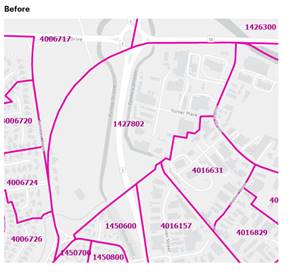
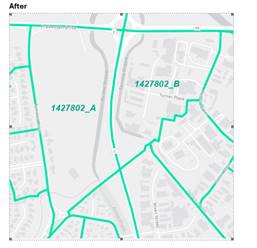
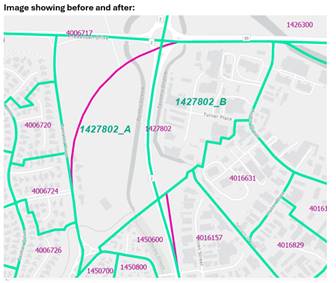
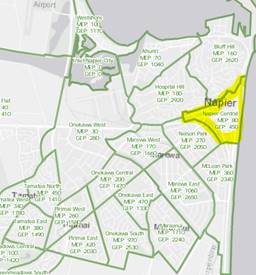
i. Moving meshblock number 1427802_A from the proposed Napier Central general ward to the Ahuriri general ward which has 5 residential dwellings and a Church on the eastern side of Tamatea Drive; and
ii. Minor meshblock nudges and splits required as outlined in this report.
c. Adopt in accordance with sections 19H and 19J and clauses 1 and 2 of schedule 1A of the Local Electoral Act 2001, a final proposal for Council representation, being:
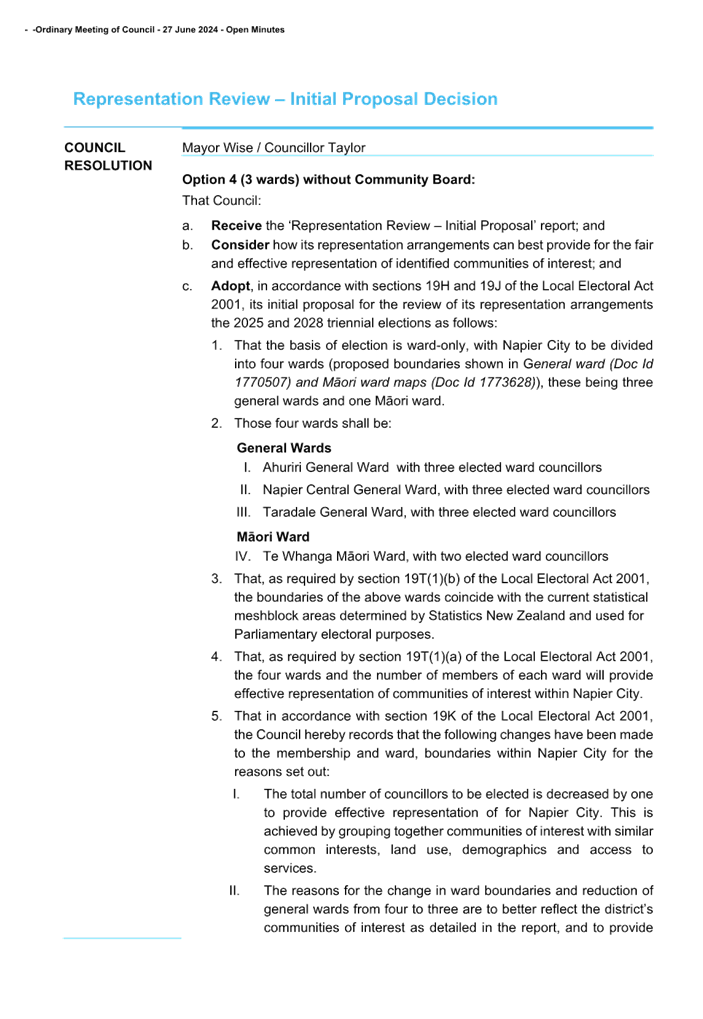
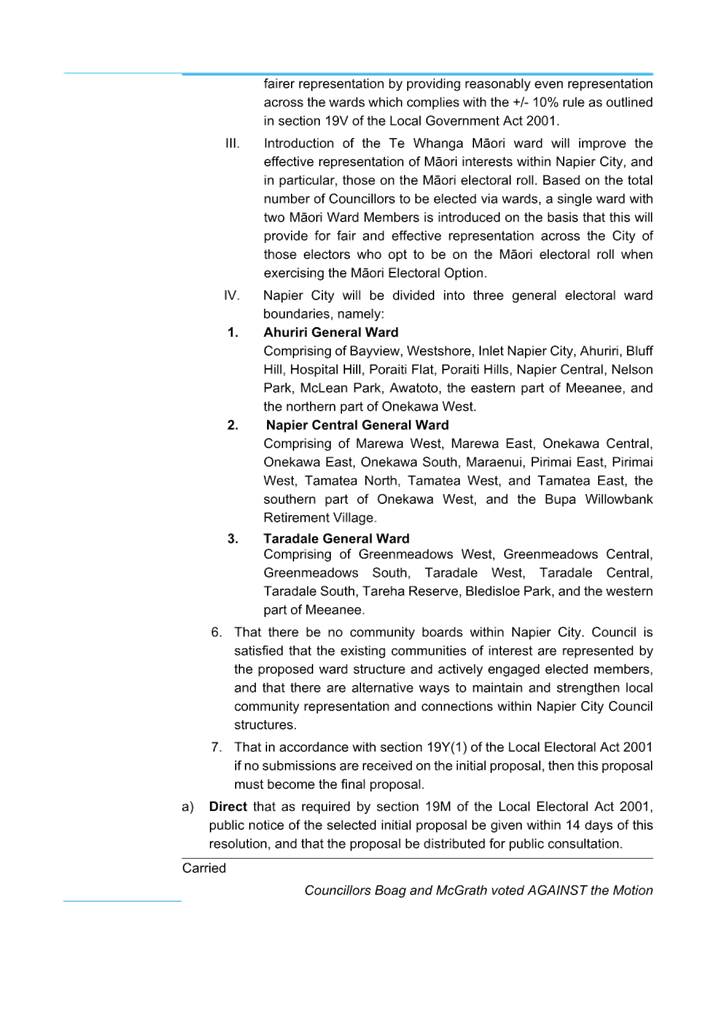
i. The Initial Proposal adopted by Council at its meeting held 27 June 2024, with the minor boundary adjustment listed in b. above; and that Council determines that the following representation arrangements will apply for the triennial election of the Napier City Council to be held on Saturday 11 October 2025:
2. Those four wards shall be:
General Wards
I. Ahuriri General Ward, with three elected ward councillors
II. Napier Central General Ward, with three elected ward councillors
III. Taradale General Ward, with three elected ward councillors
Māori Ward
IV. Te Whanga Māori Ward, with two elected ward councillors
3. That, as required by section 19T(1)(b) of the Local Electoral Act 2001, the boundaries of the above wards coincide with the current statistical meshblock areas determined by Statistics New Zealand and used for Parliamentary electoral purposes.
4. That, as required by section 19T(1)(a) of the Local Electoral Act 2001, the four wards and the number of members of each ward will provide effective representation of communities of interest within Napier City.
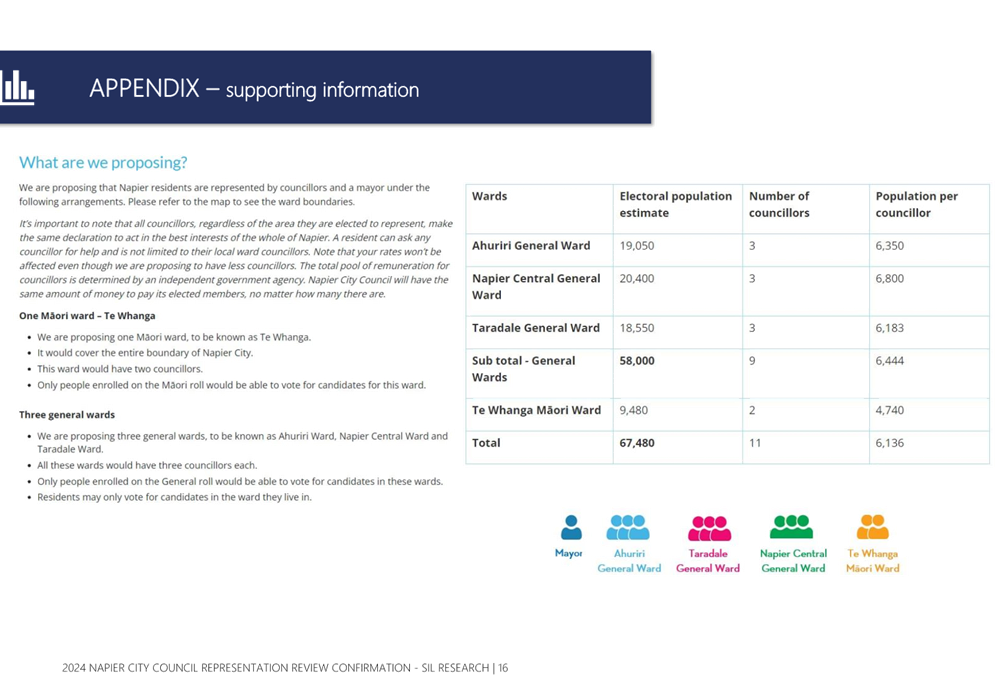
That the population that each member will represent is as follows:
|
Wards |
Electoral population estimate* |
Number of councillors |
Population per councillor |
Within +/- 10% |
|
|
Ahuriri general ward |
19,100 |
3 |
6,367 |
-83 |
-1.29 |
|
Napier Central general ward |
20,400 |
3 |
6,800 |
350 |
5.43 |
|
Taradale general ward |
18,550 |
3 |
6,183 |
-267 |
-4.13 |
|
Sub total - general wards |
58,050 |
9 |
6,450 |
||
|
Te Whanga Māori ward |
9,480 |
2 |
4,740 |
N/A |
|
|
Total |
67,530 |
11 |
6,139 |
N/A |
That as required by section 19V(2) of the Local Electoral Act 2001, the population each member represents falls within the range of 6,450 +/- 10%.”
5. That in accordance with section 19K of the Local Electoral Act 2001, the Council hereby records that the following changes have been made to the membership and ward, boundaries within Napier City for the reasons set out:
I. The total number of councillors to be elected is decreased by one to provide effective representation of for Napier City. This is achieved by grouping together communities of interest with similar common interests, land use, demographics and access to services.
II. The reasons for the change in ward boundaries and reduction of general wards from four to three are to better reflect the district’s communities of interest as detailed in the report, and to provide fairer representation by providing reasonably even representation across the wards which complies with the +/- 10% rule as outlined in section 19V of the Local Government Act 2001.
III. Introduction of the Te Whanga Māori ward will improve the effective representation of Māori interests within Napier City, and in particular, those on the Māori electoral roll. Based on the total number of Councillors to be elected via wards, a single ward with two Māori Ward Members is introduced on the basis that this will provide for fair and effective representation across the City of those electors who opt to be on the Māori electoral roll when exercising the Māori Electoral Option.
IV. Napier City will be divided into three general electoral ward boundaries, namely:
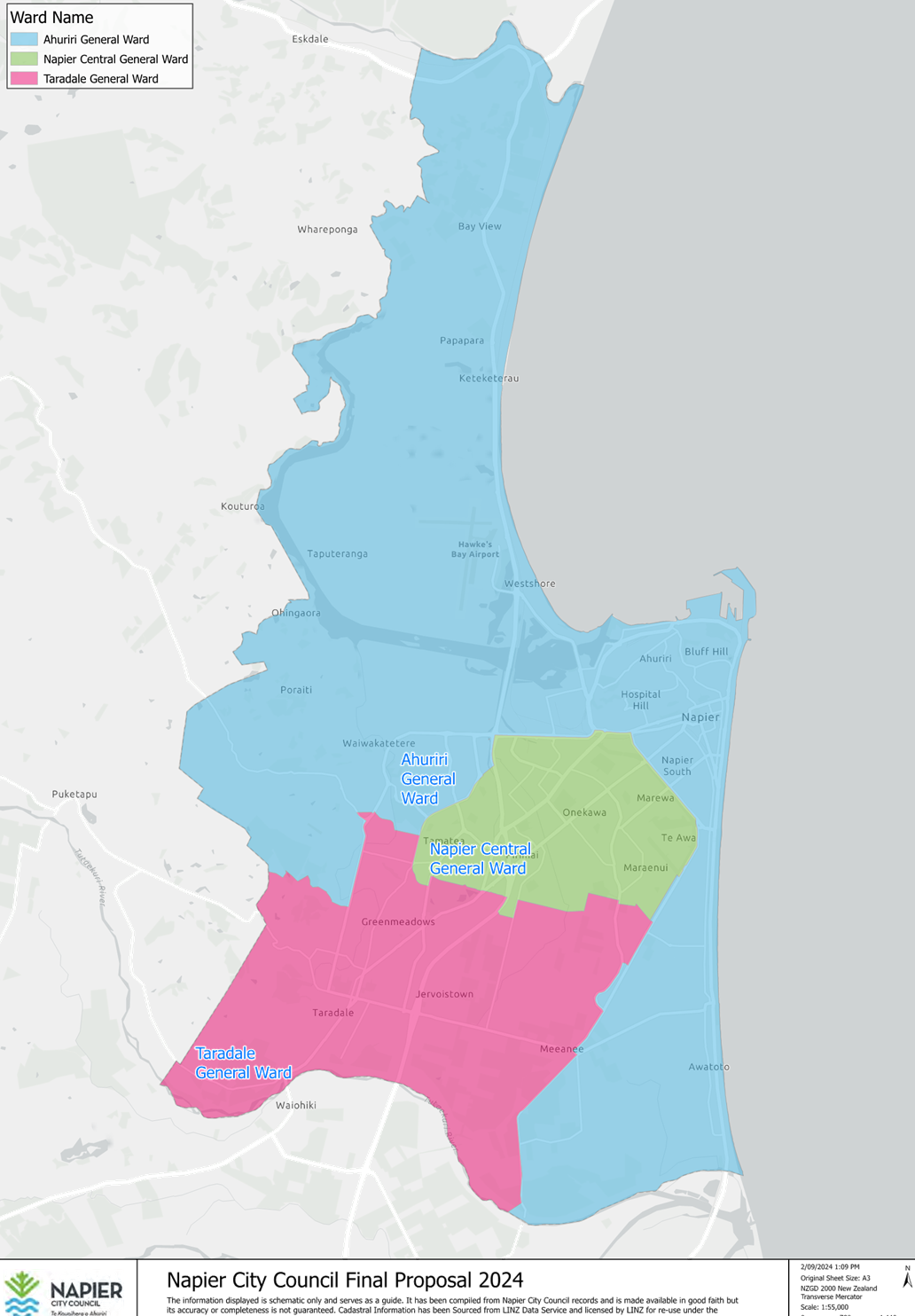
1. Ahuriri General Ward
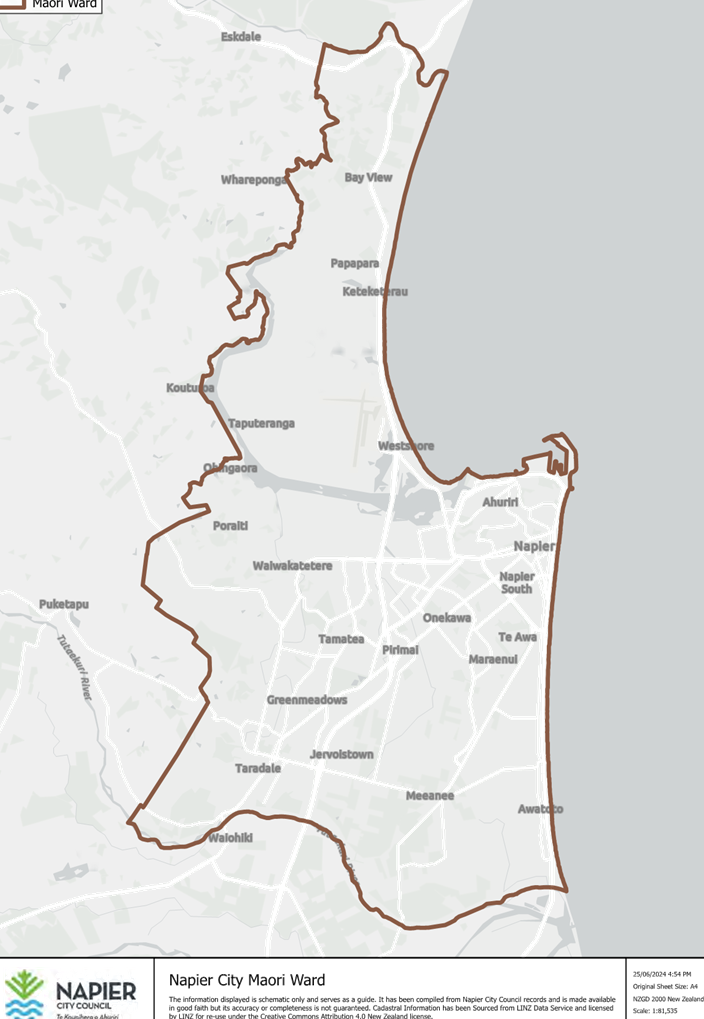
Comprising of Bayview, Westshore, Inlet Napier City, Ahuriri, Bluff Hill, Hospital Hill, Poraiti Flat, Poraiti Hills, Napier Central, Nelson Park, McLean Park, Awatoto, the eastern part of Meeanee, and the northern part of Onekawa West, and the houses and church on Tamatea Drive opposite Parklands Estate.
2. Napier Central General Ward
Comprising of Marewa West, Marewa East, Onekawa Central, Onekawa East, Onekawa South, Maraenui, Pirimai East, Pirimai West, Tamatea North, Tamatea West and Tamatea East, the southern part of Onekawa West, and the Bupa Willowbank Retirement Village.
3. Taradale General Ward
Comprising of Greenmeadows West, Greenmeadows Central, Greenmeadows South, Taradale West, Taradale Central, Taradale South, Tareha Reserve, Bledisloe Park, and the western part of Meeanee.
6. That there be no community boards within Napier City. Council is satisfied that the existing communities of interest are represented by the proposed ward structure and actively engaged elected members, and that there are alternative ways to maintain and strengthen local community representation and connections within Napier City Council structures.
7. That as required by section 19N of the Local Electoral Act 2001, public notice of the proposals contained in this resolution be given including the proposed reasons for any rejection of submissions as outlined in the report and below:
I. Containing objections outside of the scope of the representation review consultation.
II. The following table highlights the themes of submissions received in scope and rejected and the reasons.
|
Theme of submission rejected |
Whether Council agrees to make any changes to the initial proposal |
|
Retaining a full ward system
An at large system increases the number of candidates for voters to vote for Different focus of at large councillors versus ward councillors |
Council proceeds with ward-based representation as the most effective way of representing communities of interest in Napier at this time for reasons that: - There are geographically-based communities of interest in Napier. - Ward-based representation was identified as the most preferred in the pre-consultation rounds and retaining a full ward system was the most preferred by submitters on the consultation on the initial proposal. - Options in the second round of pre-consultation with at large councillors were the least favoured. - A city-wide community of interest of Māori has been identified, and this has been catered for with 1 city-wide Māori ward with 2 councillors as the preference of Māori. - Feedback from the community is for the same size or a smaller Council. Council must have a minimum of 9 general ward councillors to have 2 Māori ward councillors. Any at large councillors are additional and increase the overall size of Council. - All councillors take the same oath to act in the best interests of the city. |
|
Moving to a 3 general ward arrangement
Napier Central ward covers too many communities of interest Ahuriri ward includes communities of interest that do not fit Should have smaller wards |
Council proceeds with moving to a 3 general ward arrangement, with a slight boundary adjustment, for reasons that: - The three wards broadly cater for communities of interest. - Three wards enables the same number of councillors for each general ward. - The introduction of Māori ward councillors will provide representation to Māori across Napier, including areas with high percentage of Māori residents such as Maraenui. |
|
General ward names Napier Central general ward name confusing/unimaginative Ahuriri general ward name not appropriate |
Council proceeds with using the proposed general ward names for reasons that: - Regarding Napier Central general ward o this name provides a neutral name to designate the area of Napier that the ward covers. o most residents will be unfamiliar with the Statistical Area Unit called Napier Central, and thus will not be confused by it not being included in the Napier Central general ward. - Regarding Ahuriri general ward o this name is the Māori name for the whole of Napier, and also refers to the suburb of Ahuriri which is part of the ward. o Ahuriri ward is the name of one of the current wards. The ward is being expanded to include some other areas of Napier, and is the largest land mass compared with the other general wards. As such, it is the most fitting to be called Ahuriri. - Council will run a ward awareness campaign once the wards are set, so that residents can learn the new ward names. |
|
1 city-wide Māori ward with 2 councillors Support contingent on Māori views Te Whanga should be written out in full |
Council proceeds with establishing a city-wide Māori ward, named Te Whanga, with two councillors, for reasons that: - No submitters against the configuration of 1 city-wide Māori ward with two councillors. - Submitters expressed support for 1 city-wide Māori ward to cover Māori as a community of interest. - Māori support this configuration. - Te Whanga is considered an appropriate name by Māori stakeholders, and Council’s Pou Whakarae. |
|
Council size Avoid stalemates in decision-making Napier doesn’t warrant such a large Council |
Council proceeds with 11 councillors and 1 Mayor for reasons that: - there are existing mechanisms in Standing Orders to deal with a 50/50 split vote. - 11 councillors is not a significant departure from the current size of 12 councillors. To reduce the size of council further and achieve an even number of councillors between the general wards, would require a significant change to the initial proposal. - A council size of 11 is not dissimilar to other councils of a similar size. |
|
Not establishing a Community Board in Maraenui Should be community boards in other parts of Napier A community board in Maraenui will help residents voice to be heard |
Council proceeds with not establishing a community board in Maraenui or elsewhere in Napier at this time for reasons that: - There is limited support across the community for establishing a community board in Maraenui and elsewhere in Napier. - The introduction of 2 Māori ward councillors will help with providing representation of Māori in Maraenui. - There are other ways that Council can seek to improve representation outcomes in Maraenui. Officers recommend that a plan to improve representation in Maraenui is put together for council’s consideration. |
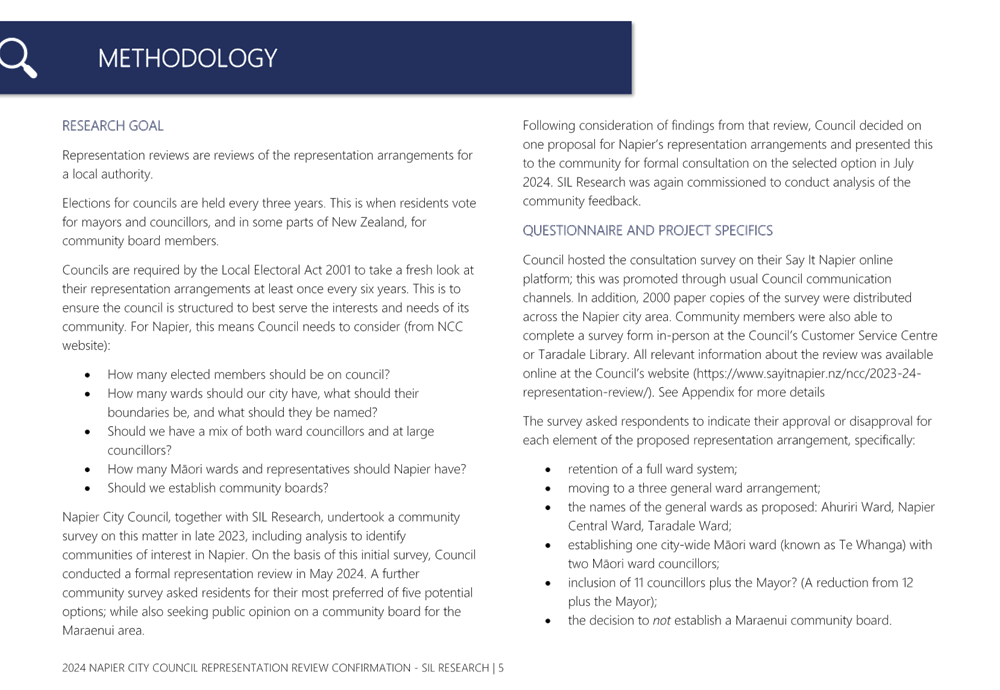
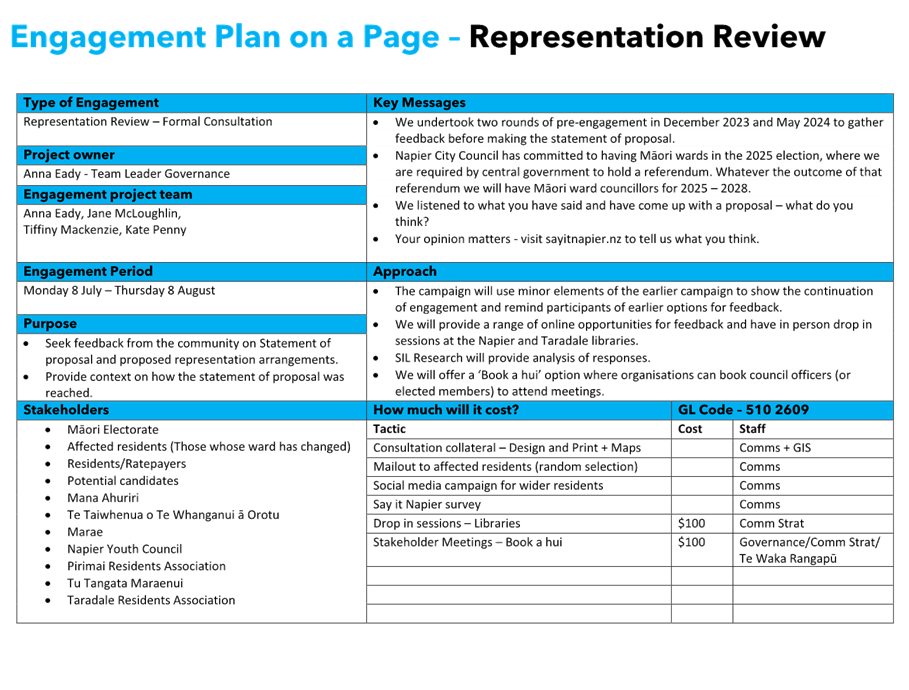
Following Council’s decision on the Initial Proposal for the 2024 Representation Review (see Attachment 4), made 27 June 2024, consultation was undertaken with the public from 8 July to 8 August 2024.
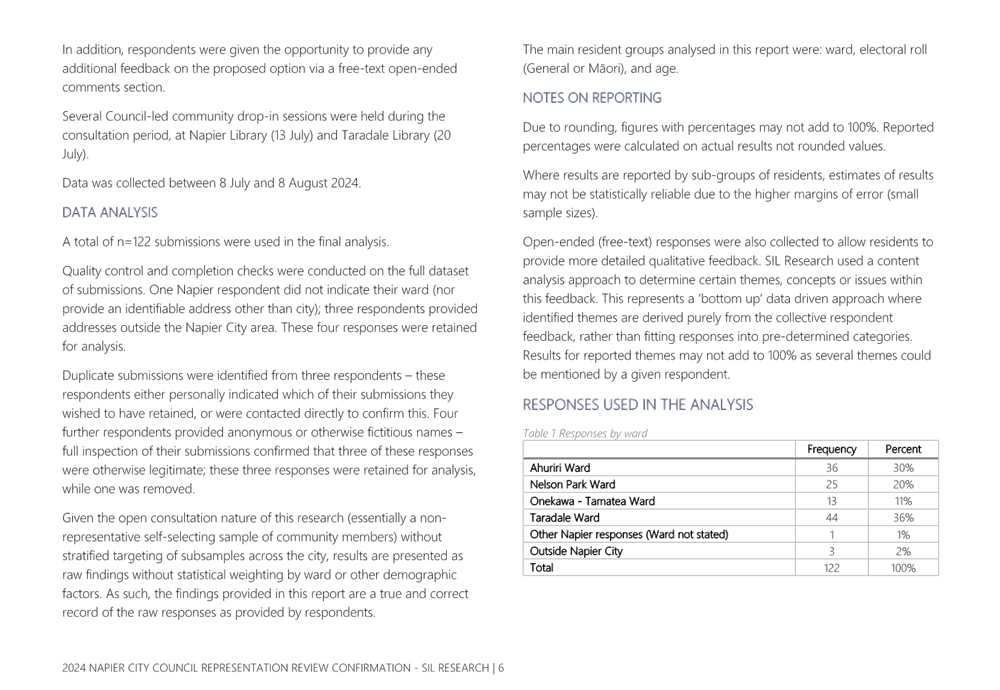
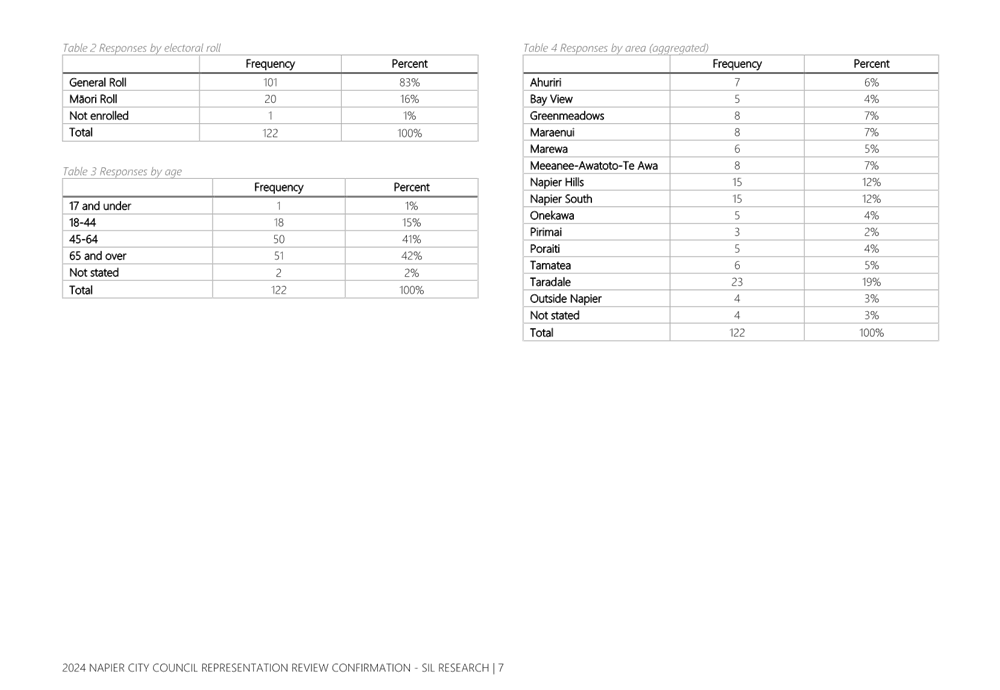
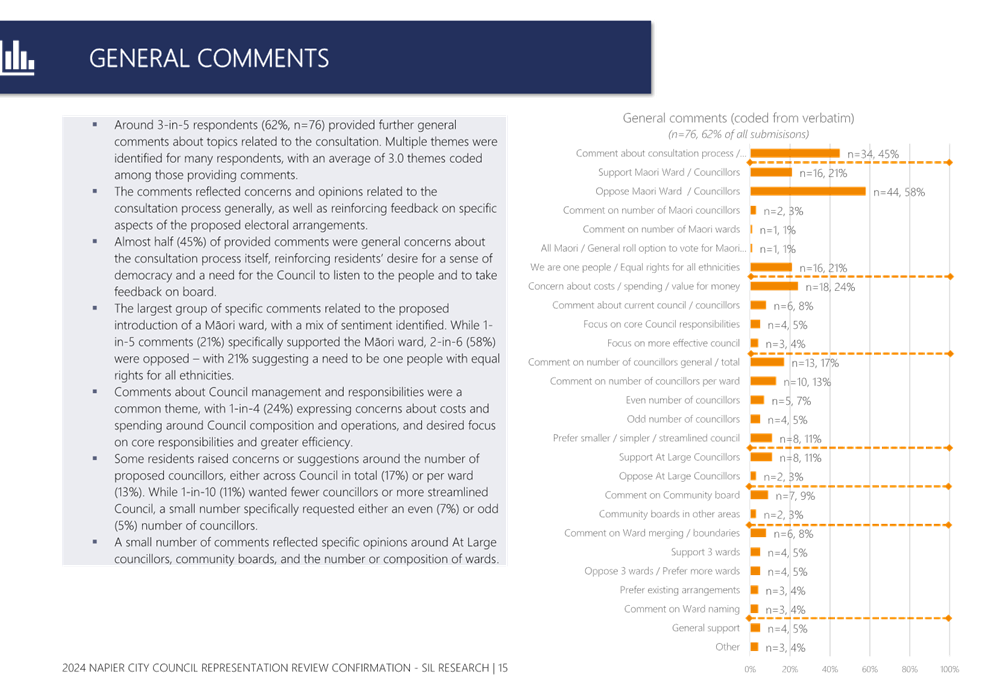
122 submissions have been analysed by SIL Research (see Attachment 2). Six residents indicated they would like to speak to their submission, with three confirming they would attend the Hearing. Around 3 in 5 respondents provided further general comments.
Of note, only four submissions were received for the 2012 Representation Review and thirty-seven for the 2019 Representation Review, so there has been a significant increase in the level of public feedback for this process. Moreover, Council undertook two rounds of pre-consultation with 1,140 residents providing input through surveys.
After considering the submissions, Officers recommended that Council continues with its initial proposal with a minor ward boundary adjustment. Reasons are set out in this report.
The Local Government Commission guidelines state that Council must issue a public notice of its final proposal, under section 19N(2) of the Local Electoral Act 2001, and is required to state the reasons for amendments and the reasons for any rejection of submissions. The reasons must be recorded in the Council resolution of its final proposal. Officers have themed submissions accordingly and provided a proposed response.
Council must consider the submissions and decide whether they wish to either continue with the initial proposal or amend it based on the content of the submissions.
Results in Brief
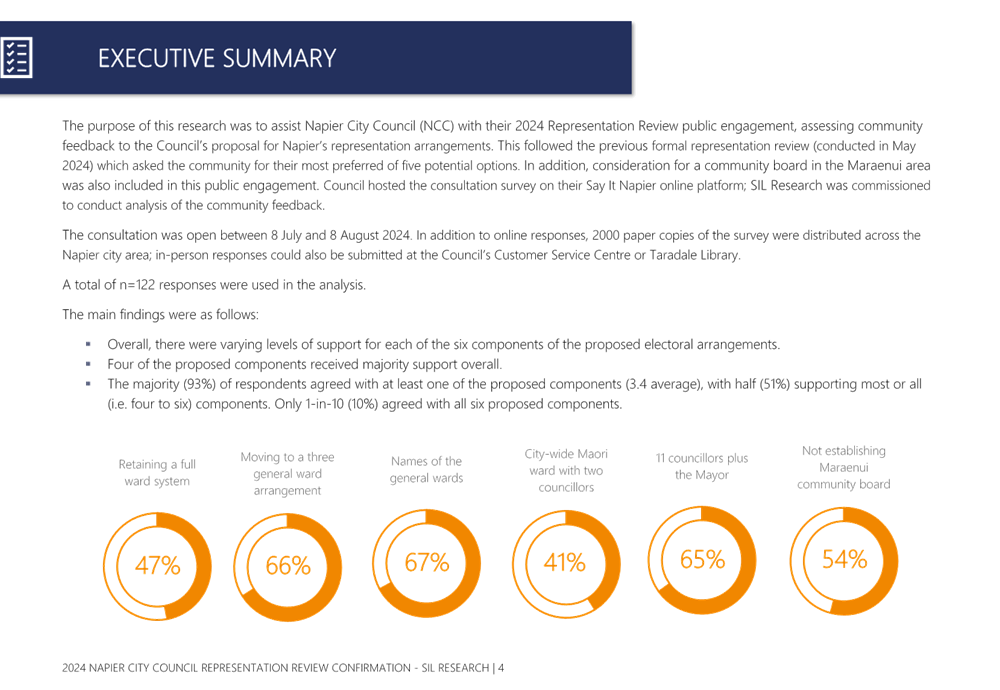
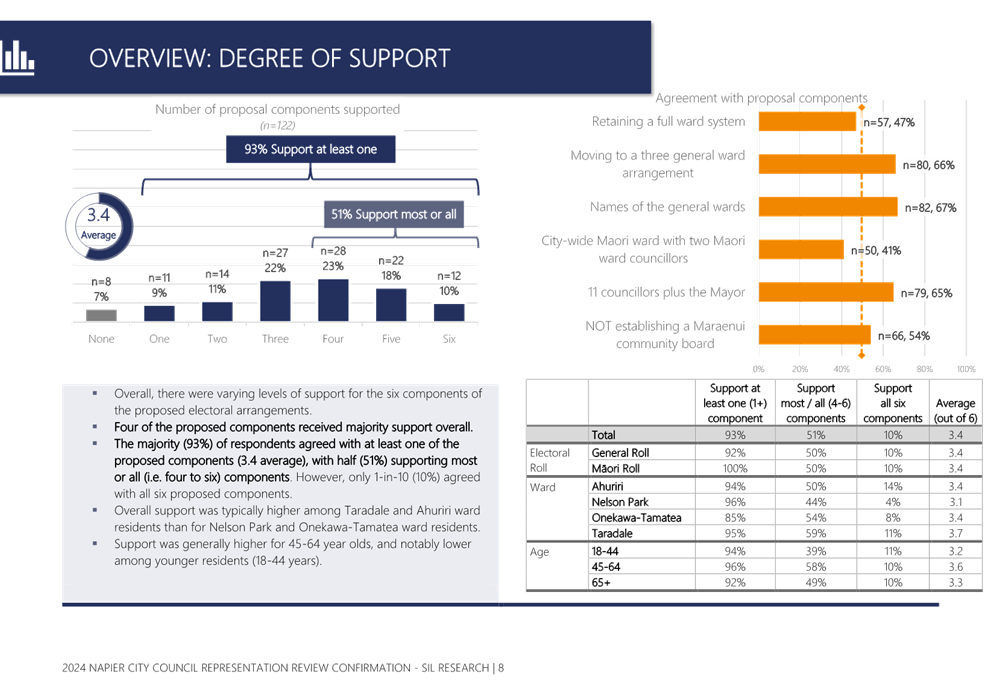
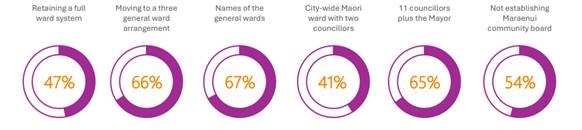
Submitters were invited to comment on whether they agreed with the separate elements included in the initial proposal, those being:
· Retaining a full ward system,
· Moving to a three general ward arrangement,
· The names of the general wards,
· A city-wide Māori ward with two councillors,
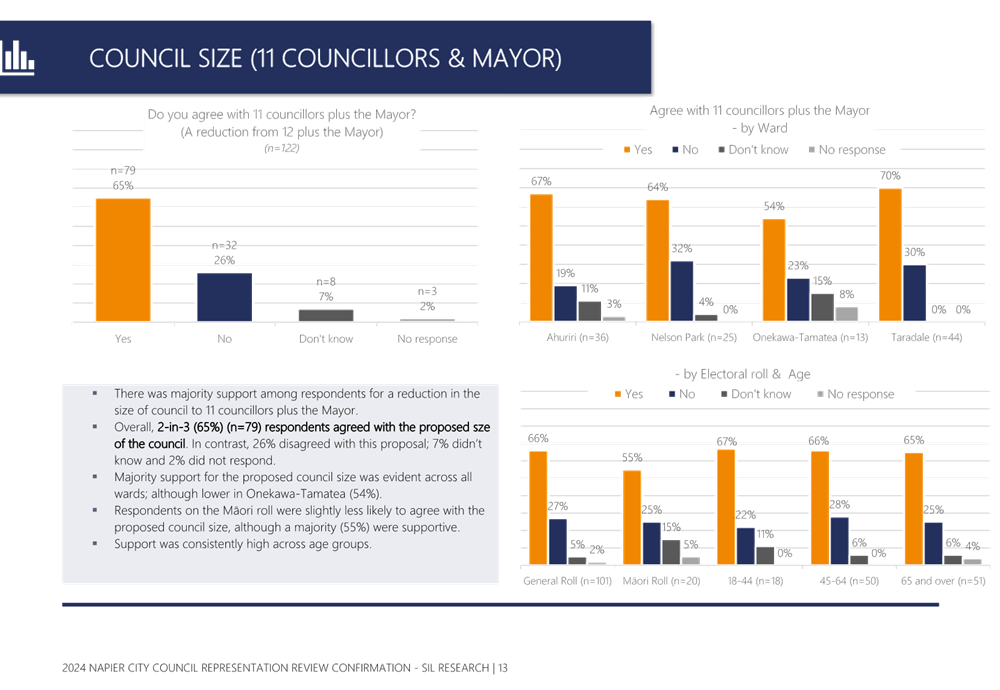
· 11 councillors plus a mayor, and
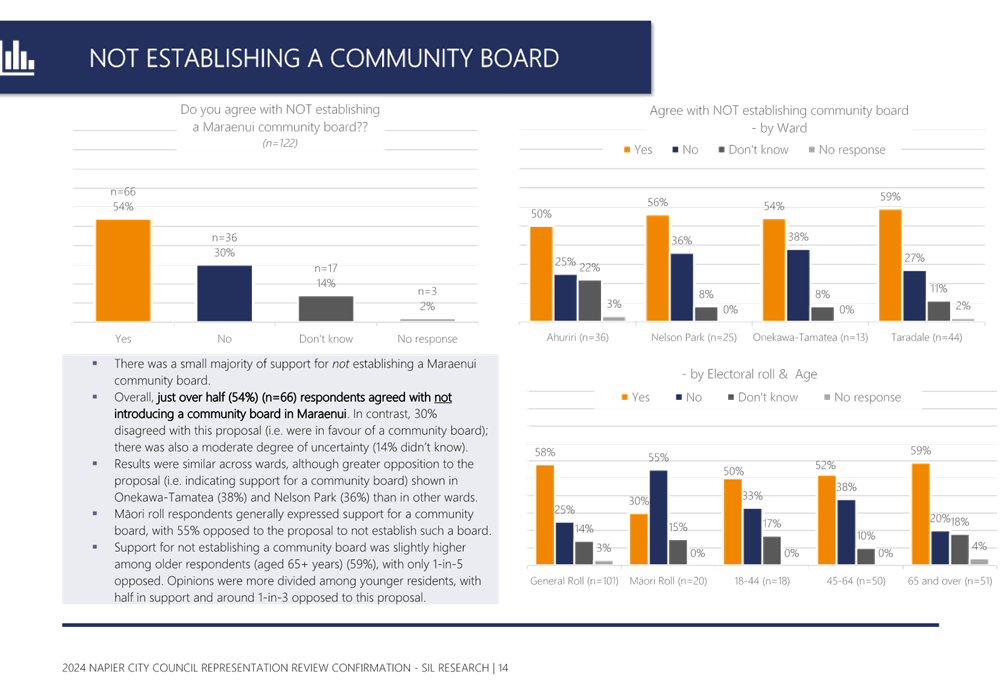
· Not establishing a Maraenui Community Board.
Four of the proposed components received majority support. For further detail see (Attachment 1).
Some issues raised in the submission are outside of the scope of the representation review and Electoral Act 2001. For example:
|
Points raised that are outside of rep review (fair and effective representation considerations) |
Officer’s comment |
|
- whether to establish a Māori ward or not; disagreement that all the options that Council consulted on during the pre-consultation phase included Māori wards; should stick with status quo (4 wards). Entry ID 19, 22, 23, 25, 27, 29, 33, 38, 41, 42, 50, 51, 54, 55, 56, 61, 68, 69, 70, 71, 73, 74, 77, 81, 85, 87, 98, 104, 106, 108, 111, 112, 114, 119, 123, 124, 126, 127, 128, 132, 134, 137, 140, 150, 152, 153, 154, 156, 158, 160, 162, 167, 168, 169, 173 |
The representation review was undertaken under the legislation at the time, in which Council had previously agreed to establish a Māori ward, so status quo is not an option, neither is not establishing a Māori ward. New legislation has since been enacted, and the Council will decide on 5 September whether to reaffirm or rescind its decision to establish Māori wards for the 2025 local government election. Officers provided Council with the submissions made for/against Māori wards to inform their decision on 5 September. |
|
- reducing the number of councillors in order to cut costs and bring down rates. Entry ID 30, 47, 51, 173 |
The Remuneration Authority, an independent body, set the amount for Napier, irrespective of number of councillors, and any proposed changes would need to be led by the Authority. In other determinations, the Local Government Commission has stated that in their view, a representation review is not the appropriate mechanism for addressing councillor remuneration (refer 2022 Northland Regional Council determination, para. 41). |
|
- reducing the number of councillors in order to pay councillors more to attract more candidates Entry ID 104 |
|
|
- reducing the overall number of council to include the Mayor Entry ID 26 |
Legislation sets out there must be a Mayor (Part 1A Section 19A of the Local Electoral Act 2001). |
|
- changing who can vote for Māori ward seats, by enabling everyone to vote, not just electors on the Māori roll. Entry ID 60 |
The eligibility for voting in Māori ward seats is determined by legislation (Local Electoral Act 2001) and is not within the Napier City Council's control to change. |
|
- change electoral system to get rid of the current council and make it easier for new candidates to be elected. Entry ID 19 |
Consideration of effective and fair representation does not include the impact of changing representation arrangements on the ease or difficulty for new candidates to be elected. Voters determine who gets elected. |
|
- perceived unfairness that Māori electoral population get better representation due to the number of councillors per Māori electoral population in comparison to the number of councillors for the general electoral population. - include 3 Māori ward councillors due to perceived unfairness that there are only 2 despite there being 3 in each general ward - suggested changes to increase general ward councillors due to number of Māori ward councillors. Entry ID 61, 99, 110, 114 |
There is a particular formula set in legislation (Schedule 1A Section 2) for calculating the number of Māori ward councillors and total number of councillors. The Local Electoral Act 2001 provides that the +/-10% rule (where required) is calculated separately for general wards and Māori wards.
|
|
- over representation of Māori in other representation structures such as Mayoral portfolio. Entry ID 126 |
Alternate representation arrangements are not part of the representation review. Under the Local Government Act 2002, Council must provide Māori with opportunities to be part of decision-making. |
|
- candidates in a ward can get substantially less votes than a losing candidate in another ward, but still be elected. Entry ID 132 |
This is correct. How many votes a candidate gets in comparison to another is not a consideration of fair and effective representation. Council will undertake a VOTE campaign to encourage voting prior to the next election. |
|
- size of Ahuriri ward is too big, wards should all be the same size. Have 4 wards and 4 councillors only, 1 for each.
Entry ID 51 |
Council must have a minimum of 5 elected members plus the Mayor (Part 1A Section 19A, Local Electoral Act 2001). The estimated population determines compliance with the +/-10% rule between wards, not the size of the land area. Council has already decided to establish Māori wards, and there would need to be a minimum of 5 general ward councillors to have 1 Māori ward councillor. |
|
- Council to focus on its priorities, streamlining, decreasing cost to ratepayers, focusing on core services, spend money wisely, reduce overheads, no more speed bumps, get rid of councillors. Entry ID 29, 30, 77, 79, 85, 126, 127, 150, 173 |
Any comments directly un-related to the representation review are not in scope.
|
Submissions that included points that can be considered are as follows.
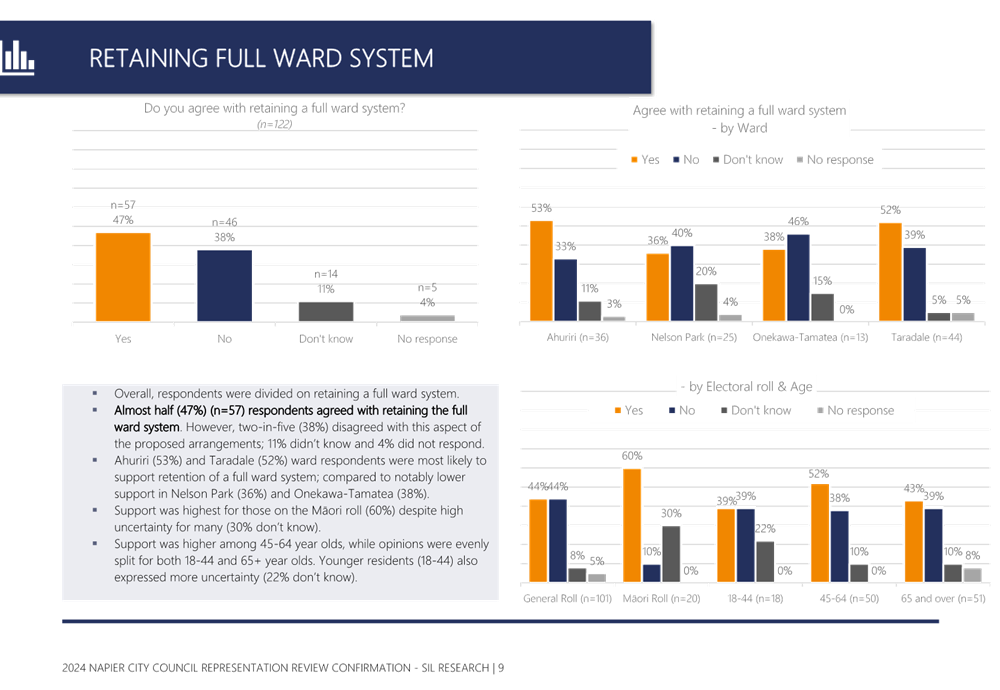
Retaining a full ward system
Results from submitters:
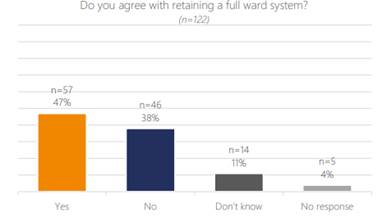
3 comments in support
9 comments against
1 comment neutral
Key themes:
- should introduce all at large councillors
- should introduce some at large councillors
- prefer ward representation
- should consider how to make any arrangements more effective
Reasons include:
An at large system increases the number of candidates that voters can vote for
- “I want to vote for the best candidates irrespective of which area they put their name down for”.
- “Allow more voting choices”.
- “Prefer at large so we can vote for the people of our choice that we think will do a good job for everyone”.
- “Encourage better voting turnout”.
- “For the size of the city, I would move away from wards and move to general city councillors, which would increase the pool of prospective candidates to stand for council, which is currently restricted by geographic borders. Inside the council the Mayor can still delegate wards to councillors if required”.
- The At Large option, as detailed in the 2023-2024 Representation Review, ensures that ALL candidates are vetted by ALL voters. My recommendation is for 12 Councillors to be voted for At Large.
- “Best option is at large councillors. At worst, 8 ward councillors and 4 at large councillors”.
Different focus of at large councillors versus ward councillors
- “Without an at large candidate, the bigger picture is forgotten and only ward issues will be discussed”.
Prefer ward representation
- “Very pleased to see no ‘at large’ councillors”.
- “Very much like the present ward system so that we have direct councilors acting for us”
- “Councillors without wards will be as much use as list MPs and will further erode our already fragile democracy. Why would we be asked to fund representatives who have no base in the population when the list MPs have proved time and again what a scandal this is”.
Should consider how to make any arrangements more effective
- “We do not need more consideration of “the number of wards, their boundaries, and whether to introduce ‘at large’ councillors”. These matters have been exhaustively discussed in recent years. What we do urgently need is ways of making the wards more effective. For example, we have properties in the Napier central city, and in Greenmeadows. When was the last ward meeting held in either area? So far as we are aware, there have been no ward meetings in the areas savaged by Cyclone Gabrielle to discuss their future needs and planning. Robin’s sister happens to be a past Mayor of Northampton in the United Kingdom, which has a ward system covering the whole town. In her own ward and all others there is a regular. advertised hour every month when any member of the ward can discuss with their ward councillor matters affecting their wards. That is one effective way of making the ward system meaningful to all residents. Where is our equivalent? Let’s focus not on re-inventing the wheel, but on making what we have relevant and effective.”
Officer’s comment/recommendation to Council
|
Submission number(s) |
Officer’s comment |
|
Introduce all at large councillors |
|
|
TeKira Lawrence (Entry ID 19), Les Nash (Entry ID 23), Antony Steiner (Entry ID 28), Mark Scofield (Entry ID 42), David Hannay (Entry ID 79), Bruce Macaulay (Entry ID 104), Anthony McLagan (Entry ID 132) |
Moving completely to an ‘at-large’ system of representation is not possible, as Council made the prior decision to introduce Māori wards, so there must be at least one general ward. One general ward and one Māori ward is possible, however, geographically based communities of interest have been identified in Napier. The differences between these communities of interest are illustrated through satisfaction ratings, socio-economic demographics, and perceptions of identity. In the pre-consultation, submitters mostly preferred ward-based representation (32%). |
|
Introduce some at large councillors |
|
|
Les Nash (Entry ID 23), David Hannay (Entry ID 79) |
In the analysis phase which informed the initial proposal, Officers presented several options for Council’s consideration which included at large councillors. The analysis also explored options with less general wards such as 1 general ward and 2 general wards. Although these are still wards, they are closer to ‘at large’ than an option with several general wards. An option with 2 general wards that merged current wards that shared similar socio-economic characteristics, was put to Council for consideration, and Council tested this with the community. In the second round of pre-consultation where Council tested 5 options with the community, the options that contained at large councillors were the least preferred. The option with 2 general wards and status quo were the 2nd most preferred. The option with 3 wards was the most preferred. With the introduction of Māori wards, to have 2 Māori ward councillors there needs to be a minimum of 9 general ward councillors. Any at large councillors are additional and increase the overall size of Council. If one Māori ward councillor was agreed to, then there could be fewer general ward councillors such as 9 or under. Any at large councillors would be additional. Options with 1 Māori ward councillor were put to Council for consideration and discounted due to the strong preference to have 2 Māori ward councillors. Throughout the pre-consultation, Māori, including Council’s Ngā Mānukanuka o te iwi, have showed a strong preference for two Māori ward councillors, not one. The community has also expressed preference for a similar Council size or less Councillors, with only 11% desiring a larger Council in the November 2023 pre-consultation. Of note, Māori have been identified as a city-wide community of interest. Māori are being represented by 1 city-wide Māori ward. |
|
Prefer ward representation |
|
|
Jay Lamburn (Entry ID 43) William Garrick Ravenwood (Entry ID 91) David Carter |
Submitters expressed support for ward system. |
|
Should consider how to make any arrangements more effective |
|
|
Robin and Margaret Gwynn (Entry ID 101) |
This point was also raised in the Officer’s report during the 2018 representation review. Irrespective of what wards there are, more thought should be put into how to improve representation outcomes for residents. A review of governance arrangements will be undertaken before the next election, and will help provide ideas for improvements. |
Officer’s recommendation on retaining a full ward system
Officers recommend Council agrees to continue with ward-based representation as the most effective way of representing communities of interest in Napier at this time for reasons that:
- There are geographically based communities of interest in Napier.
- Ward-based representation was identified as the most preferred in the pre-consultation rounds and retaining a full ward system was the most preferred by submitters on the consultation on the initial proposal.
- Options in the second round of pre-consultation with at large councillors were the least favoured.
- A city-wide community of interest of Māori has been identified, and this has been catered for with 1 city-wide Māori ward with 2 councillors as the preference of Māori.
- Feedback from the community is for the same size or a smaller Council. Council must have a minimum of 9 general ward councillors to have 2 Māori ward councillors. Any at large councillors are additional and increase the overall size of Council.
- All councillors take the same oath to act in the best interests of the city.
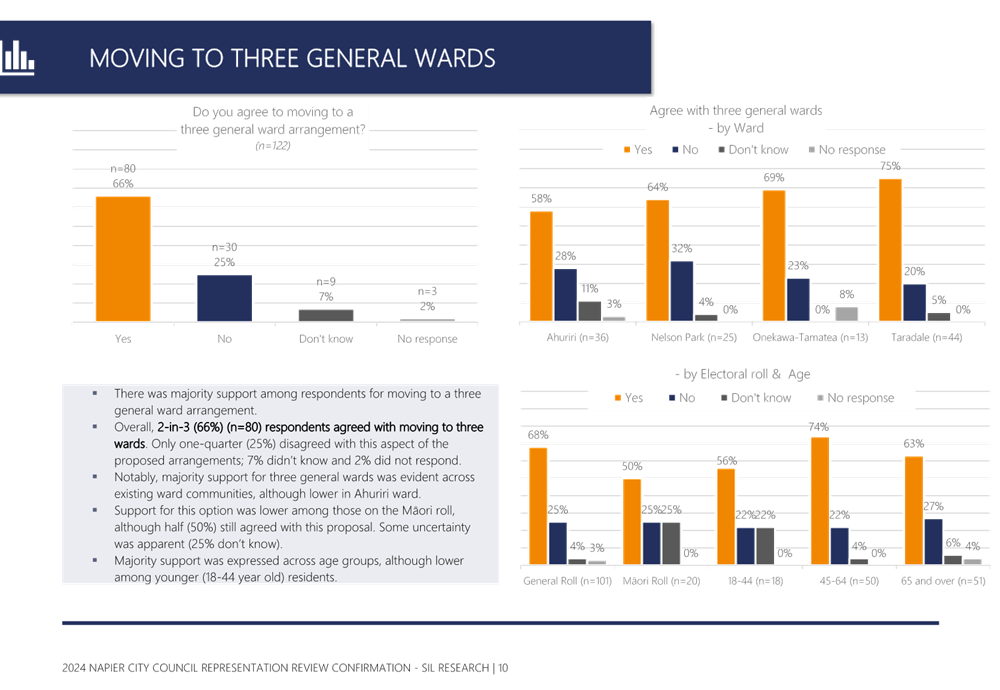
Moving to a 3 general ward arrangement
Results from the submitters:
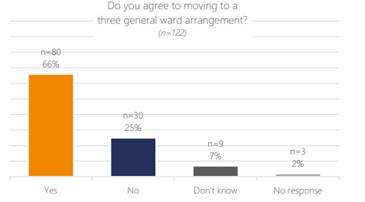
2 comments in support
5 comments against
Key themes:
- The ward boundaries don’t adequately cover communities of interest
- Like even split of councillors between 3 wards.
Reasons include:
Napier Central ward covers too many communities of interest
- “The Central ward is covering the most diverse communities of interest, perhaps too diverse?”
- “I don't agree with moving to a 3 ward system if it takes away the social economic voice for Maraenui. Maraenui is the most under developed suburb in Ahuriri/ Napier. In 2013, housing was removed which provided an opportunity for a community hub to be established. I was very proud to be apart of the mahi, on the ground engaging with whānau to keep them informed. It is 2024, we are still waiting. This is also the area with the least engagement from Māori and Pasifika. Changes need to be made but not from the top down approach. That is not how Māori stay connected to social issues especially within council”.
Ahuriri ward includes communities of interest that do not fit
- “It does seem a bit disjointed to have Meeanee Awatoto in the Ahuriri Ward”.
Specific boundary change requested – Move 5 houses and church along Tamatea Drive into same ward as Parklands Estate
- “I would like to see a slight boundary change, with the whole of Parklands being merged into the Tamatea/Onekawa ward. Or else, the five houses and the church along Tamatea Drive should be merged into the Taradale ward where Parklands currently sits.”
Having same number of councillors across general wards is great
- “I am pleased to see that it is proposed that the number of councillors in each general ward will equalise at three apiece. I have always believed that having two councillors in my ward, compared to four in two other wards, is undemocratic. We have the situation where one household gets to vote for only two councillors, but across the road another household gets to vote for four councillors because they are across an arbitrary boundary and in another ward. In my ward the two councillors out of twelve represents only 17% of the councillors, while others are represented by 33% of the councillors. Under the proposed new system, all of us in general wards would have three out of eleven councillors, or 27%. That is at least an improvement.”
- “my support of the creation of three General wards with an equal number of councillors per ward. The ward system we have operated under this last decade has always favoured one section of the city over the rest by giving that section a larger representative vote, whereas the new ward boundaries seem more natural and reasonable”.
Should have smaller wards
- “I also know you have removed the only ward that Māori have ever been elected in, and you are guaranteeing that Māori will never be elected again - further marginalized in an open system. The worry is that a group will over submit to remove Māori wards and Council will still go with the three-ward system. Today we are lucky to have so many more cultures moving here, I wonder if it’s time for the ward system to be based on suburbs where one or two candidates stand, hopefully resulting in more cultural diversity. The council will again go back to looking like a homogenized collective of well off old white people. Equality, Diversity is what they quote, but the new system they are proposing is far from that. One has to ask if this is just a ploy to start division, to have us argue over changing cultural equality and community diversity, when there are so many issues facing us that aren’t even being talked about.”
|
Submissions(s) |
Officer’s comment |
|||||||||||||||||||||||||||||||||||||||||||
|
Napier Central ward covers too many communities of interest |
||||||||||||||||||||||||||||||||||||||||||||
|
Ruth Smithies (Entry ID 39) Taiatini Lepaio (Entry ID 137) |
The Napier Central ward does cover one of the most distinct communities of interest in Napier, that is, Maraenui. However, there are Statistical Area Units (SA2’s) within the ward that contain similar socio-economic demographics to Maraenui, Onekawa South, and Marewa East. Maraenui is also made up of a large portion of the Māori electoral population e.g. 43%. The addition of two Māori ward councillors will provide specific representation for those residents. |
|||||||||||||||||||||||||||||||||||||||||||
|
Ahuriri ward includes communities of interest that do not fit |
||||||||||||||||||||||||||||||||||||||||||||
|
Mark Scofield (Entry ID 42) |
Meeannee/Awatoto is identified as having similar characteristics to Bay View, such as land use semi-rural residential, good road connections into Napier, and similar socio-economic demographics to rest of Ahuriri ward. The ongoing residential developments in Te Awa are also included. Council considered the part of Jervoistown and Meeanee up to Willowbank Road functionally had closer ties to Taradale, which is why Meeanee is split between the Taradale general ward and the Ahuriri general ward. |
|||||||||||||||||||||||||||||||||||||||||||
|
Specific boundary change requested – Move 5 houses and church along Tamatea Drive into same ward as Parklands Estate |
||||||||||||||||||||||||||||||||||||||||||||
|
Anneke Knegtmans (Entry ID 69) |
This submitter has requested Council consider options for a boundary change – either placing the whole of Parklands estate into the Tamatea/Onekawa ward or moving the 5 houses and church along Tamatea Drive into the Taradale ward where Parklands currently sits. Council is not proposing to retain the current wards, and therefore it cannot make the changes as requested. However, the intent of the request is that the 5 houses and church along Tamatea Drive are placed in the same ward as Parklands. Parklands is within the Ahuriri general ward. Officers sought direction from Council at a workshop on X date, on whether to proceed to explore with Statistics New Zealand whether this could be done. These five houses are new builds, similar to houses in Parklands, and sit out on their own, however directly across the road from Parklands estate. These residents share similar socio-economic statistics with residents in Parklands. Statistics New Zealand have confirmed that a boundary change is possible. Due to the current overlay of meshblocks, it is proposed to have pre-approval from LINZ for a meshblock split and 3 meshblock nudges as shown in the following diagrams (nudges include the boundary between MBs 1450600 and 4016157 to align to the road).
Image showing before and after:
Statistics New Zealand have also supplied an updated population estimate of the ward boundaries as follows:
|
|||||||||||||||||||||||||||||||||||||||||||
|
Having same number of councillors across general wards is great |
||||||||||||||||||||||||||||||||||||||||||||
|
Chris Denby (Entry ID 136) Robert Hepi (Entry ID 129) |
Submitter’s comments are in support of this aspect of the initial proposal. |
|||||||||||||||||||||||||||||||||||||||||||
|
Should have smaller wards |
||||||||||||||||||||||||||||||||||||||||||||
|
David Hannay (Entry ID 79)
|
Council has already agreed to establish Māori wards, and will reaffirm or rescind that decision on 5 September. There have been 3 Māori councillors in Napier’s recent electoral history that officers are aware of. Two of which were elected in the Nelson Park ward, and one in the Taradale ward. Having a ward system based on suburbs would mean there would likely be only 1 or 2 seats in each ward. In Napier’s electoral history, where there have been smaller wards with 2 seats, there were examples where seats were uncontested. This was one of the reasons in the 2018 representation review that Council decided to move away from a mixed system, and move to a ward system with more councillors in each ward. |
|||||||||||||||||||||||||||||||||||||||||||
Officer’s recommendation on moving to a 3 general ward arrangement
Council continues to proceed with moving to a 3 general ward arrangement, with a slight boundary adjustment, for reasons that:
- The three wards broadly cater for communities of interest.
- The introduction of Māori ward councillors will provide representation to Māori across Napier, including areas with high percentage of Māori residents such as Maraenui.
- Three wards enables the same number of councillors for each general ward.
- The slight boundary adjustment includes altering the proposed Ahuriri General Ward boundary to include 5 houses and church along Tamatea Drive as outlined in the map above. This adjustment is made due to a submitters request. The five houses are new builds, similar to houses in Parklands, and sit out on their own, however directly across the road from Parklands estate. These residents share similar socio-economic statistics with residents in Parklands.
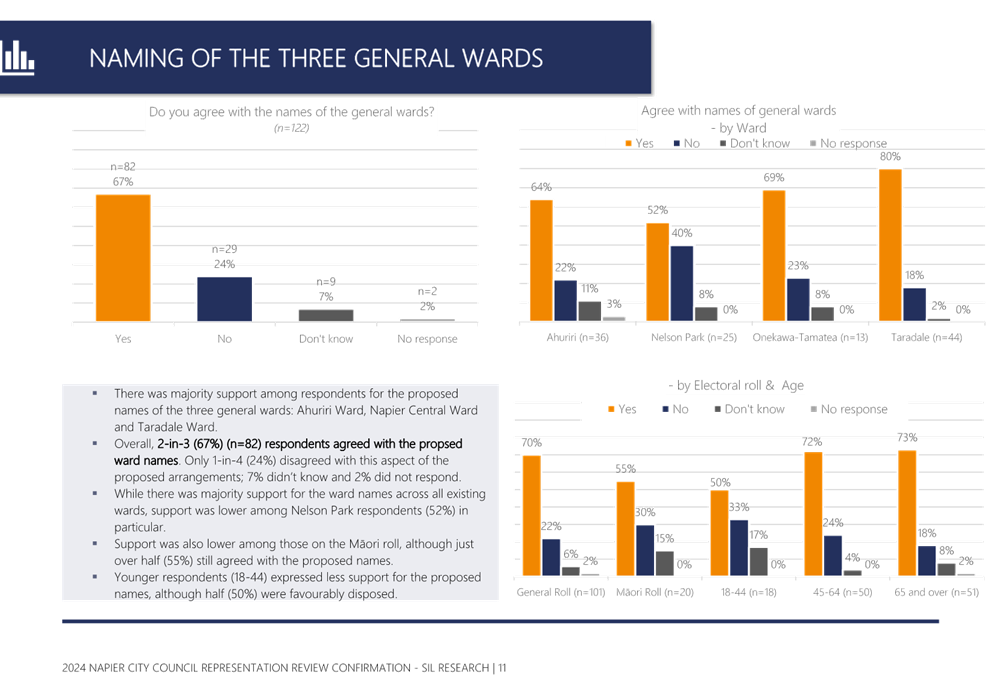
Names of the general wards
Results from submitters:
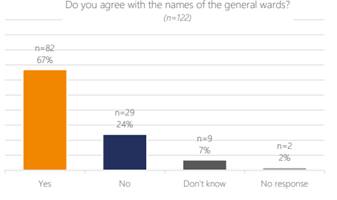
0 comments in support
3 comments against
Key themes:
- Change Napier Central general ward name
- Change Ahuriri general ward name
Reasons include:
Napier Central general ward name confusing/unimaginative
- “The name Napier Central isn't very imaginative, some thought into the name would be preferred.”
- “Since Napier Central is not in the Napier Central Ward, I suggest a new name should be found to avoid confusion.”
Ahuriri ward general ward name not appropriate
- “Napier Youth Council believes that the name of the 'Ahuriri' ward is not appropriate to the land that it makes up. When people hear 'Ahuriri' they think of the region of Napier West from the Port. Since the proposed ward has much more than this area, we believe the name should be reconsidered. We do not propose any alternative name”.
|
Submissions(s) |
Officer’s comment |
|
|
Napier Central general ward name confusing/unimaginative |
||
|
Tu Tangata Maraenui Trust, Victoria Truman (Entry ID 145) Stephen Jacobi (Entry ID 62)
|
At the Council meeting to discuss the initial proposal, Council were presented with the following names for consideration for the ‘Napier central’ general ward. Napier Central, Onekawa, Te Whenua Napier Central is a statistical area unit (SA2) which has an estimated 530 total electoral population. This SA2 is within the Ahuriri general ward. It covers the CBD. It is debatable whether any residents refer to the CBD of Napier as Napier central. Other terms for the area are, ‘going into town’, ‘going into the city’.
The SA2’s of the Napier Central general ward include: Marewa East/West, Onekawa Central/East/South/West (up to Prebenson Drive), Maraenui, Pirimai East/West, Tamatea North/East/West, and Bupa Willowbank Retirement Village. Napier Central refers to the geography of the ward, being in the centre of the other wards. Council could consider naming it any of the SA2s or suburbs, however this could add confusion for residents who do not reside in a particular suburb. For example, if the ward was called Maraenui, then residents in Tamatea may be confused why their ward is called that. Onekawa was previously suggested as it is central to the ward. |
|
|
Ahuriri ward general ward name not appropriate |
||
|
Napier Youth Council (Entry ID 169) |
Ahuriri is the Māori name for the whole of Napier. It also refers to the suburb of Ahuriri. Ahuriri ward is the name of one of the current wards. The ward is being expanded to include some other areas of Napier and is the largest land mass compared with the other general wards. As such, it is the most fitting to be called Ahuriri. Council considered ward names during the initial proposal. Some other suggestions for Ahuriri ward were Napier Coastal, Pacific, Mataruahau, Napier North, Te Tai. In the minutes of the Council meeting where Council considered the initial proposal, it highlights that although Te Reo names were attractive, it would add more confusion to the public with changes in ward size and representation to have a ward name change. |
|
Officer’s recommendation on general ward names
Officers recommend Council continues with using the proposed general ward names for reasons that:
- Regarding Napier Central general ward
o this name provides a neutral name to designate the area of Napier the ward covers.
o most residents will be unfamiliar with the Statistical Area Unit called Napier Central, and thus will not be confused by it not being included in the Napier General ward.
- Regarding Ahuriri general ward
o this name is the Māori name for the whole of Napier, and also refers to the suburb of Ahuriri which is part of the ward.
o Ahuriri ward is the name of the current wards. The ward is being expanded to include some other areas of Napier and is the largest land mass compared with the other general wards. As such, it is the most fitting to be called Ahuriri.
- Council will run a ward awareness campaign once the wards are set, so that residents can learn the new ward names.
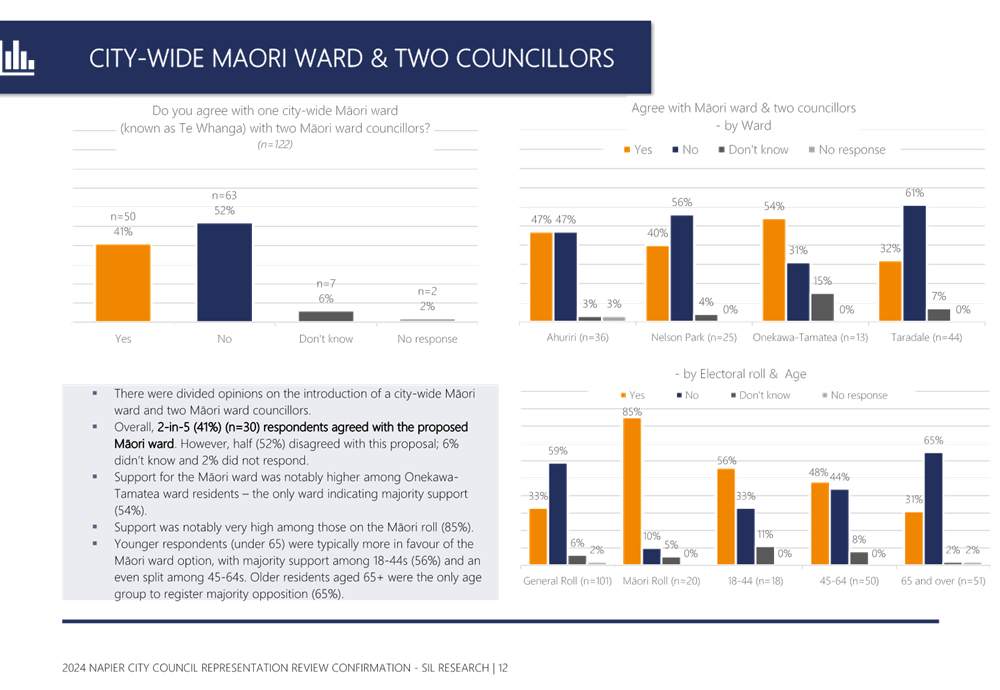
City-wide Māori ward with two councillors
Results from the submitters:
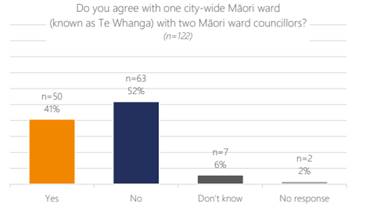
7 comments in support
1 comment against*
As outlined earlier, comments about the configuration/name are in scope, however comments whether to establish them or not, are not in scope, as that decision will has already been made and will either be reaffirmed or rescinded on 5 September.
Key themes:
- In favour of proposed configuration
- Modify Te Whanga Māori ward name
Reasons include:
A city-wide Māori ward covers Māori as a community of interest
- “I am fully in favour of at least 2 Māori councillors in a single Maori ward although I would be happier with 3.”
- “Good to see one city-wide Maori ward with 2 councillors as that ward is clearly a community of interest.”
- “I absolutely support the provision of a single Māori ward for our city having two councillors to represent the constituency of all Māori, both Mana Whenua and Rāwaho (Māori from other areas outside of Te Whanganui-a-Orotu.) I feel that it is the right time that the approximately 17,000 Māori in Napier (who represent 26% of the city's population) are guaranteed both a voice and a platform at the council table, free from the vagaries of local election turnouts and ward boundaries, with an absolute charge to represent Māori interests - no matter where we live in this beautiful city of ours, and irrespective of whether we affiliate to local hapū or not. Māori have much to contribute to the future of our community, and a Napier wide Māori ward gives us that opportunity.”
General support
- “Very pleased to see a Māori ward with 2 councillors”.
- “I agree to having 2 councillors working alongside each other to tautoko the voice of Māori who are under represented within communities. I agree to supporting in any way I can to push this kaupapa over the line. Our people are disengaged, they need adequate support from a cultural perspective, from people that have experienced similar injustices as they have.”
Support contingent on Māori views
- “Your paper does not provide any information on the views of Māori on the proposed one ward. I believe the views of our Treaty partner should be paramount here. I strongly support the concept of Māori wards.”
Te Whanga should be written out in full
- “Napier Youth Council opposes the name of the Māori Ward – Te Whanga. The name of this ward should not be shortened from the original name, Te Whanganui ā Orotu. Māori naming protocols state that there is no situation in which it is appropriate to shorten the name of a place (even if the intention is good or it is to stop the name from being mispronounced). We believe that Māori culture should not be whitewashed, simplified, or minimised to make it marketable. Instead of whitewashing the name, we need to be vigilant, help and correct those who mispronounce it, and be proud of Napier’s vibrant Tikanga, history, and culture.”
Other
- “Does the Tiriti o Waitangi have priority in any decision you make? If Tiriti o Waitangi is a guiding document, how would article 2 play out since it reference Maori having ownership of Maori taonga? In regards to Maori Ward councilors?”
|
Submissions(s) |
Officer’s comment |
|
A city-wide Māori ward covers Māori as a community of interest |
|
|
Jay Lamburn (Entry ID 43) Ruth Smithies (Entry ID 39) Robert Hepi (Entry ID 129) |
Comments from submitters agree with this aspect of initial proposal.
|
|
General support |
|
|
Christine Briasco (Entry ID 50) Taiatini Lepaio (Entry ID 137) |
Comments from submitter agree with this aspect of initial proposal. |
|
Support contingent on Māori views |
|
|
Stephen Jacobi (Entry ID 62) |
Comments from submitter agree with this aspect of initial proposal, subject to Māori supporting it. As outlined in the Council report on the initial proposal, Ngā Mānukanuka o te iwi support 1 city-wide Māori ward. In the consultation on the initial proposal, support from submitters was notably very high among those on the Māori roll (85%).
|
|
Te Whanga should be written out in full |
|
|
Napier Youth Council (Entry ID 169) |
Council has considered the advice of the Pou Whakarae and Māori stakeholders in selecting this name, rather than the full version of Te Whanaganui ā Orotu, which is the name of an ancestor and would be disrespectful to mispronounce. The name Te Whanga translated is The Harbour, which is appropriate considering Napier City’s coastline. Ngā Mānukanuka o te iwi komiti requested to get endorsement from the Kahui Kaumatua for the name. However, since that direction the Kahui Kaumatua have not met. Te Taiwhenua o Te Whanganui ā Orotu have endorsed the name Te Whanga, along with Ngā Mānukanuka o te iwi. |
|
Other |
|
|
James Matenga (Entry ID 24) |
Māori ward councillors are treated the same as any other councillors under the Local Electoral Act 2001. All councilors must take an oath to act in the best interest of the entire city. Councillors will bring their own viewpoints and represent and advocate for their constituents at the council table. Councils have an obligation to uphold equality in local government representation arrangements and to honour the articles and the principles of Te Tiriti o Waitangi / The Treaty of Waitangi. The fundamental purpose of the Local Government Act 2002 is to enable good local governance decision making on behalf of communities, and by communities. This upholds the principles of Te Tiriti. Section 81 of the LGA requires councils to: (a) establish and maintain processes to provide opportunities for Māori to contribute to the decision-making processes of the local authority; and (b) consider ways in which it may foster the development of Māori capacity to contribute to the decision-making processes of the local authority. |
Officer’s recommendation on a city-wide Māori ward with two councillors
- No submitters against the configuration of 1 city-wide Māori ward with two councillors.
- Submitters expressed support for 1 city-wide Māori ward to cover Māori as a community of interest.
- Te Whanga is considered an appropriate name by Māori stakeholders, and Council’s Pou Whakarae.
Council size – 11 councillors plus a Mayor
Results from submitters:
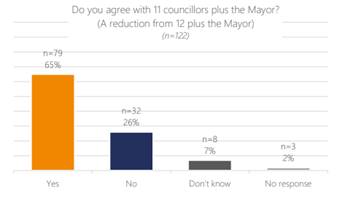
1 comment in support
3 comments against
Key themes:
- should have a particular number of councillors to avoid a stalemate
- should be less councillors
Reasons include:
Avoid stalemates in decision-making
- “There should be an odd number of councillors to avoid stalemates”.
- “I absolutely support the reduction in councillors by 1. A council of 11 and 1 mayor means that the chances of a tied vote is reduced”.
Napier’s size doesn’t warrant such a large Council
- “I understand we are one the smallest geographic cities in NZ, so it would appear to me that we still appear to have a large number of councillors (the recent Tauranga election have a Mayor and 9 councillors) for the size of the city? I would put forward that if there was a move to have less councillors that would increase the remuneration of the current and future councillors (making public service a more attractive option to a wider range of professions?), but more importantly allow better communication and decision making”.
- “We don’t need three councillores per ward either”.
|
Submission number(s) |
Officer’s comment |
|
|
Avoid stalemates in decision-making |
||
|
Antony Steiner (Entry ID 28)
Robert Hepi (Entry ID 129) |
The Local Government Act, Schedule 7, Section 24, and Council’s standing orders section 19.3, states that the Chair has a casting vote. The Mayor, Chair, or any other person presiding at a meeting, has a deliberative vote and, in the case of an equality of votes, has a casting vote. Standing orders are rules that the Council puts in place to govern the conduct of meetings. If a new Council came in, standing orders could be changed. Also, a quorum allows for decisions to be made without every elected member there. So irrespective of Council size, there can be decisions made as long as quorum rules are following e.g. for a meeting of council, the rule is half of the members physically present where the number of members is even, and a majority of the members physically present, where the numbers of members is odd. |
|
|
Napier doesn’t warrant such a large Council |
||
|
Bruce Macaulay (Entry ID 104)
Suzanne Roberts (Entry ID 153)
|
As highlighted in the analysis, there are variety of council sizes across New Zealand. Napier could reduce or expand from 9-14 and still be in a comparative range to some other councils. In the pre-consultation, the majority of respondents preferred council size to be the same (52%) or less (24%). Council size is one consideration, however, also needs to be considered in the context of the wards and what is feasible within the +/-10% rule, and how it affects the number of Māori ward councillors. For example, in the May pre-consultation, one of the reasons given for liking the 3 general ward option presented was that it provided with the same number of councillors across the general wards. To achieve a further reduction from 11 for the option presented in the initial proposal, the number of councillors would need to reduce to 2 in each general ward, and that would mean there would only be 1 Māori ward councillor, with a total of 7. This would also give an option of having some at large councillors. However, because there has been very strong support for having 2 Māori ward councillors, options that resulted in only 1 Māori ward councillor were discounted. |
|
Officer’s recommendation on Council size
Officers recommend that Council proceeds with 11 councillors and 1 Mayor for reasons that:
- there are existing mechanisms in Standing Orders to deal with a 50/50 split vote.
- 11 councillors is not a significant departure from the current size of 12 councillors. To reduce the size of council further and achieve an even number of councillors between the general wards, would require a significant change to the initial proposal.
- A council size of 11 is not dissimilar to other councils of a similar size.
Not establishing a community board in Maraenui
Results from the submitters:
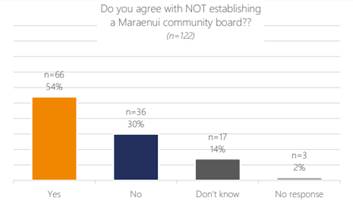
2 comments in support
4 comments against
Key themes:
- Don’t need a community board in Maraenui
- Should have a community board in Maraenui
- Should have a community board elsewhere in Napier too
Reasons include:
Maraenui will be better represented by having 2 Māori ward councillors
- “I support the decision not to establish community boards in our city. We live in a city which is not that large in area. As a community with a predominantly Māori population, I feel that Maraenui and surrounds will be better served by having two Māori councillors who sit at the decision making table, rather than a community board with no real power. Beyond this, I feel that the ratepayers of Napier can ill afford the expense.”
Should be community boards in other parts of Napier
- “If community ward is establishing then not only in Maraenui it should be in Taradale as well.”
- “With the Council proposal set to merge the wards, I strongly suggest the establishment of Community Boards across Napier (not just for Mareanui) to ensure greater public engagement citywide.”
A community board in Maraenui will help residents voices to be heard
- “We feel Maraenui should have a community board to allow adequate community representation.”
- “A Maraenui Community Board may be a good way to make sure that the voice of that community is well represented and heard.”
Too expensive
- “I don't agree with [any maori wards], and no community board. Our rates are high enough, and we're not receiving value for money. The council needs to stick to its core business instead of their woke ideas at the rate payers expense and like any business look and reducing over heads instead of the easy option of just increasing rates. Bring on the next election”.
|
Submission(s) |
Officer’s comment |
|
Maraenui will be better represented by having 2 Māori ward councillors |
|
|
Robert Hepi (Entry ID 129) |
Council’s proposal does include a Māori ward with two Māori ward councillors. Māori ward councillors will have decision-making powers, that a community board could not (although some decisions can be delegated to a community board if council chooses). |
|
Should be community boards in other parts of Napier |
|
|
Pakistan Association Hawkes Bay, Syeda Narjis Khurram (Entry ID 53) Anneke Knegtmans (Entry ID 69) |
Only 33% of all submitters in the pre-consultation supported establishing a community board(s) in Napier. In Taradale, only 33% expressed support, whereas in Maraenui and surrounds over 50% of residents expressed support in the pre-consultation. There is very low support in some parts of Napier for a community board. For example, only 8% of respondents from Bay View support having a community board. Maraenui was identified as a distinct community of interest that may warrant representation from a community board. Other communities of interest are either not interested in establishing a community board or have their own representation through active resident associations/neighbourhood groups. Such as Taradale has an active residents association. |
|
A community board in Maraenui will help residents voices to be heard |
|
|
Tu Tangata Maraenui Trust, Victoria Truman (Entry ID 145)
Ruth Smithies (Entry ID 39)
|
Only 30% of submitters disagreed with not establishing a community board in Maraenui (i.e. they were in favour of a community board in Maraenui). Whereas, over half of the submitters (54%) agreed with not introducing a board there. 14% did not know. In the November 2023 pre-consultation survey there was positive feedback from communities based in and near Maraenui for establishing a community board, however only 33% of all submitters supported a community board in Napier. Feedback from the May pre-consultation survey on a community board in the Maraenui area did not reach a consensus. The results were split 45% against and 41% in favour, and 14% unsure or neutral. However, there was positive feedback from communities based in Maraenui (64% support). Ngā Mānukanuka o te Iwi Komiti have two representatives from the Maraenui area. Ngā Mānukanuka o te Iwi members were not in favour of a Community Board as they considered it would be too formal; an unnecessary extra layer of governance; doubling-up of the conversations already happening between the community and Council. As part of the initial proposal, Council decided against establishing a community board in Maraenui as it was satisfied that the existing communities of interest are represented by the proposed ward structure and actively engaged councillors, and that there are alternative ways to maintain and strengthen local community representation and connections within Napier City Council structures. In the Council report on the Initial proposal, officers identified work underway and improvements to alternative representation structures that may help improve representation of Maraenui. These included: - Maraenui wellbeing is a priority of the Community Development Fund (underway) - A Maraenui resilience plan is being developed (underway) - Introducing consistent standards for ward meetings and attendance at resident association meetings and/or neighbourhood support meetings - Ward awareness campaign - Targeted vote campaign - Wānanga for Māori and general ward candidates to encourage potential candidates to stand and build their confidence. - Dedicated Community Connector, or Maraenui Champions Group. - Dedicated Councillor Portfolio role for Maraenui.
Officers will need scope and cost these and consider what work would need to be reprioritised. The submissions do not introduce any new reasons why a community board could be helpful for Maraenui. |
|
Cost |
|
|
Juliet Allen (Entry ID 127) |
The submitter is expressing views in support of this aspect of Council’s initial proposal. |
Officer’s recommendation on not establishing a community board in Maraenui
Officer’s recommend Council proceeds with not establishing a community board in Maraenui or elsewhere in Napier at this time for reasons that:
- There is limited support across the community for establishing a community board in Maraenui.
- The introduction of 2 Māori ward councillors will help with providing representation of Māori in Maraenui.
- There are other ways that Council can seek to improve representation outcomes in Maraenui. Officers recommend that a plan to improve representation in Maraenui is put together for council’s consideration.
1.3 Issues
N/A
1.4 Significance and Engagement
Notification of the initial proposal and an invitation for feedback was communicated to the community via public notification in the Hawke’s Bay Today newspaper, as required in the LEA, and also via NCC’s website and social media platforms. NCC ran an online survey on the Say It Napier platform, and 2,000 paper surveys were delivered to random addresses across the city. Residents could also fill in a paper survey at the NCC Customer Service Centre or Taradale Library.
Two community drop-in sessions were held, one at the Napier Library and one at the Taradale Library. Community groups were invited to ‘Book-a-Hui’ if they wanted to know more about the Representation Review consultation, and officers attended one hui with the NCC Multicultural Strategy Reference Group, which has external members on it.
NCC’s Ngā Mānukanuka o te Iwi Komiti has been fully briefed on the initial proposal and encouraged submit and to share the information with their networks. They have also endorsed the name Te Whanga for the Māori ward.
1.5 Implications
Financial
The cost of elected member salaries is not directly affected by amending the total number of councillors, as these are funded by a fixed pool set by the Remuneration Authority (an independent body from NCC).
The cost of communicating changes of representation arrangements to residents will be met from operational budgets.
Social & Policy
There are no Social & Policy factors to consider in this report.
Risk
There is a risk that the Council’s representation decision could be overturned by an appeal or objection. Under section 19O of the Act 2001, anyone who has made a submission on the review resolutions can lodge an appeal against Council’s decision. In addition, if the Council’s final proposal differs from the initial proposal any person may make an objection to the proposal. The appeals and objections (if any) are forwarded to the LGC which makes the final determination.
There is also a reputational risk for Council if the review process and final decisions are perceived as unfair or incomplete by the community.
1.6 Options
The options available to Council are as follows:
a. Consider the submissions and retain the initial proposal.
b. Consider the submissions and amend the initial proposal.
1.7 Development of Preferred Option
Once a final proposal is adopted it will be publicly notified by 3 October 2024, as required under the LEA.
Appeals/objections (if any)
Appeals and objections must be made in writing and received by Council at least one month after the public notice of the final proposal and no later than 3 December 2024.
Officers will then forward any appeals/objections to the Local Government Commission for review. The Commission will make a determination by April 2025. Determinations can be appealed in the High Court, but only on a point of law. The Commission’s determination come into force at the 2025 local body election.
No Appeals or Objections
If there are no appeals or objections to the final proposal a public notice of the electoral arrangements will be made in December 2024.
1 Submissions analysis report (Doc ID 1785134)
2 Submissions (Doc ID 1785137) (Under separate cover 1)
3 Enagement Summary (Doc ID 1785194)
4 2024-06-27 Initial Proposal Decision (Doc ID 1786360)
5 General Ward Map (Doc ID 1789192)