|
Item 1 - Attachment 1 |









Ordinary Meeting of Council
Open Agenda
|
Meeting Date: |
Tuesday 3 March 2026 |
|
Time: |
2.00pm (Adopt underlying A/P info) |
|
Venue: |
Breakout Room 2 |
|
|
Livestreamed via Council’s YouTube Channel |
|
Council Members |
Chair: Mayor McGrath Members: Deputy Mayor Crown, Councillors Brownlie, Chrystal, Isaac-Sharland, Lawrence, Mawson, Morley, Price, Raihania, Simpson and Taylor |
|
Officer Responsible |
Chief Executive |
|
Administrator |
Governance Team |
|
|
Next Council Meeting Thursday 19 March 2026 |
Ordinary Meeting of Council - 03 March 2026 - Open Agenda
|
Chairperson |
Mayor |
|
Deputy Chairperson |
Deputy Mayor |
|
Membership |
All elected members |
|
Quorum |
6 |
|
Meeting frequency |
At least 6 weekly and as required |
|
Executive |
Chief Executive |
Purpose
The Council is responsible for:
1. Providing leadership to and advocacy on behalf of the people of Napier.
2. Ensuring that all functions and powers required of a local authority under legislation, and all decisions required by legislation to be made by local authority resolution, are carried out effectively and efficiently, either by the Council or through delegation.
Terms of Reference
The Council is responsible for the following powers which cannot be delegated to committees, subcommittees, officers or any other subordinate decision-making body[1]:
1. The power to make a rate
2. The power to make a bylaw
3. The power to borrow money, or purchase or dispose of assets, other than in accordance with the long-term plan
4. The power to adopt a long-term plan, annual plan, or annual report
5. The power to appoint a chief executive
6. The power to adopt policies required to be adopted and consulted on under the Local Government Act 2002 in association with the long-term plan or developed for the purpose of the local governance statement, including the 30-Year Infrastructure Strategy
7. The power to adopt a remuneration and employment policy.
8. The power to establish a joint committee with another local authority or other public body[2].
9. The power to approve or change the District Plan, or any part of that Plan, in accordance with the Resource Management Act 1991.
10. The power to make the final decision on a recommendation from the Parliamentary Ombudsman, where it is proposed that Council not accept the recommendation.
11. The power to make a final decision whether to adopt, amend, revoke, or replace a local Easter Sunday shop trading policy, or to continue a local Easter Sunday shop trading policy without amendment following a review.[3]
Delegated Power to Act
The Council retains all decision making authority, and will consider recommendations of its committees prior to resolving a position.
Specific matters that will be considered directly by Council include without limitation unless by statute:
1. Direction and guidance in relation to all stages of the preparation of Long Term Plans and Annual Plans
2. Approval or amendment of the Council’s Standing Orders[4].
3. Approval or amendment the Code of Conduct for Elected Members[5].
4. Appointment and discharging of committees, subcommittees, and any other subordinate decision-making bodies[6].
5. Approval of any changes to the nature and delegations of any Committees.
6. Appointment and discharging of members of committees (as required and in line with legislation in relation to the role and powers of the Mayor) [7].
7. Approval of governance level strategies, plans and policies which advance council’s vision and strategic goals.
8. Resolutions required to be made by a local authority under the Local Electoral Act 2001, including the appointment of an electoral officer.
9. Reviewing of representation arrangements, at least six yearly[8].
10. Approval of any changes to city boundaries under the Resource Management Act.
11. Appointment or removal of trustees, directors or office holders to Council’s Council-Controlled Organisations (CCOs) and Council Organisations (COs) and to other external bodies.
12. Approval the Local Governance Statement as required under the Local Government Act 2002.
13. Approval of the Triennial Agreement as required under the Local Government Act 2002.
14. Allocation of the remuneration pool set by the Remuneration Authority for the remuneration of elected members.
15. To consider and decide tenders for the supply of goods and services, where tenders exceed the Chief Executive’s delegated authority, or where projects are formally identified by Council to be of particular interest. In addition, in the case of the latter, milestone reporting to Council will commence prior to the procurement process.
Ordinary Meeting of Council - 03 March 2026 - Open Agenda
ORDER OF BUSINESS
Karakia
Apologies
Councillor Isaac-Sharland
Conflicts of interest
Public forum
Announcements by the Mayor including notification of minor matters not on the agenda
Note: re minor matters only - refer LGOIMA s46A(7A) and Standing Orders s9.13
A meeting may discuss an item that is not on the agenda only if it is a minor matter relating to the general business of the meeting and the Chairperson explains at the beginning of the public part of the meeting that the item will be discussed. However, the meeting may not make a resolution, decision or recommendation about the item, except to refer it to a subsequent meeting for further discussion.
Announcements by the management
Confirmation of minutes – There are no minutes to confirm
Agenda items
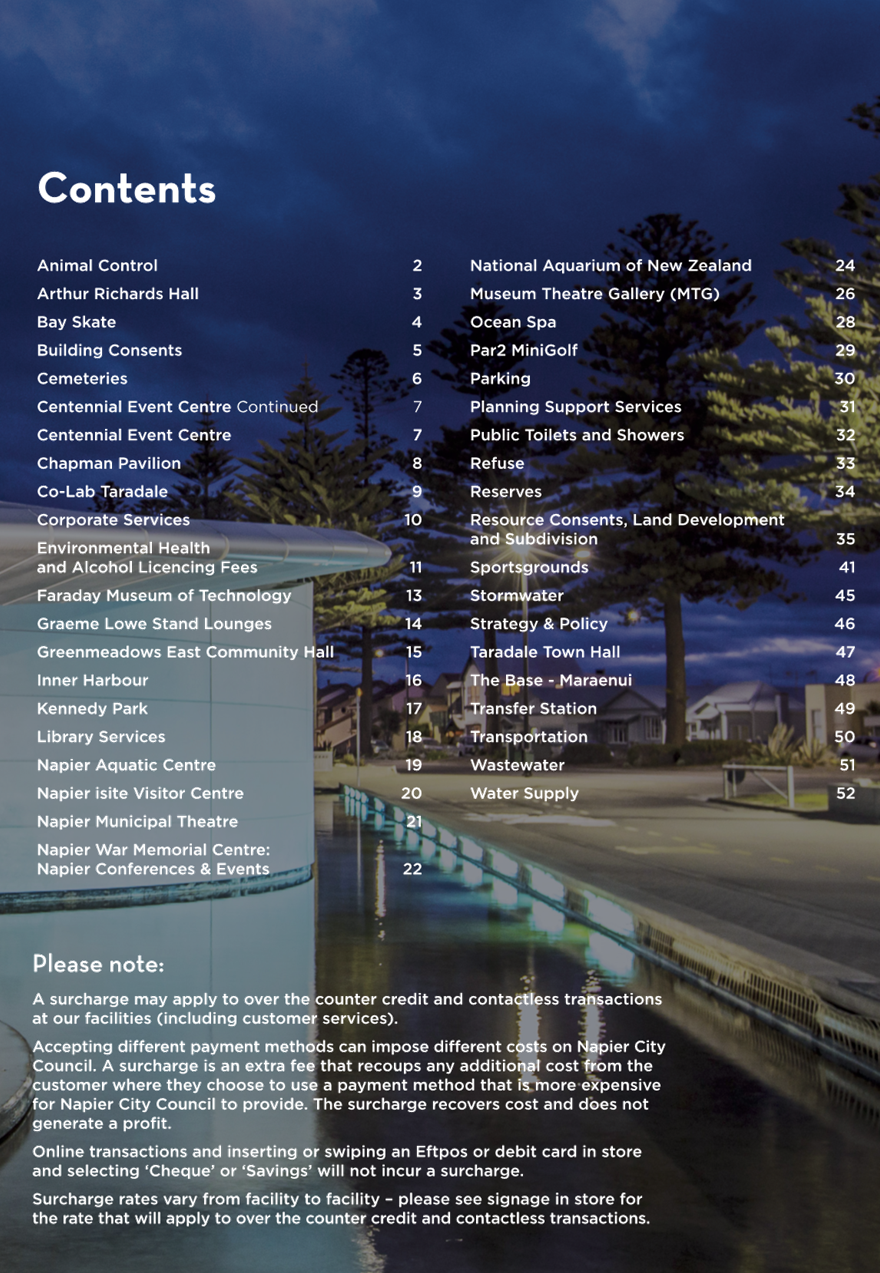
1 Annual Plan 2026/27 - Adoption of underlying information....................................... 6
2 Whiria Ahuriri- Napier's Multicultural Strategy........................................................ 74
3 Declaration and Consent of land to be accessway - Onslow Steps........................ 81
Minor matters not on the agenda – discussion (if any)
Reports under Delegated Authority
Recommendation to Exclude the Public
Ordinary Meeting of Council - 03 March 2026 - Open Agenda
Agenda Items
1. Annual Plan 2026/27 - Adoption of underlying information
|
Type of Report: |
Legal |
|
Legal Reference: |
Local Government Act 2002 |
|
Document ID: |
1895986 |
|
Reporting Officer/s & Unit: |
Danica Rio, Senior Advisor Corporate Planning Caroline Thomson, Head of Finance, Data & Digital |
1.0 Executive Summary - Te Kaupapa me te Whakarāpopototanga:
1.1 To formally approve the underlying information and direction given to date on the Annual Plan 2026/27.
1.2 The information in this report will be used to inform the development of the Annual Plan 2026/27 consultation document and supporting information.
2.0 Recommendations - Ngā Tūtohunga
That Council
a. Adopt the content of the report titled ‘Annual Plan 2026/27 – Adoption of Underlying Information’ as the underlying information that will inform the development of the Annual Plan 2026/27 consultation document and supporting information.
b. Direct officers to prepare an Annual Plan consultation document to be reported back for Council adoption on 19 March 2026.
c. Note the proposed rates increase for 2026/27 will be an 8.8% increase including growth (8.5% average increase for existing ratepayers), noting this is 0.3% less than the increase forecast in the Three-Year Plan 2024-27 (9.1%).
d. Agree the following matters will be included in the consultation document:
i. Proposed rates increase: Update on proposed increase.
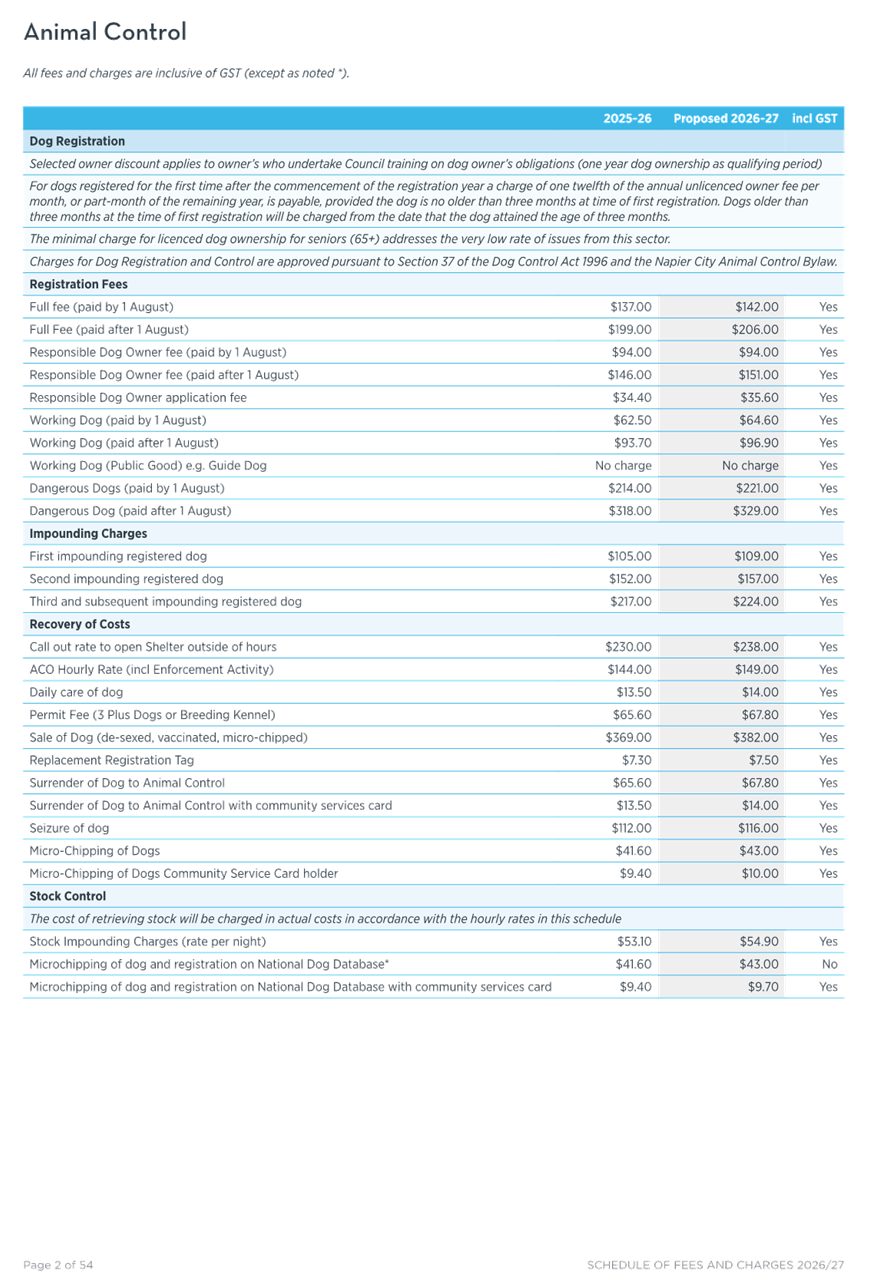
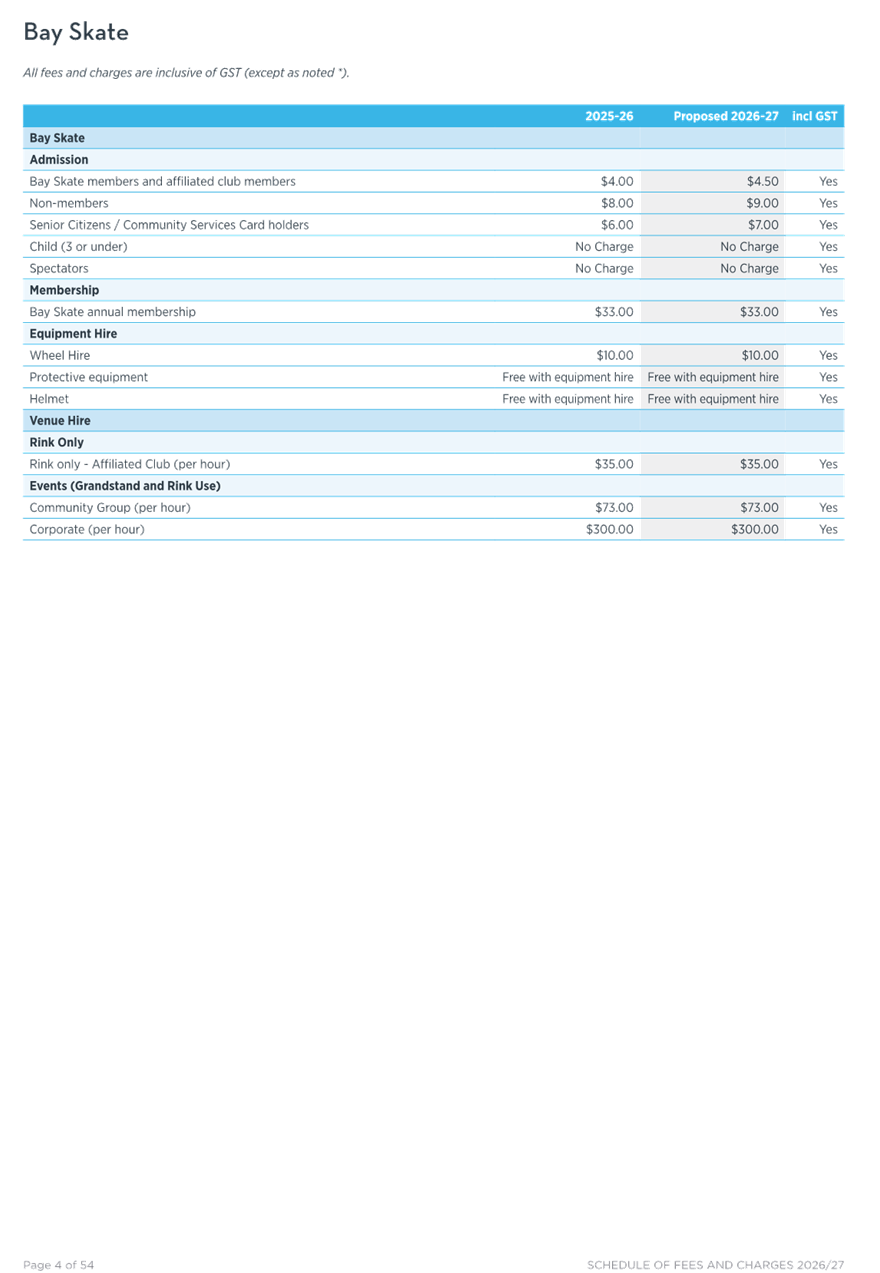
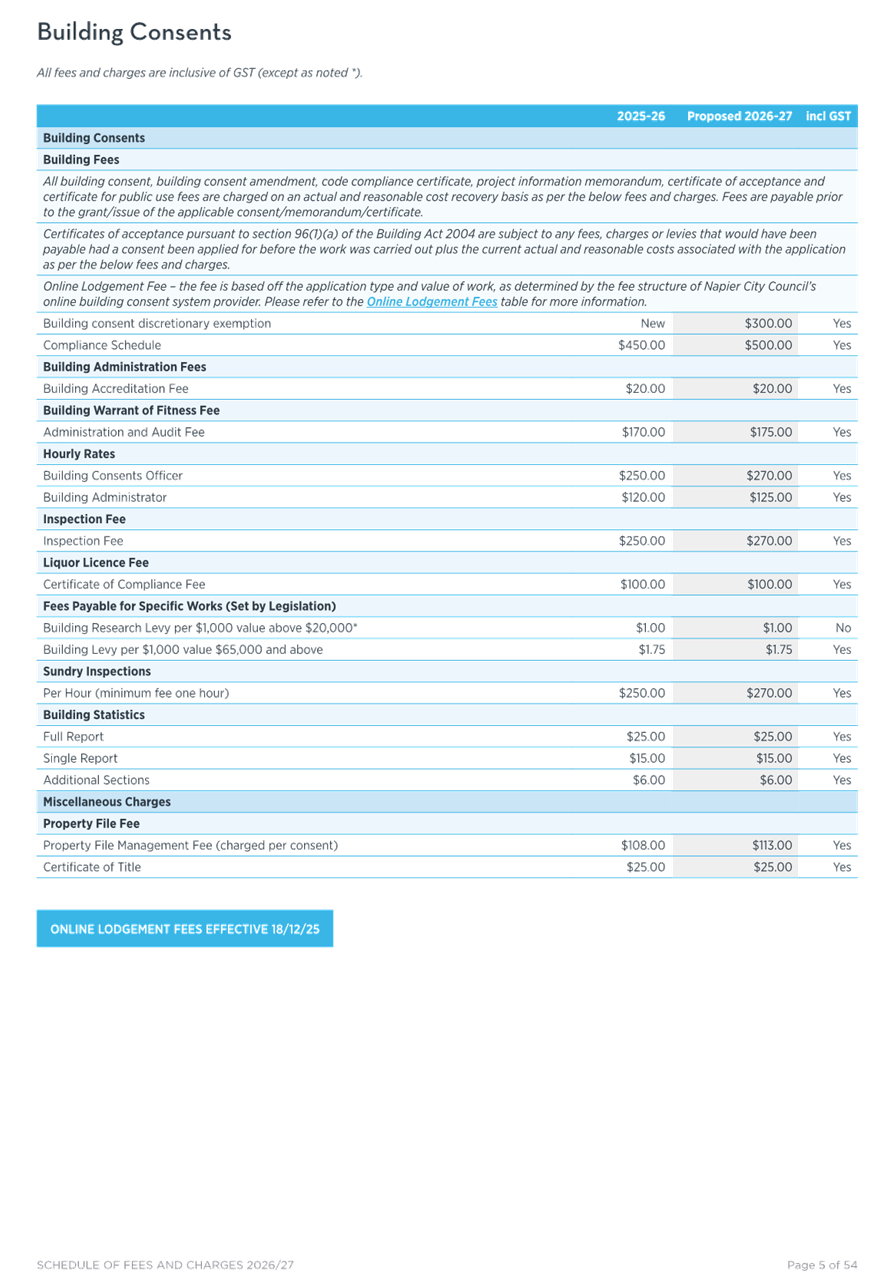
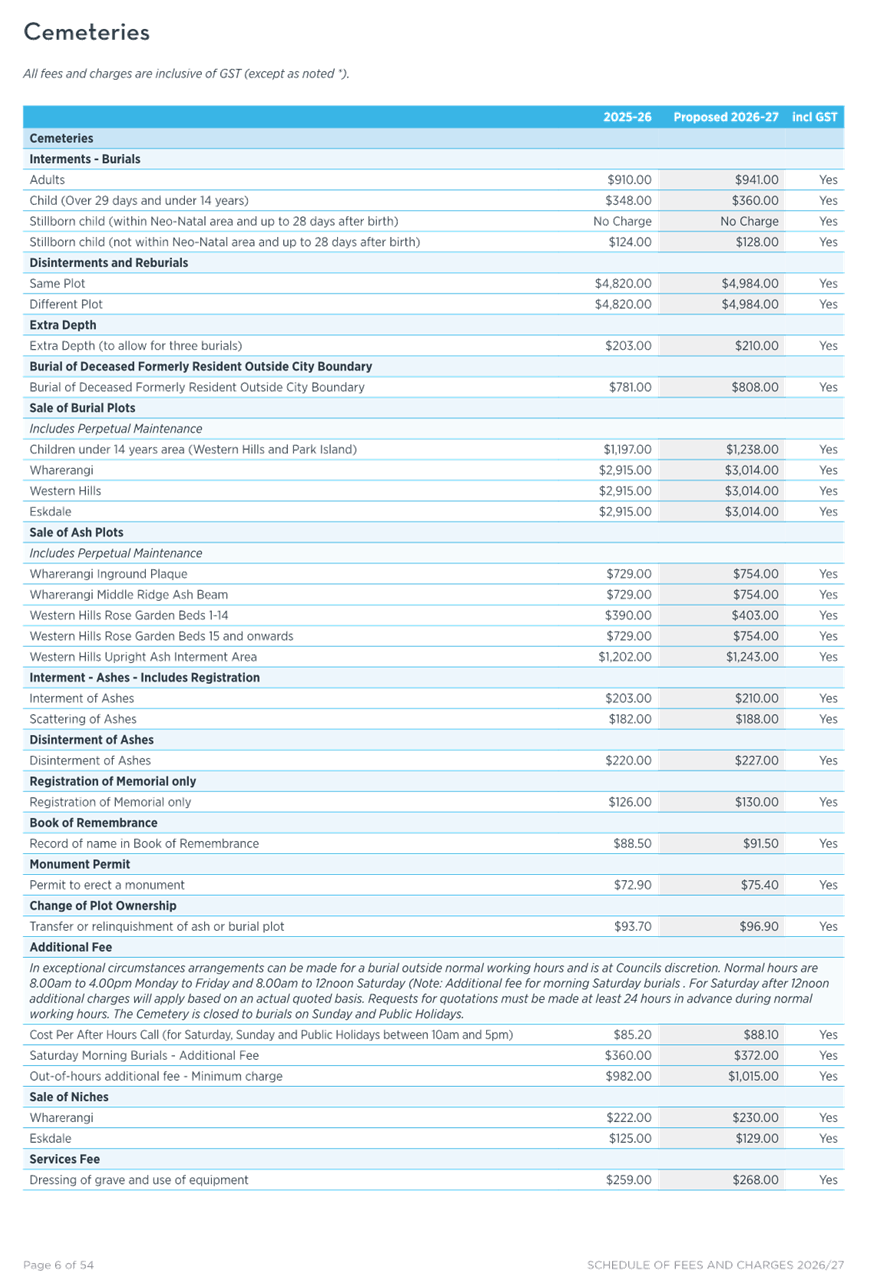
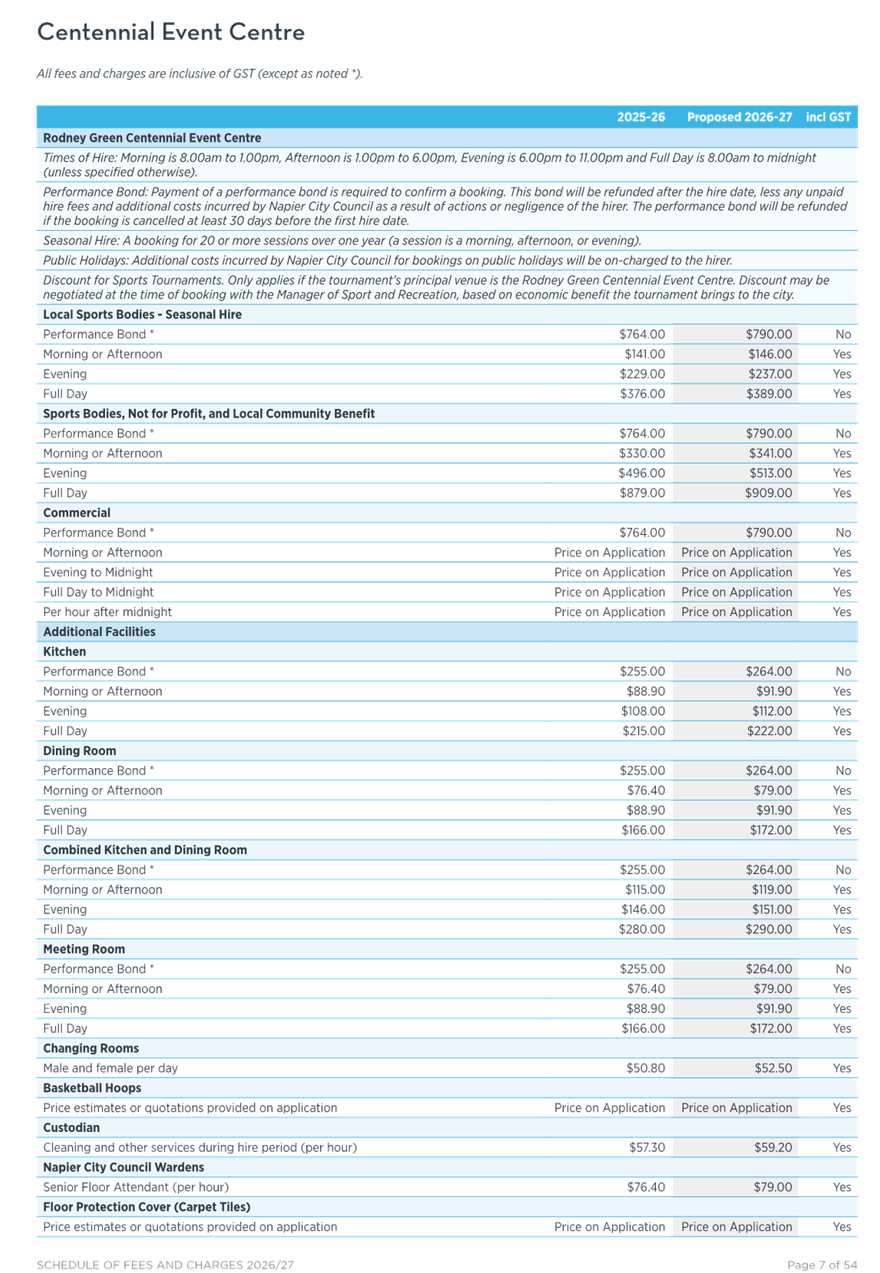
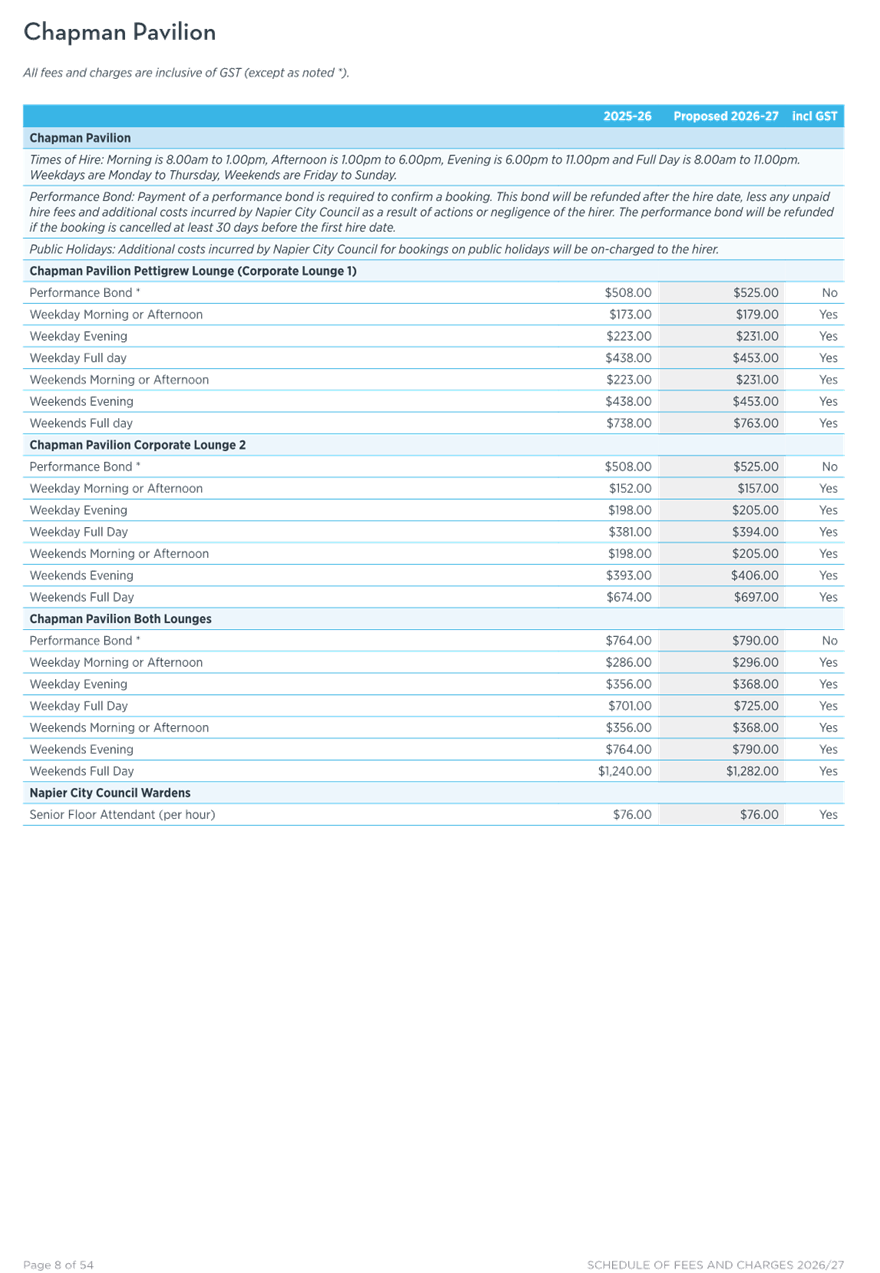
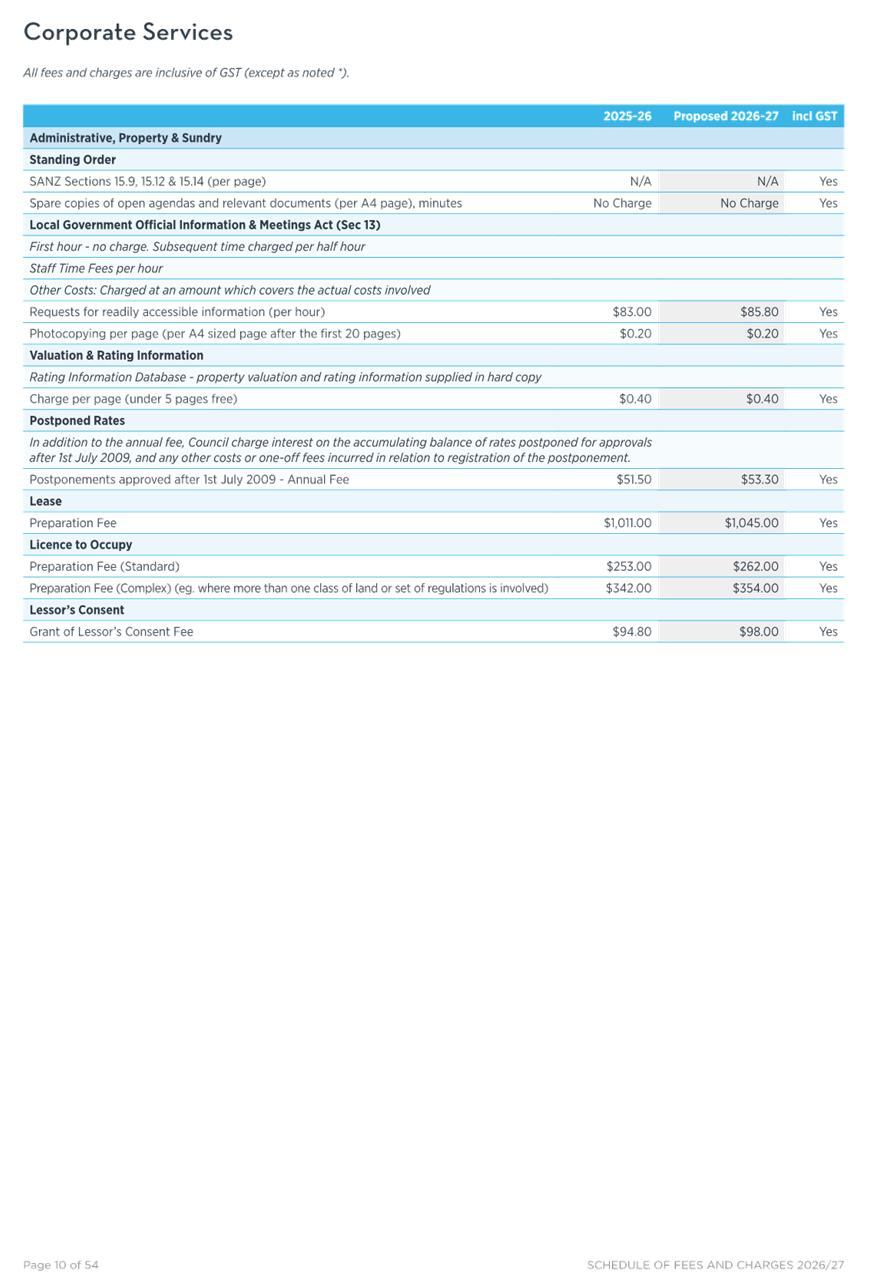
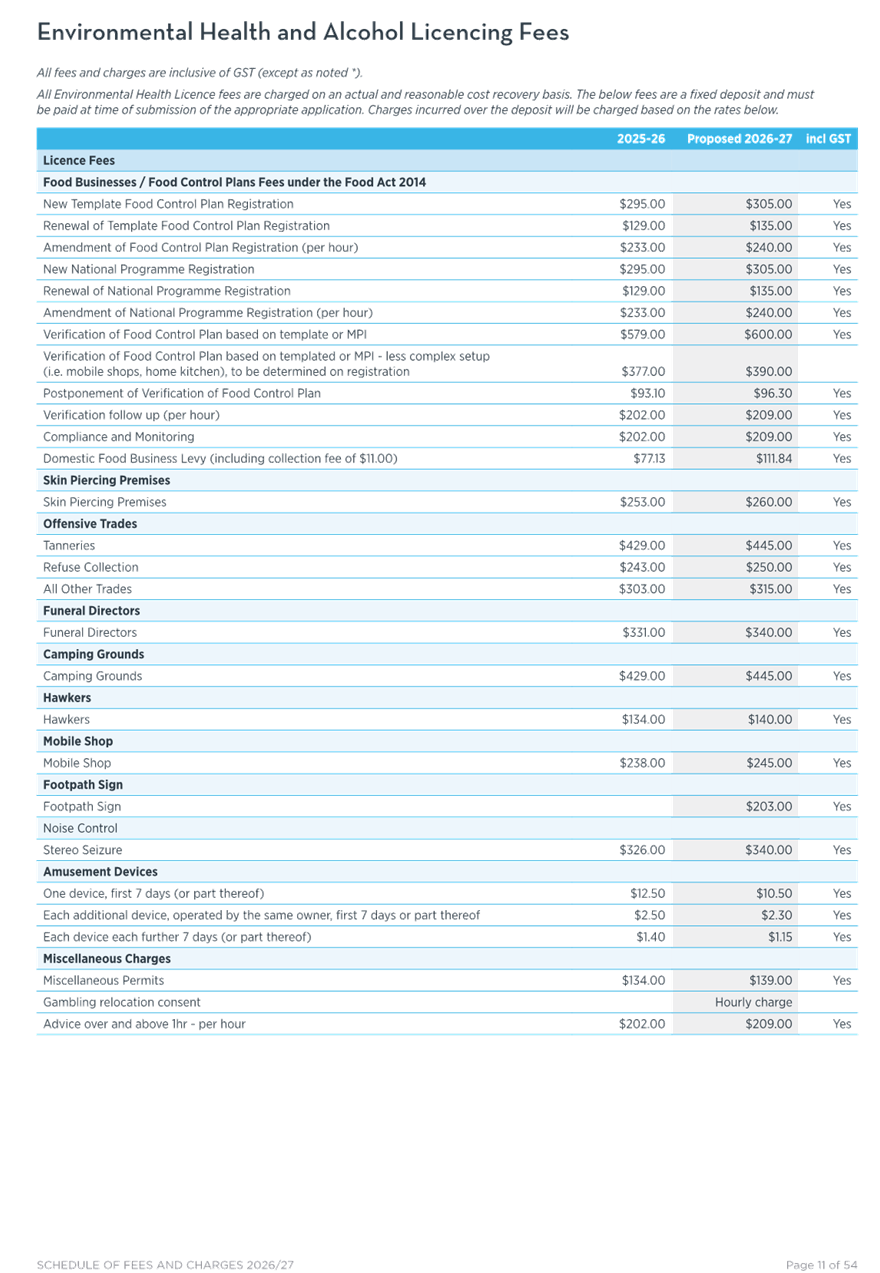
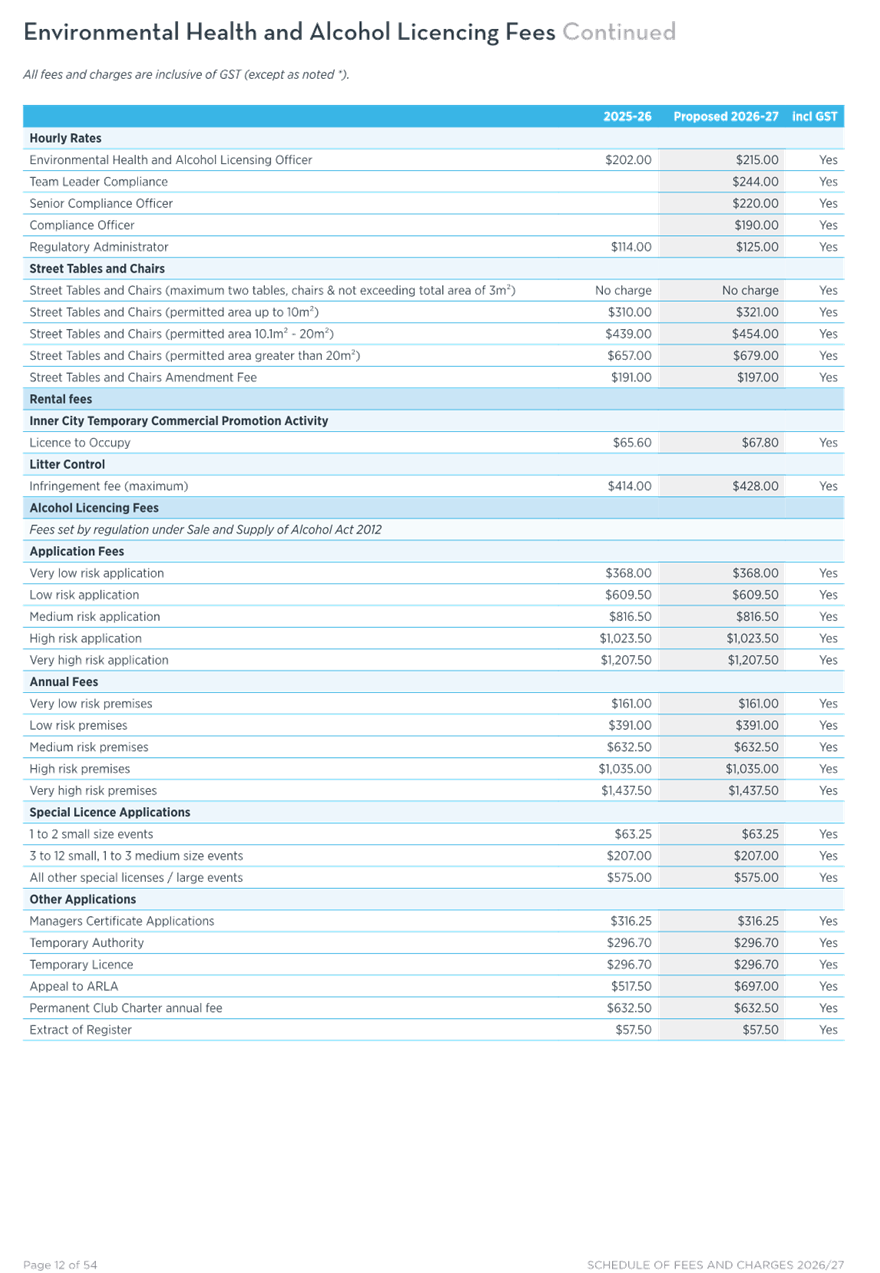
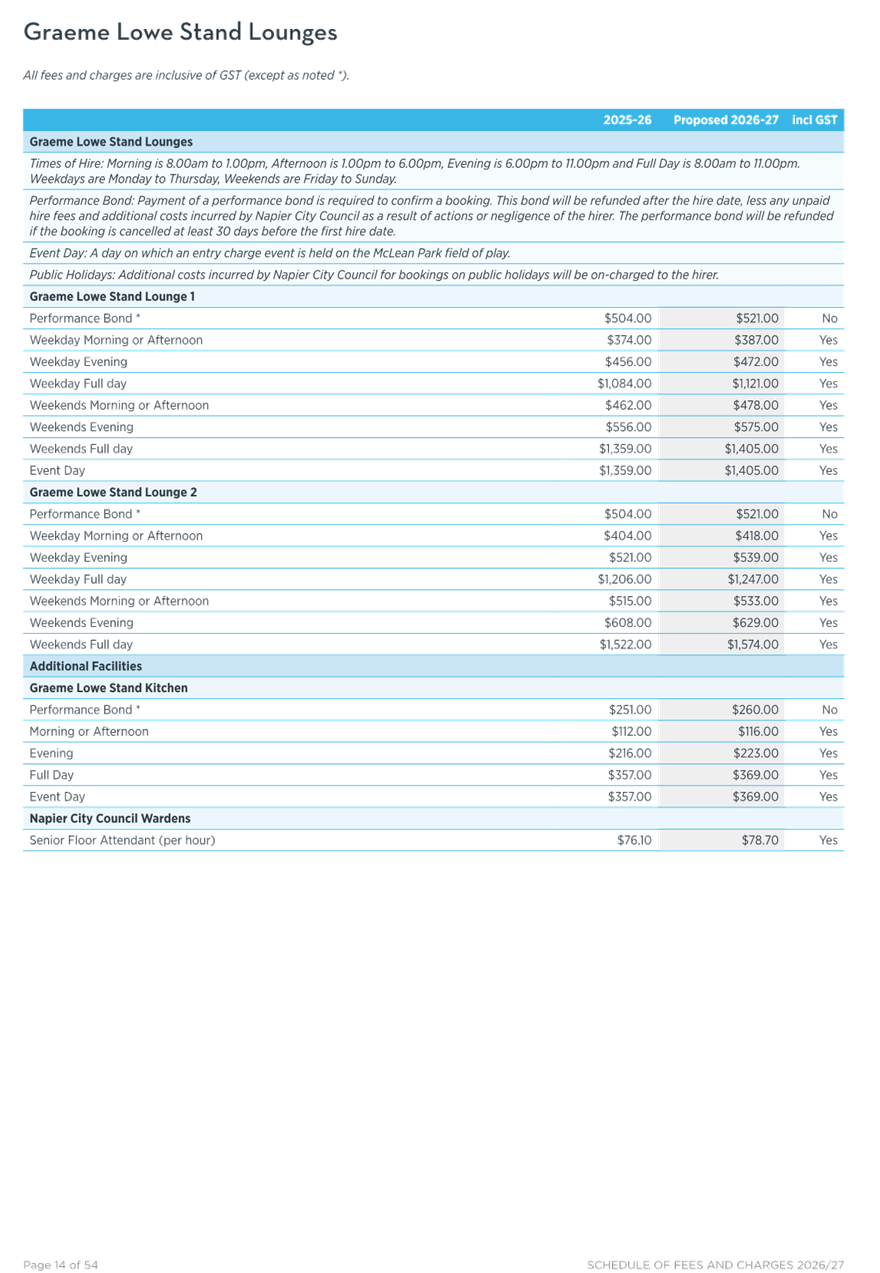
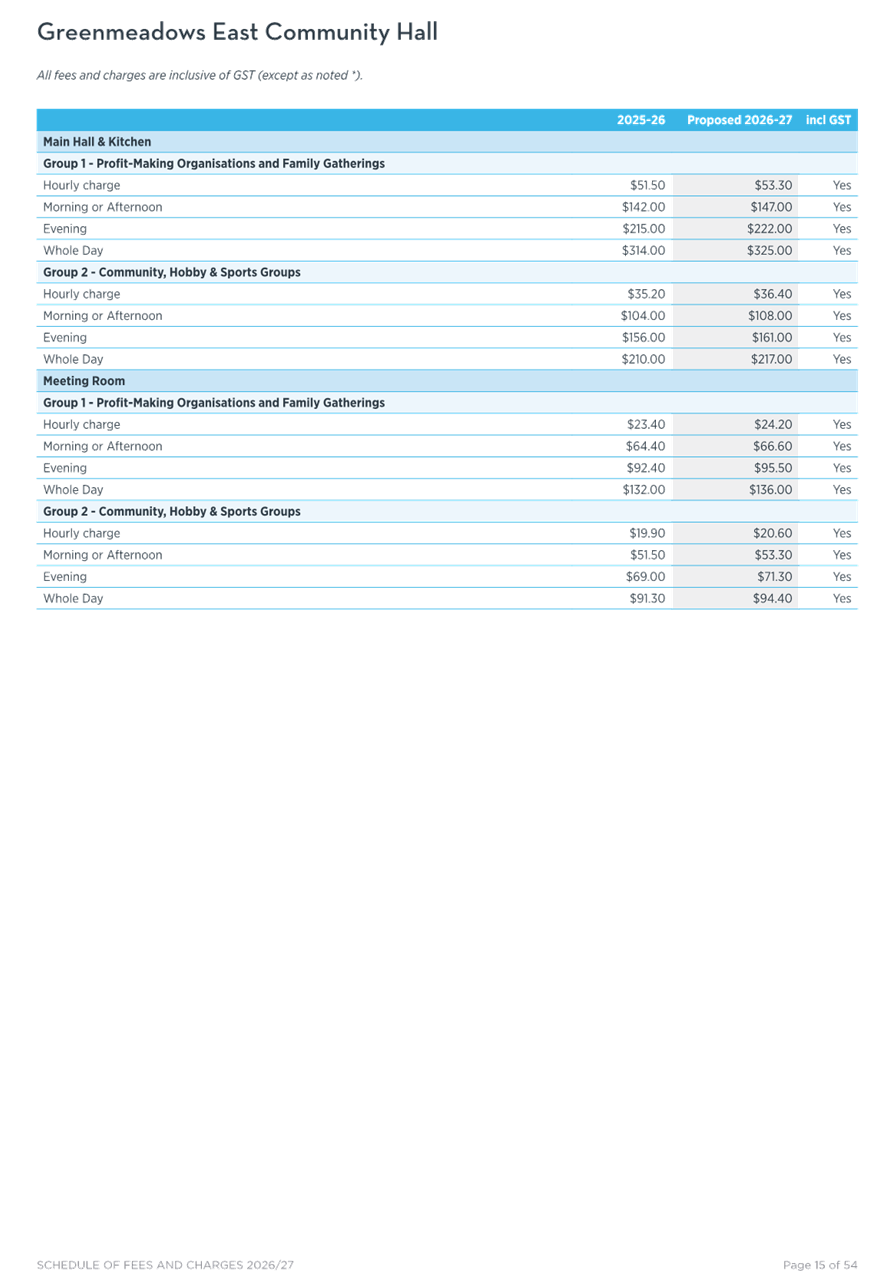
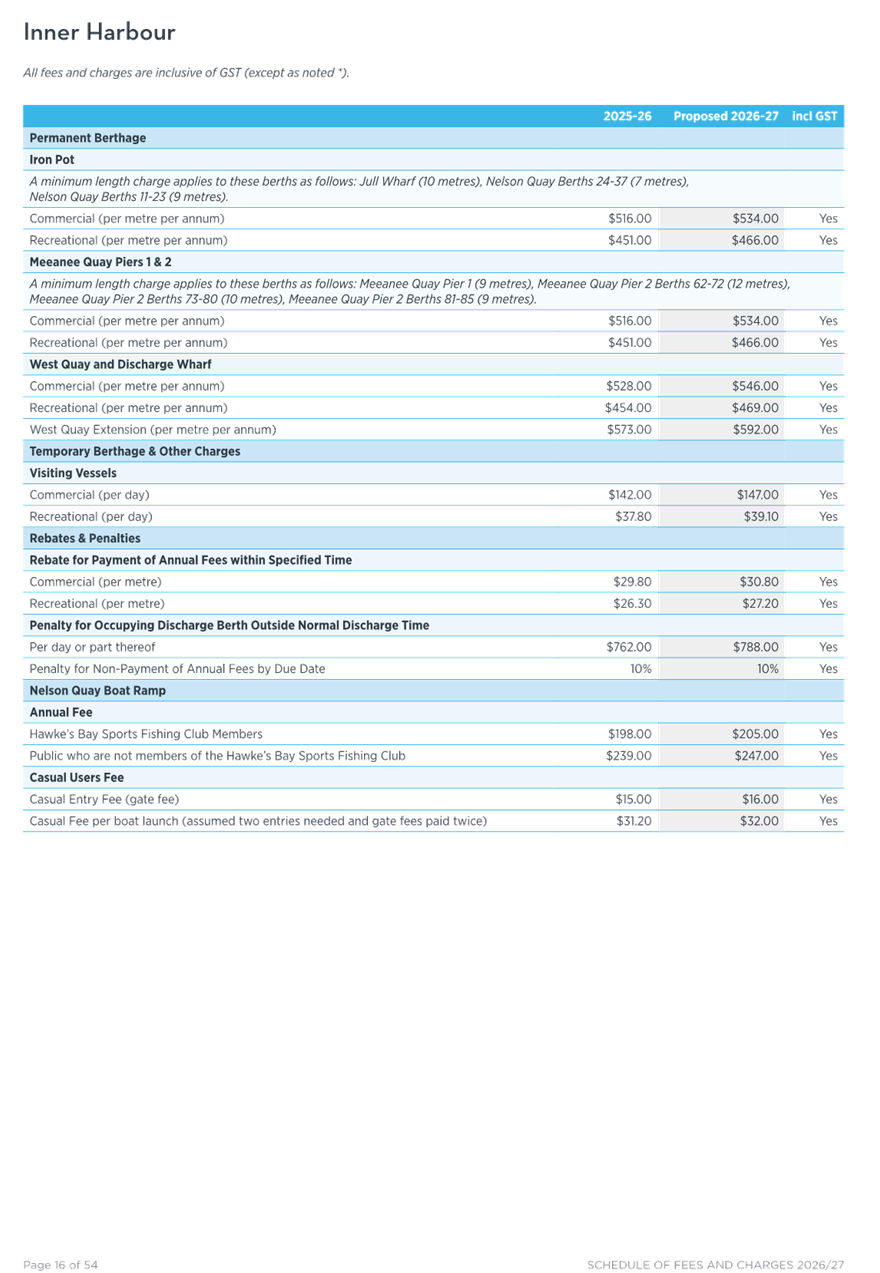
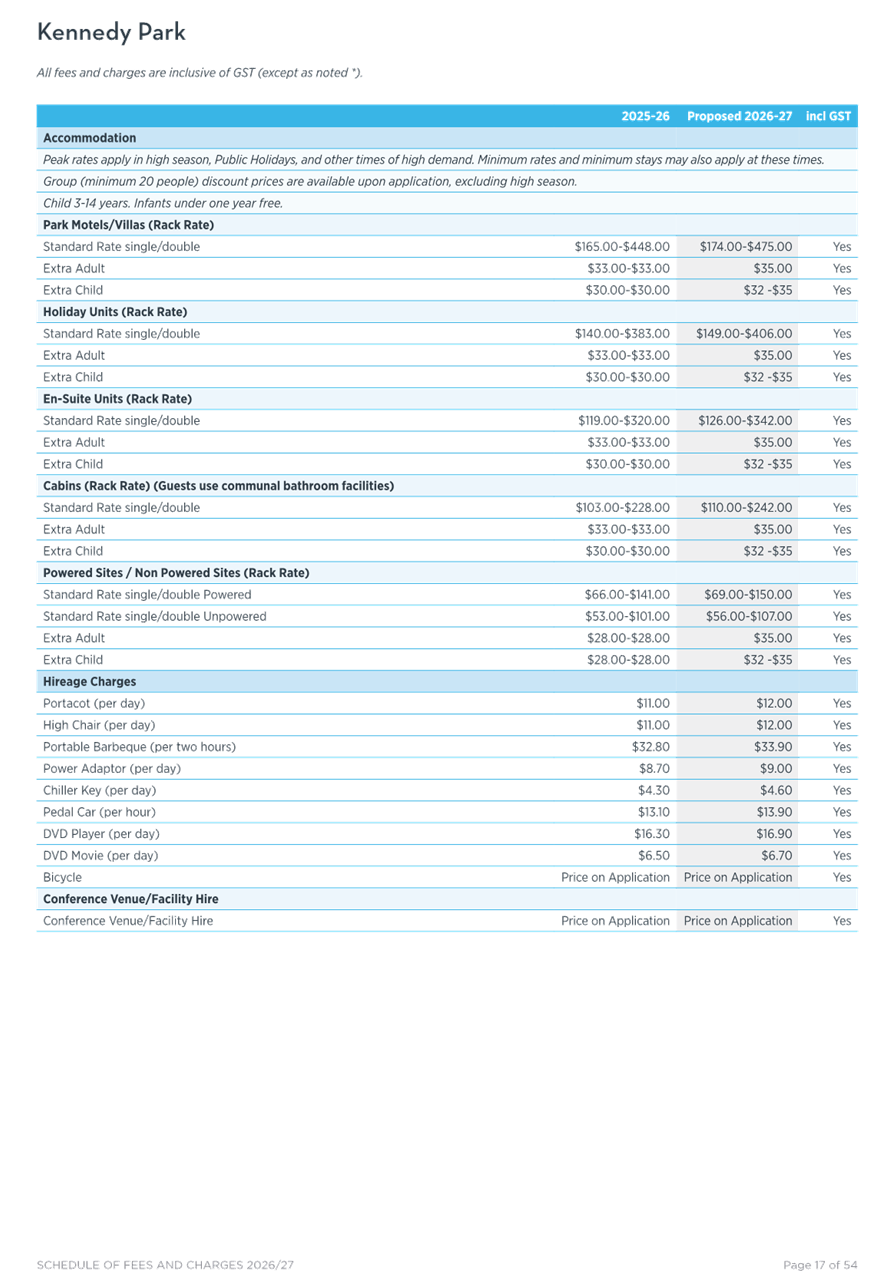
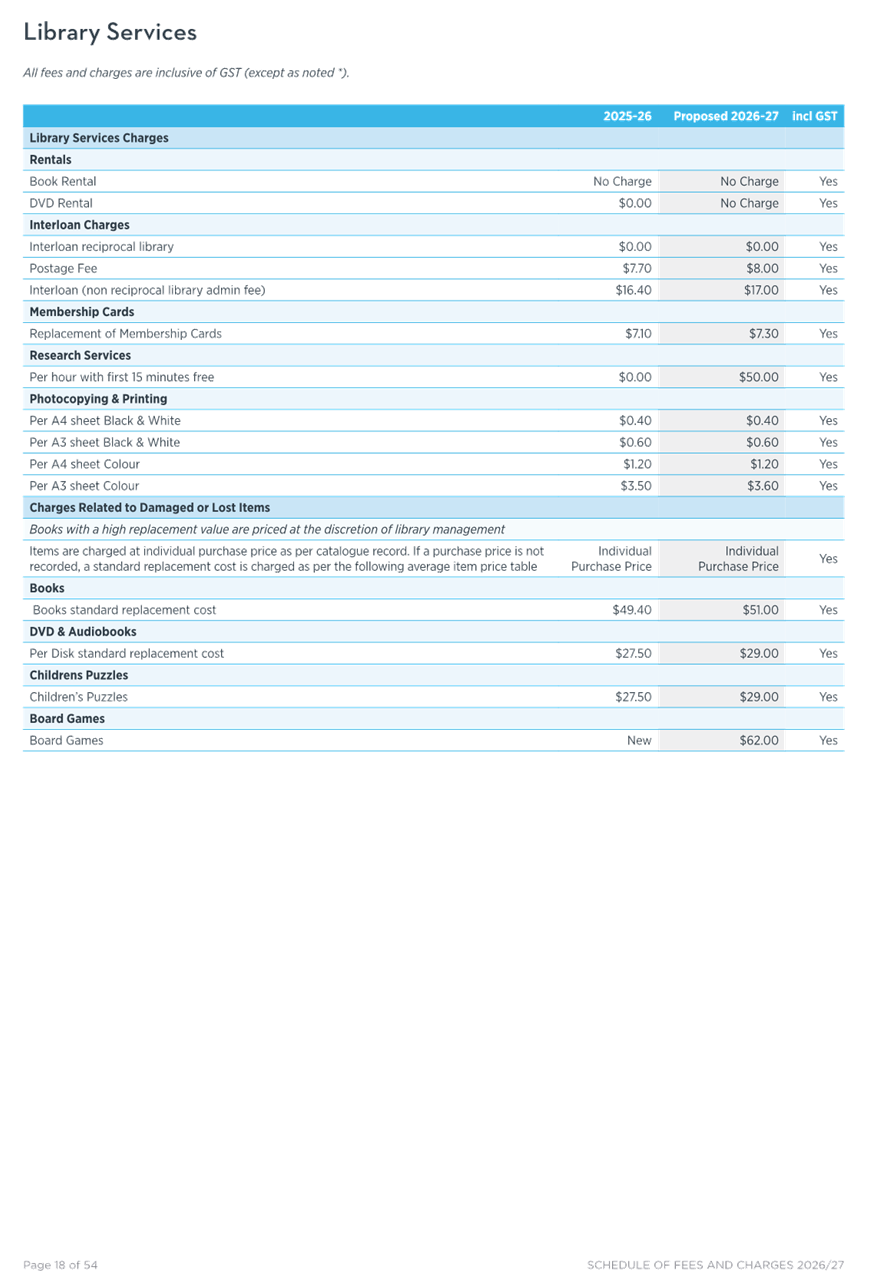
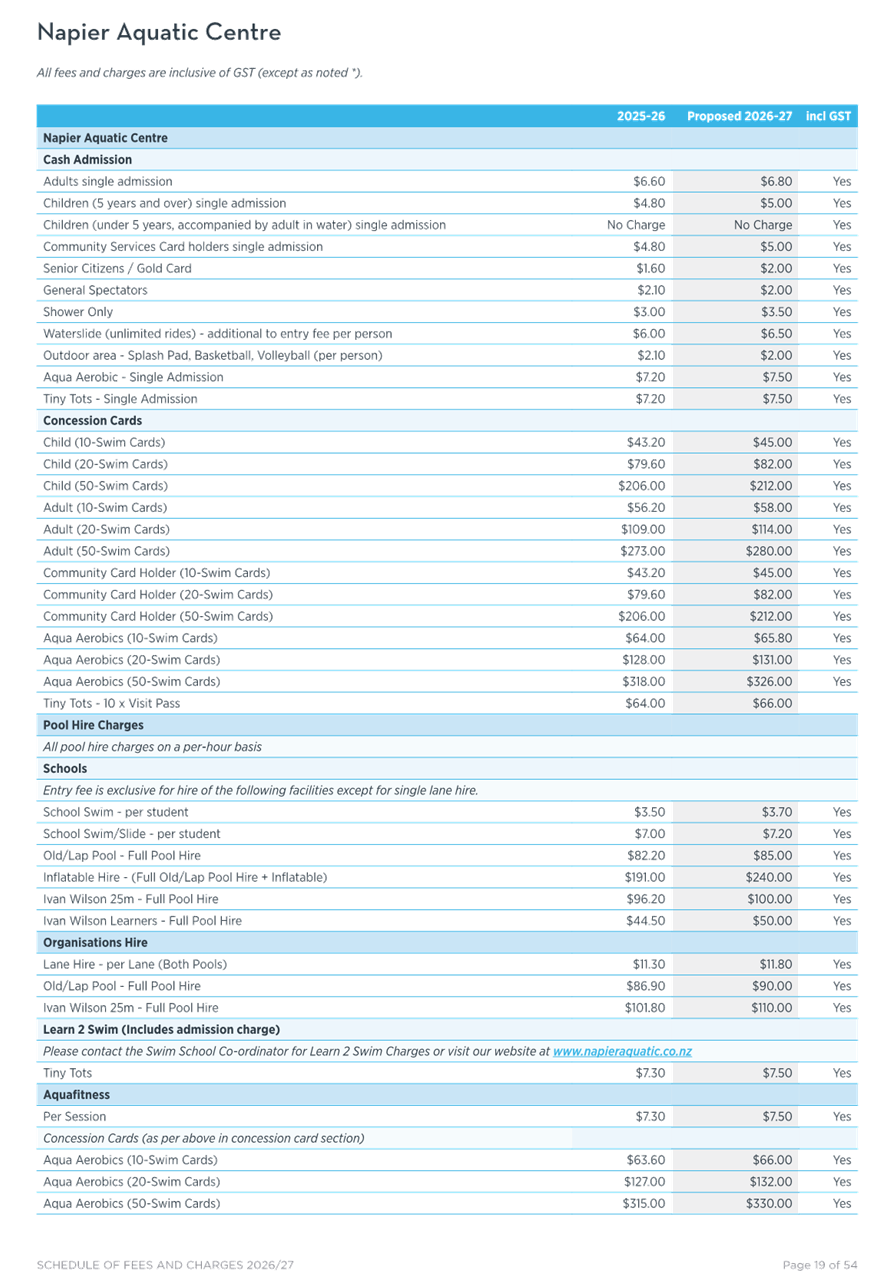
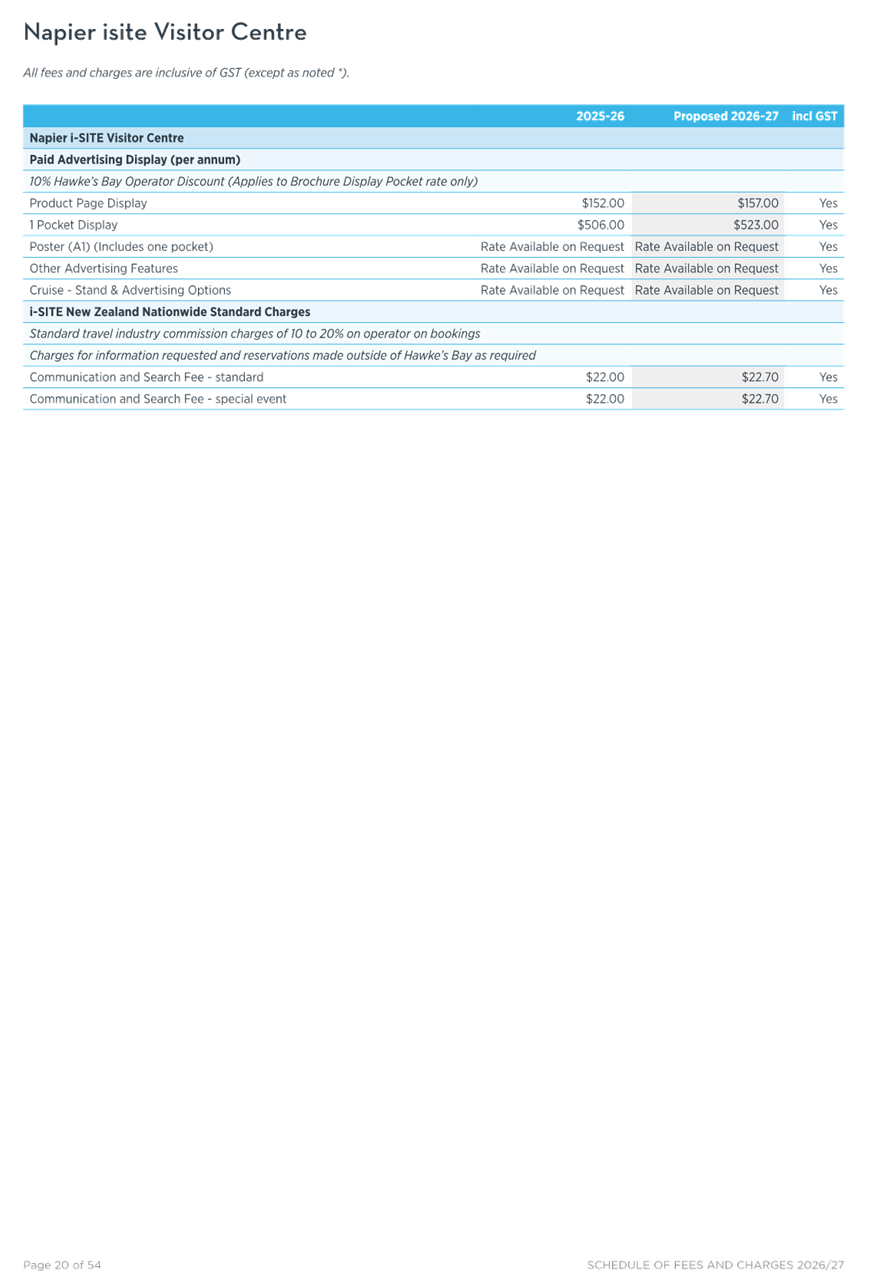
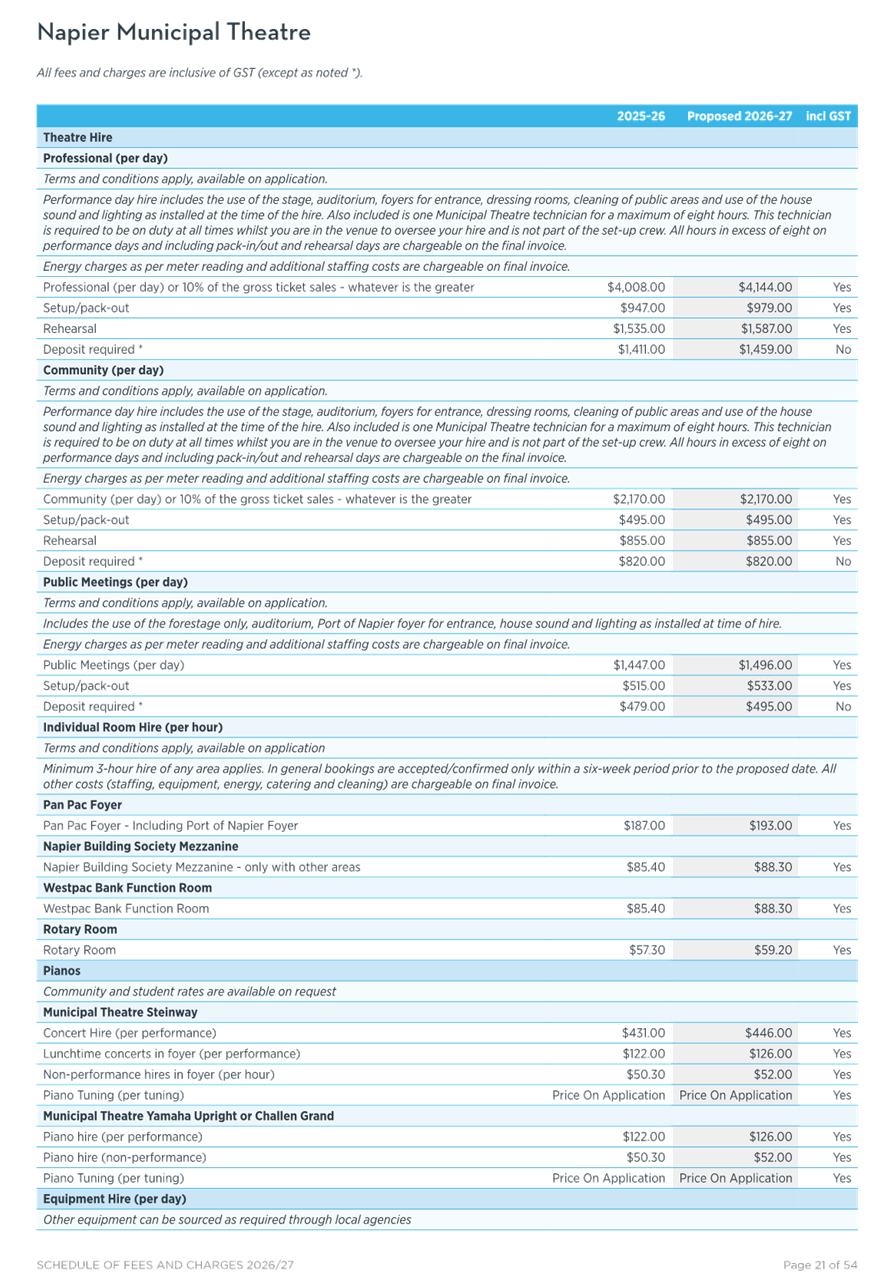
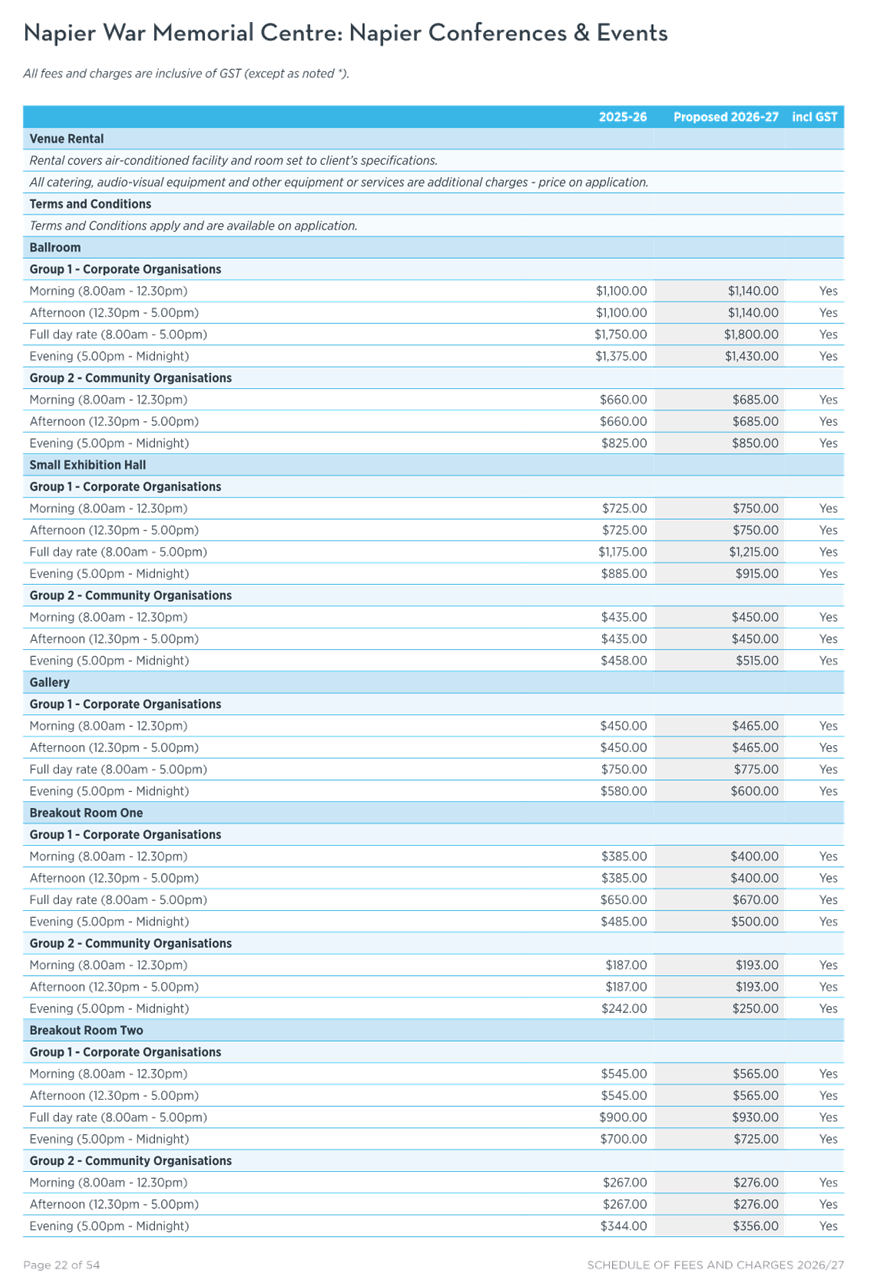
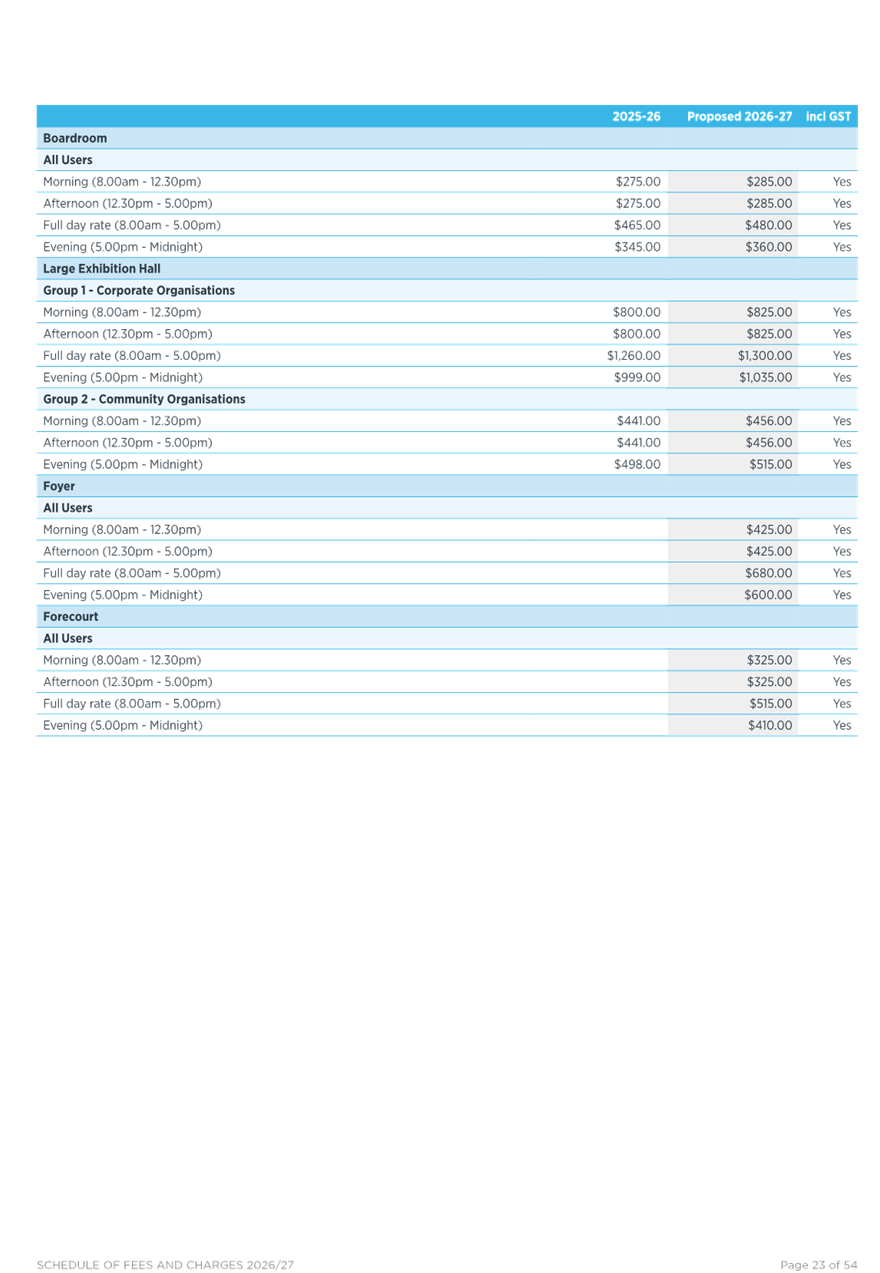
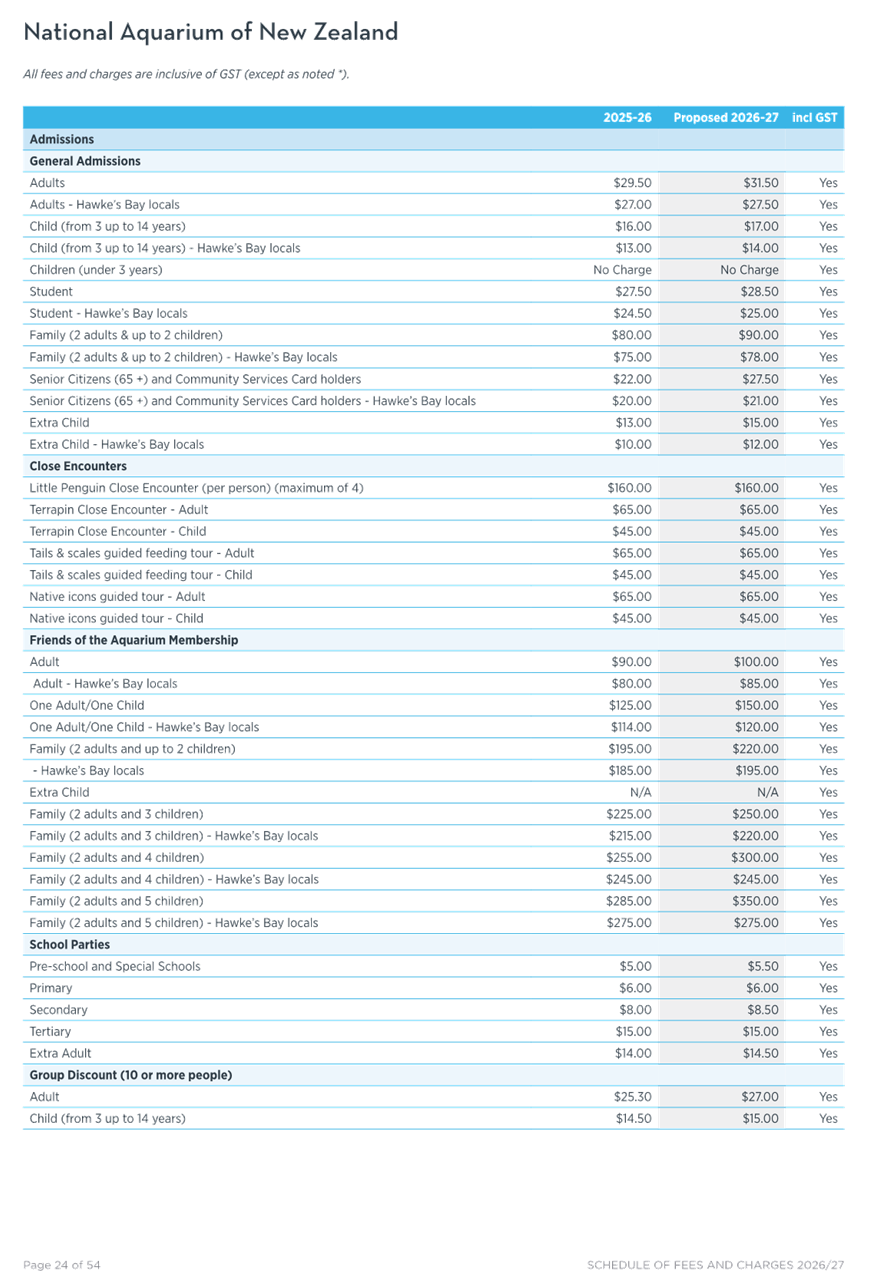
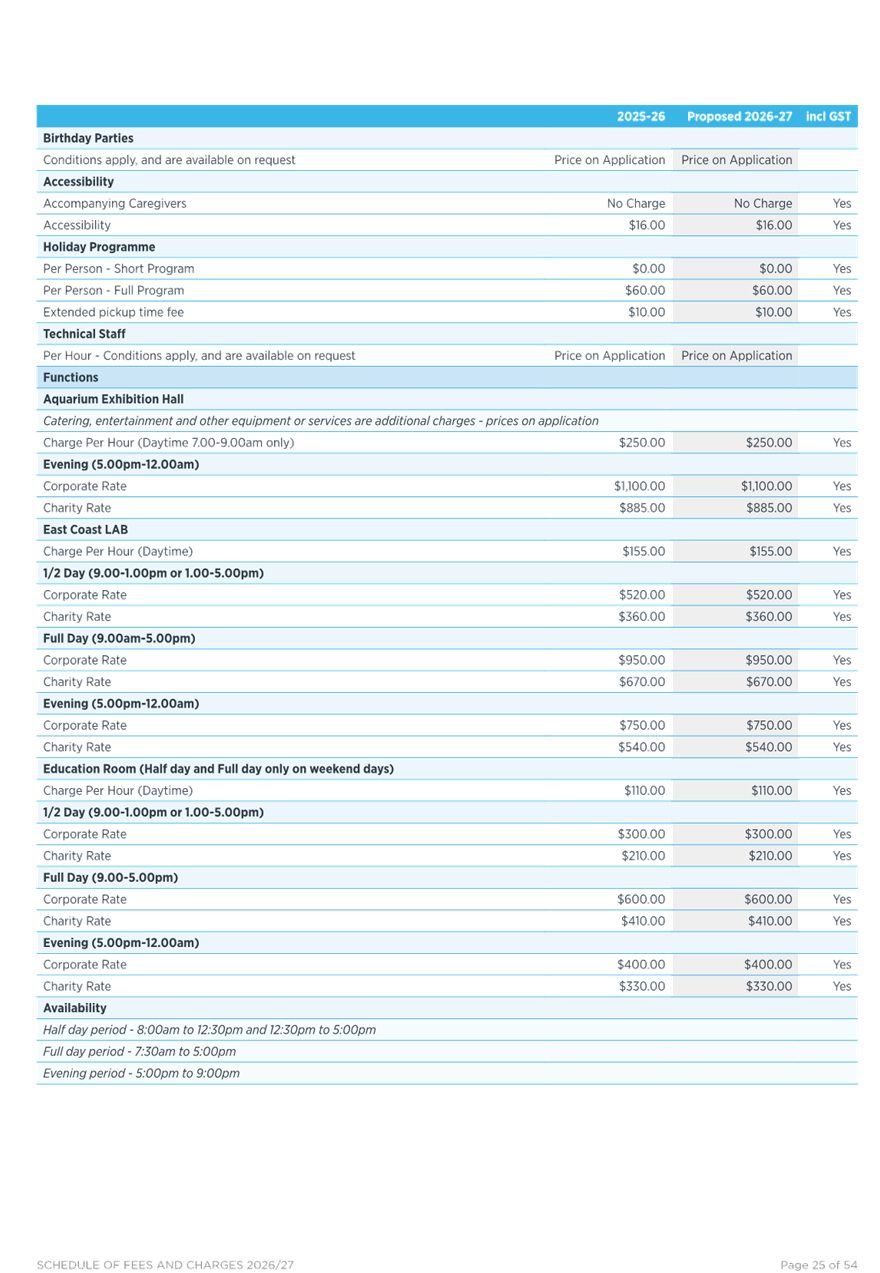
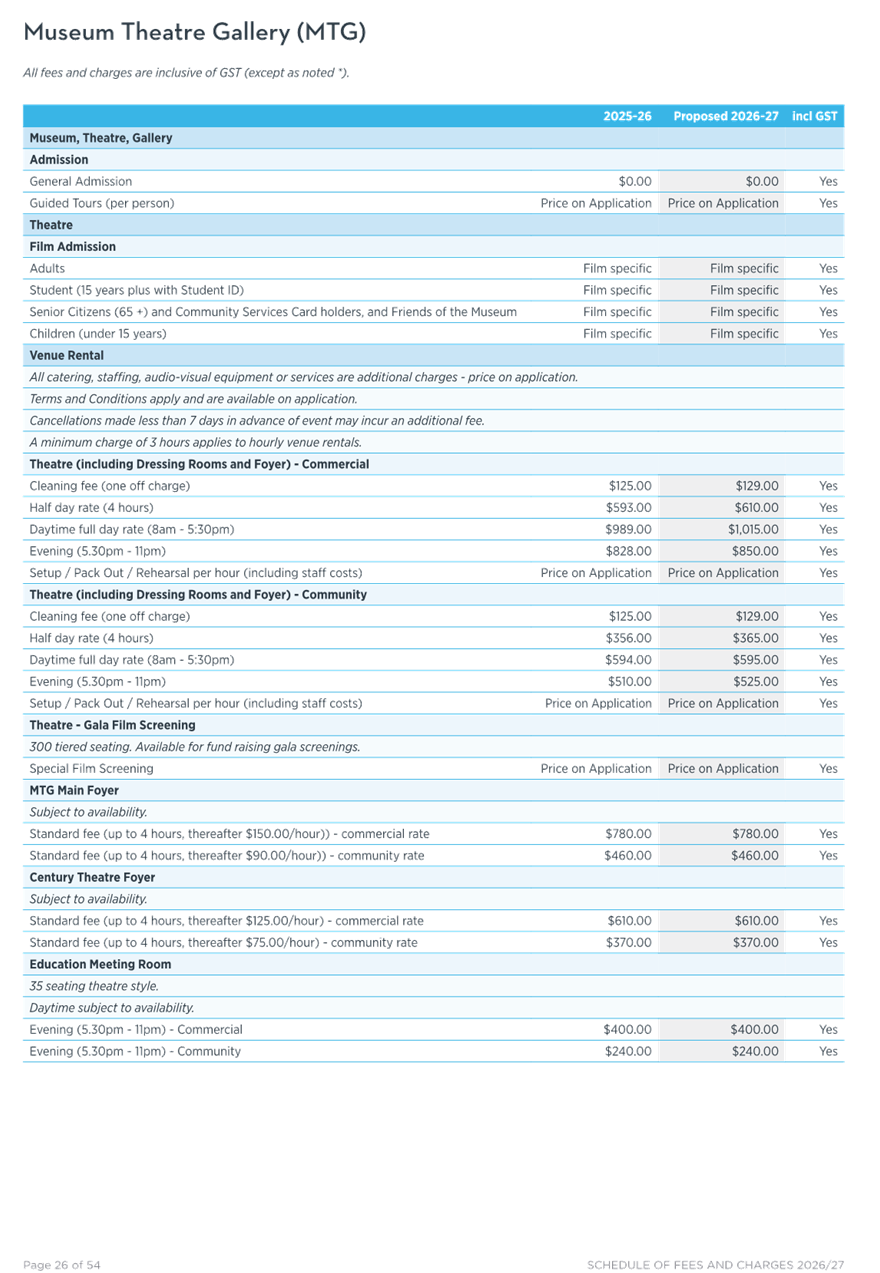
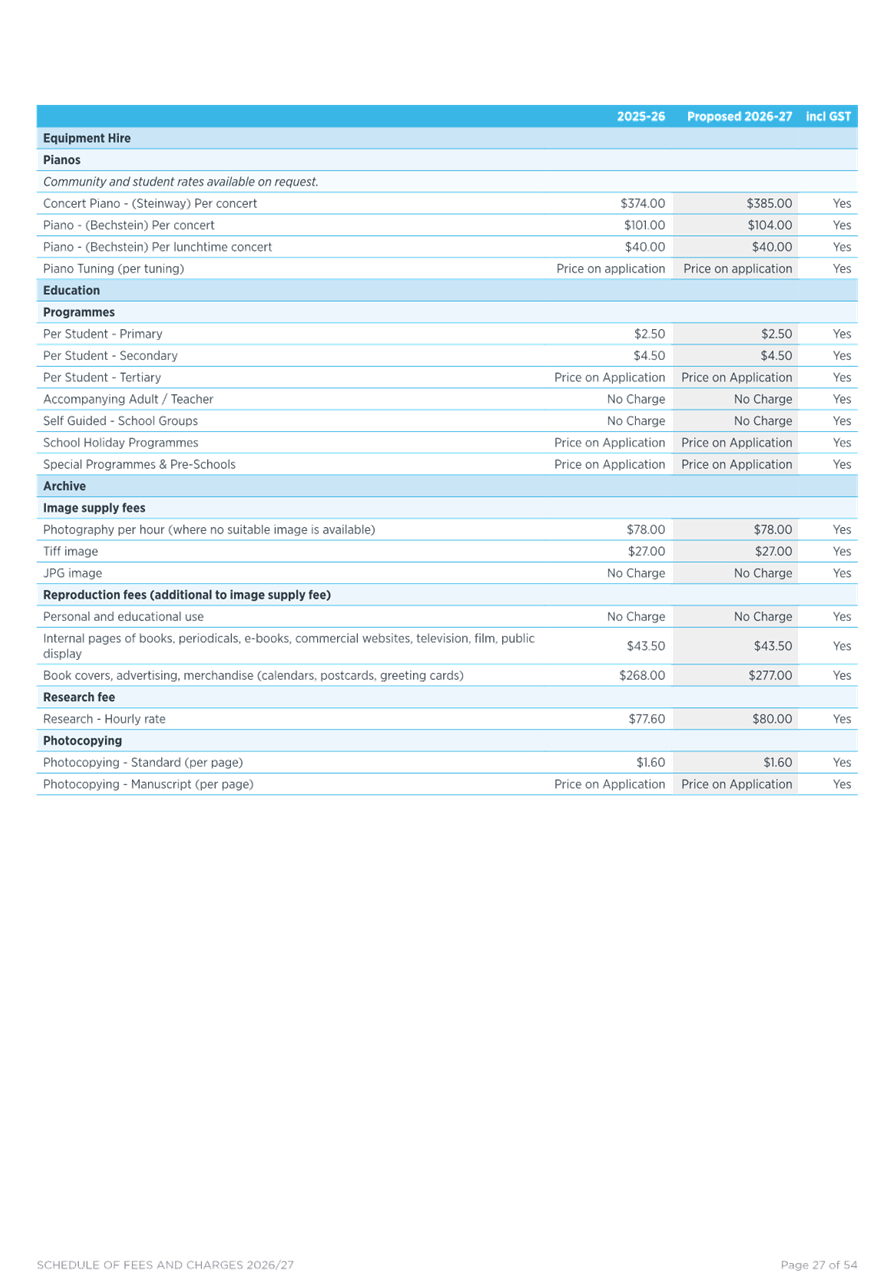
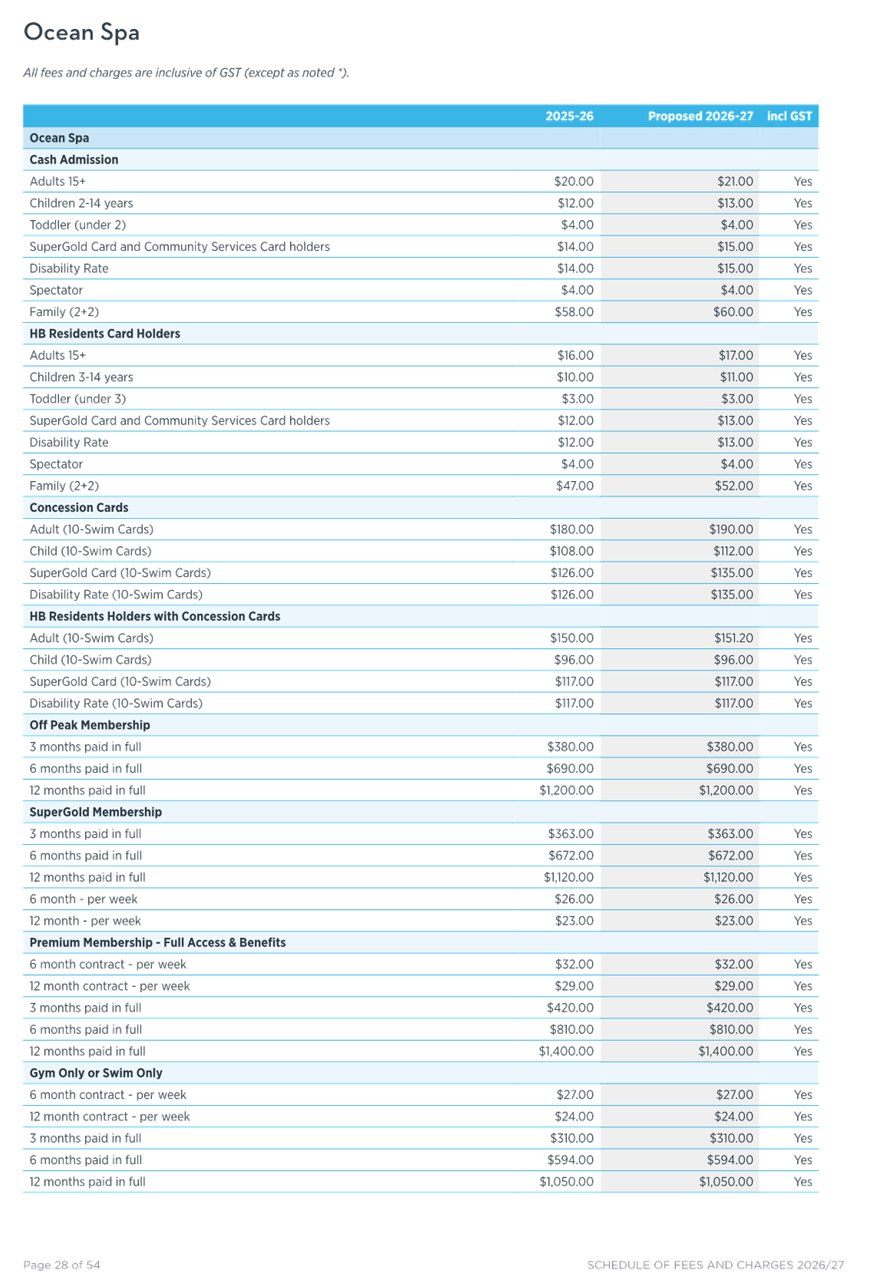
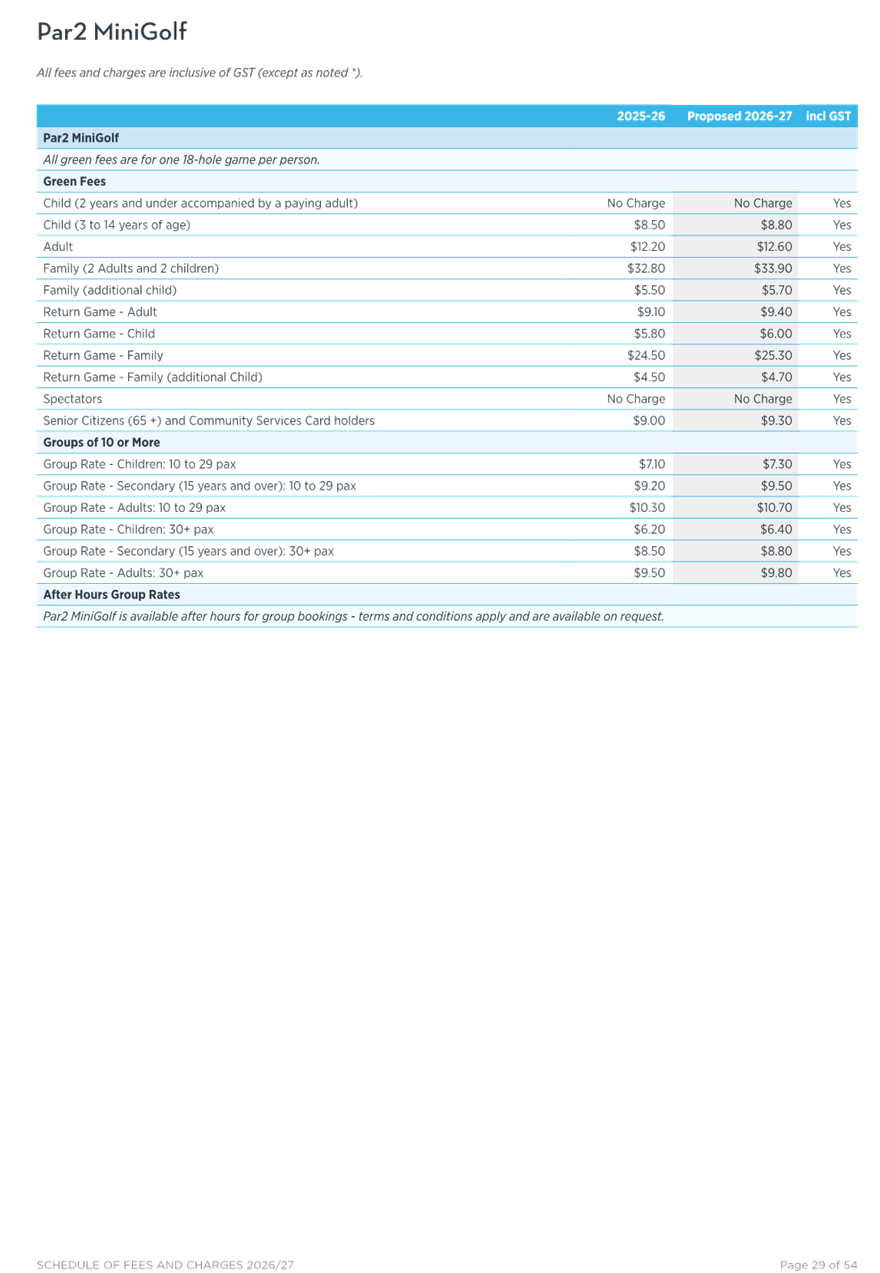
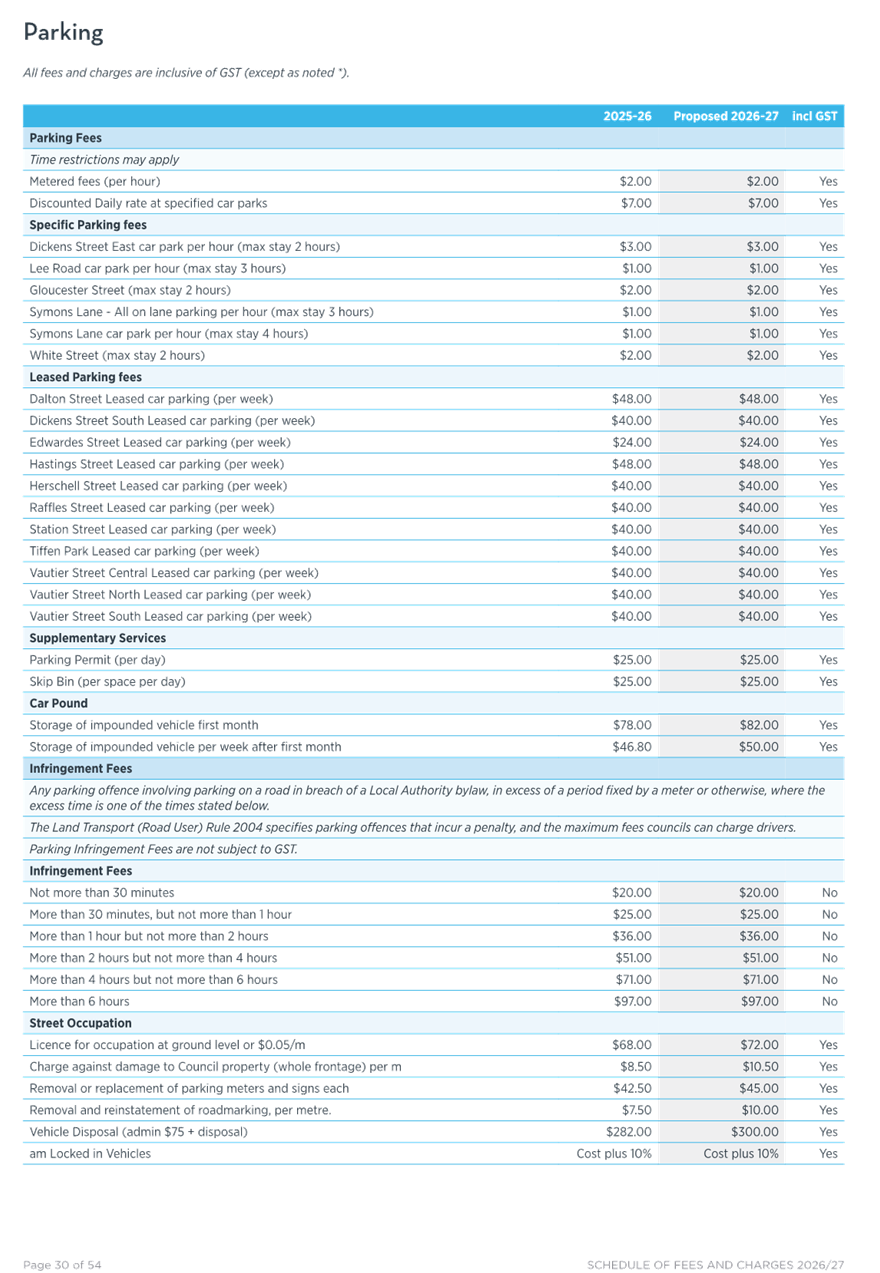
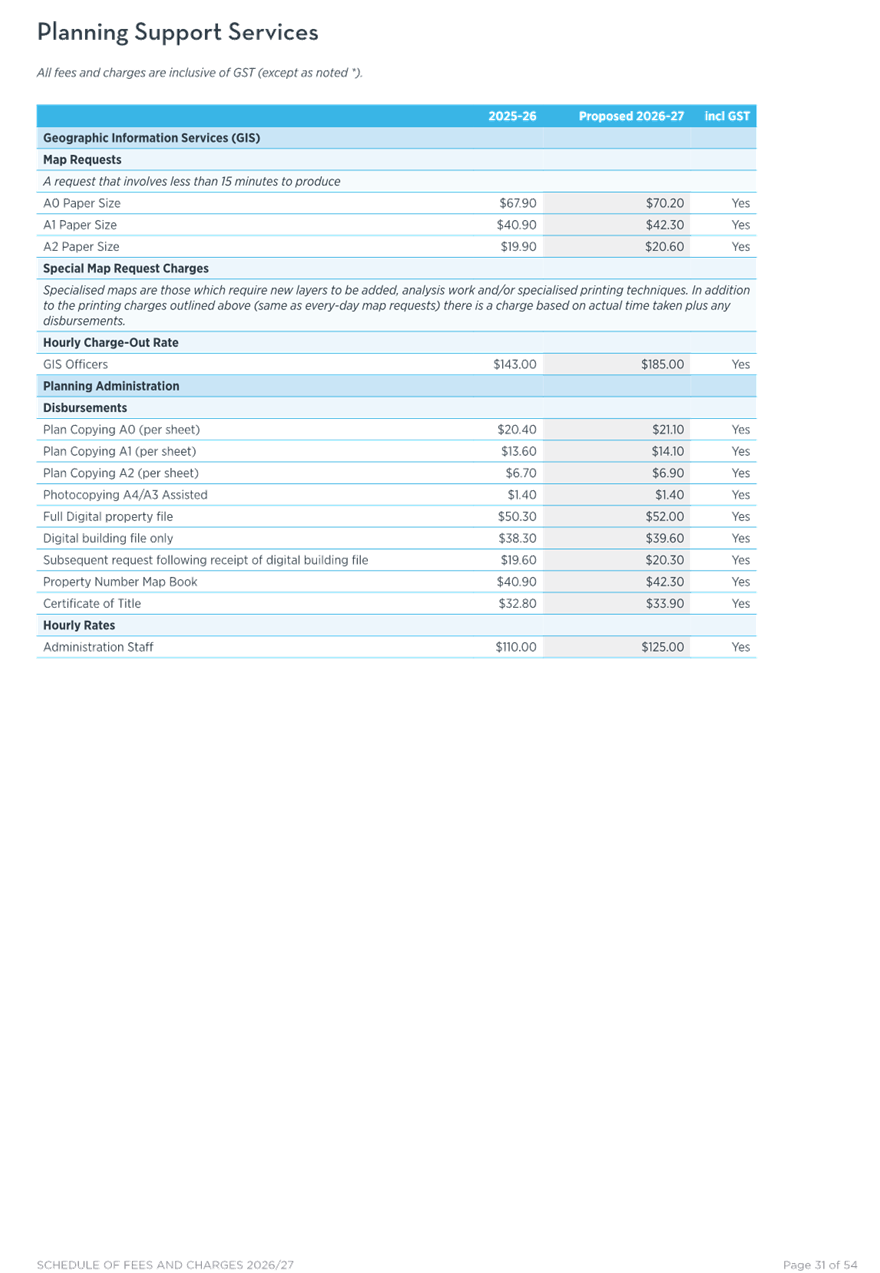
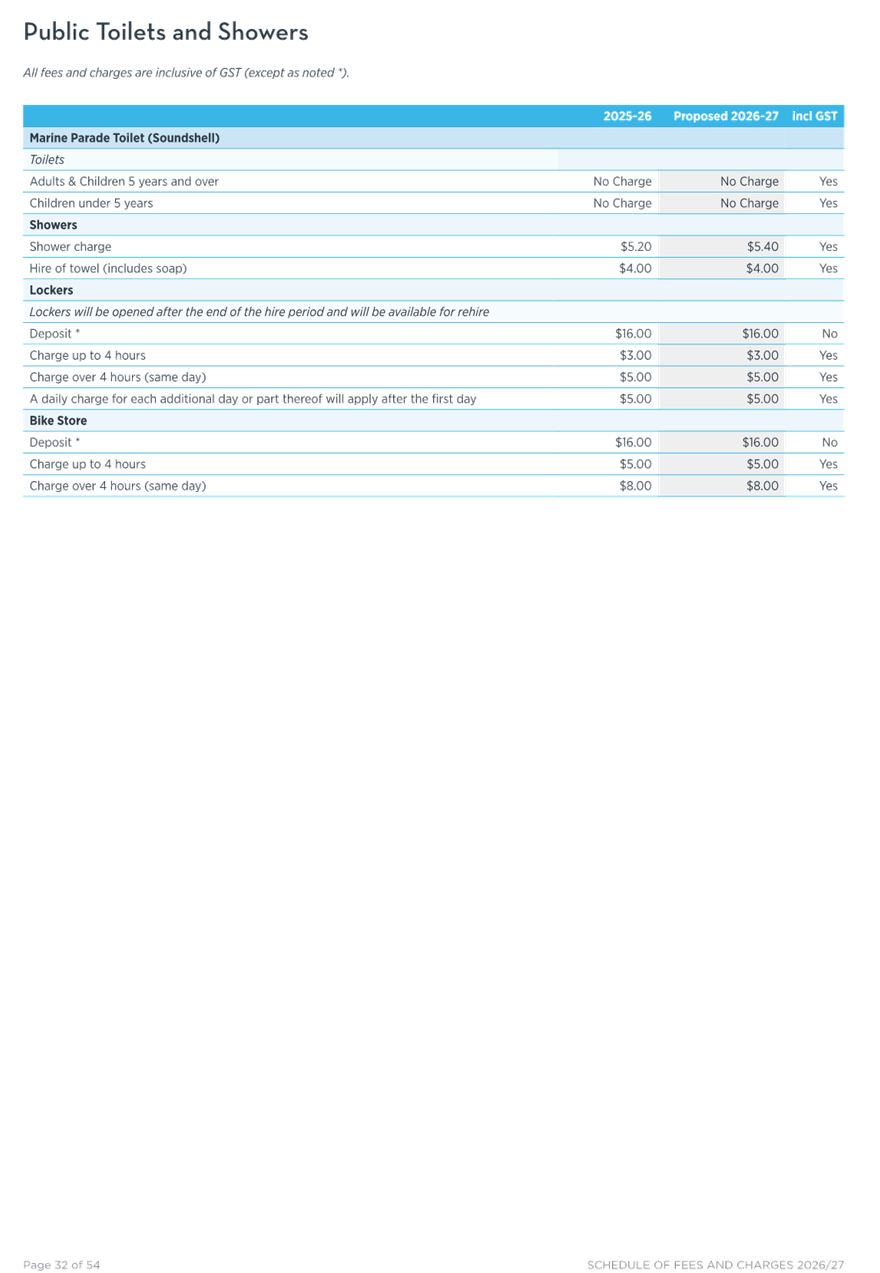
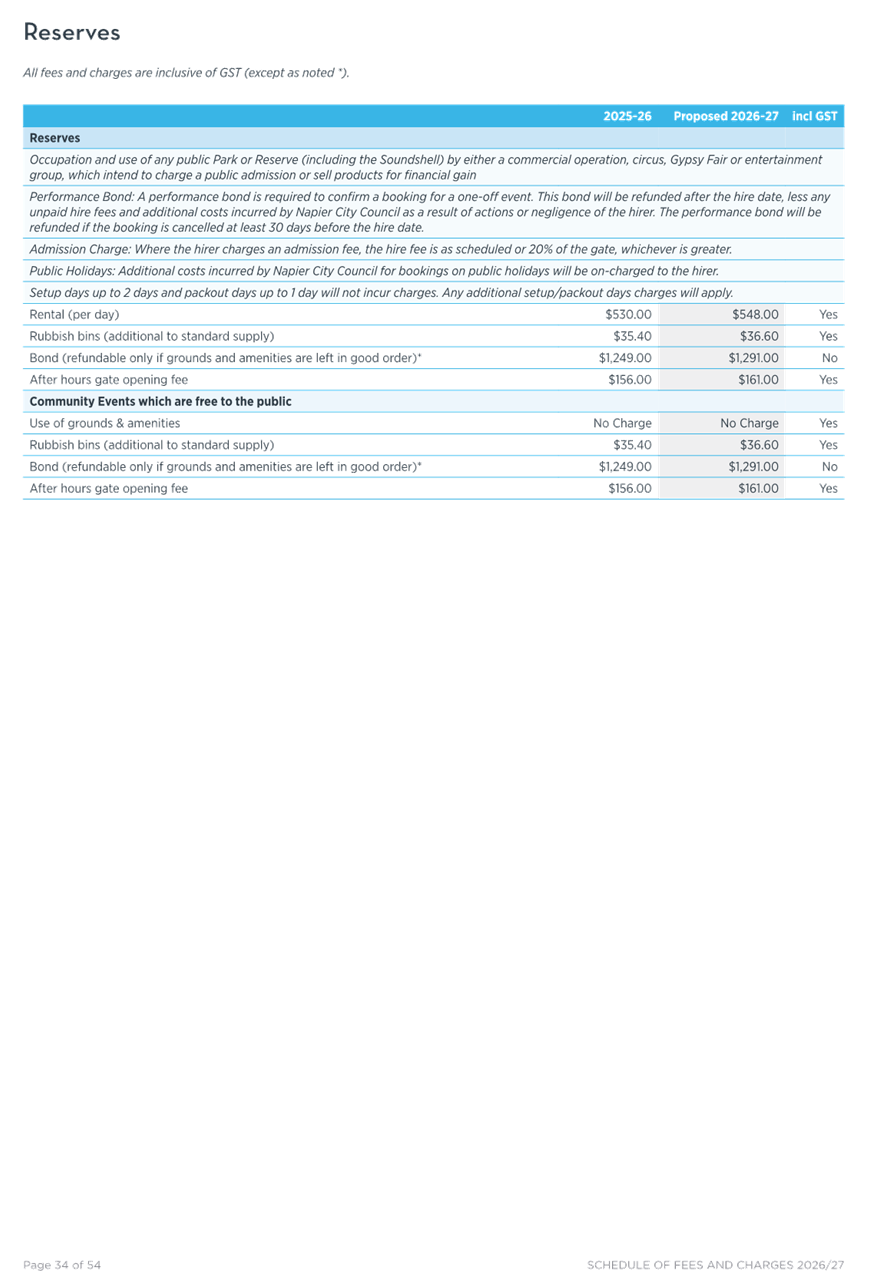
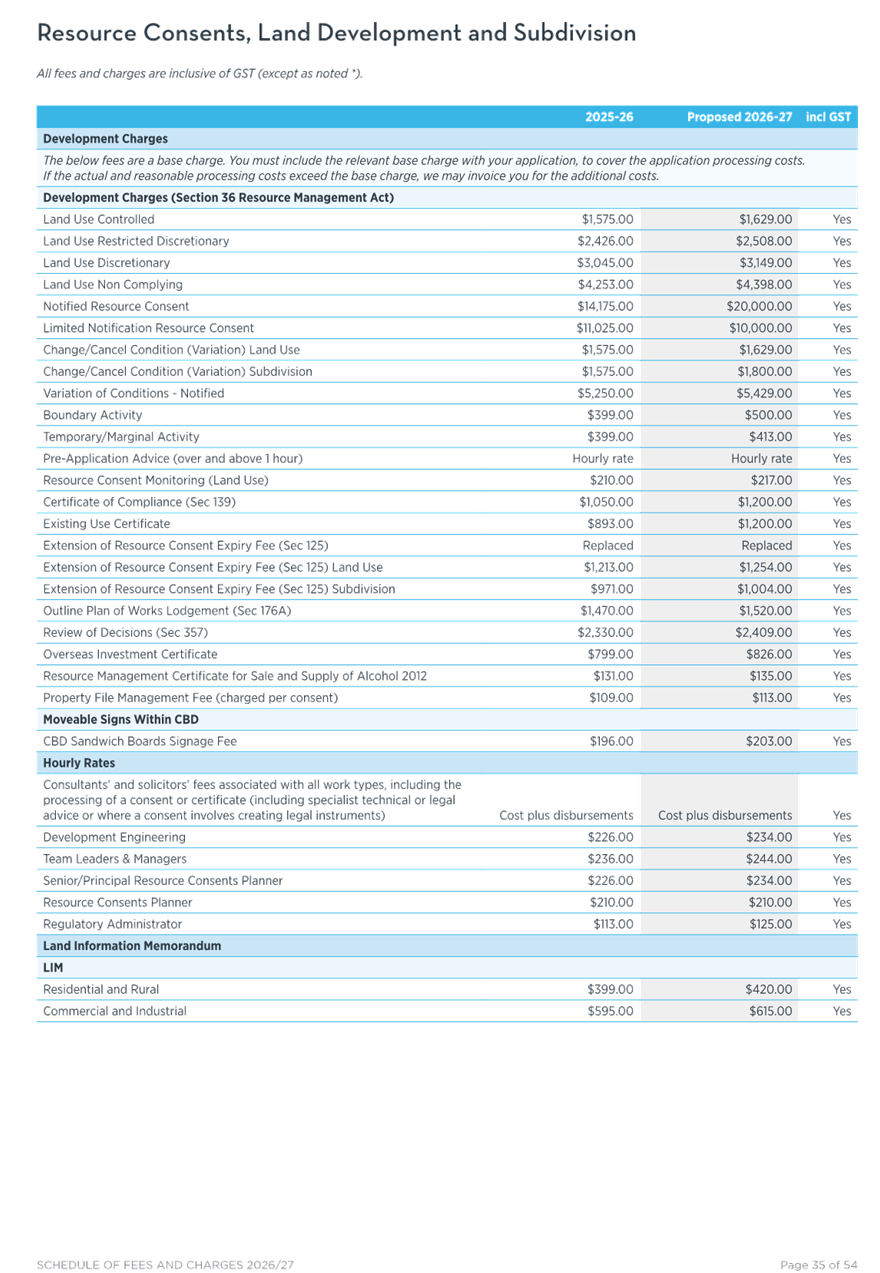
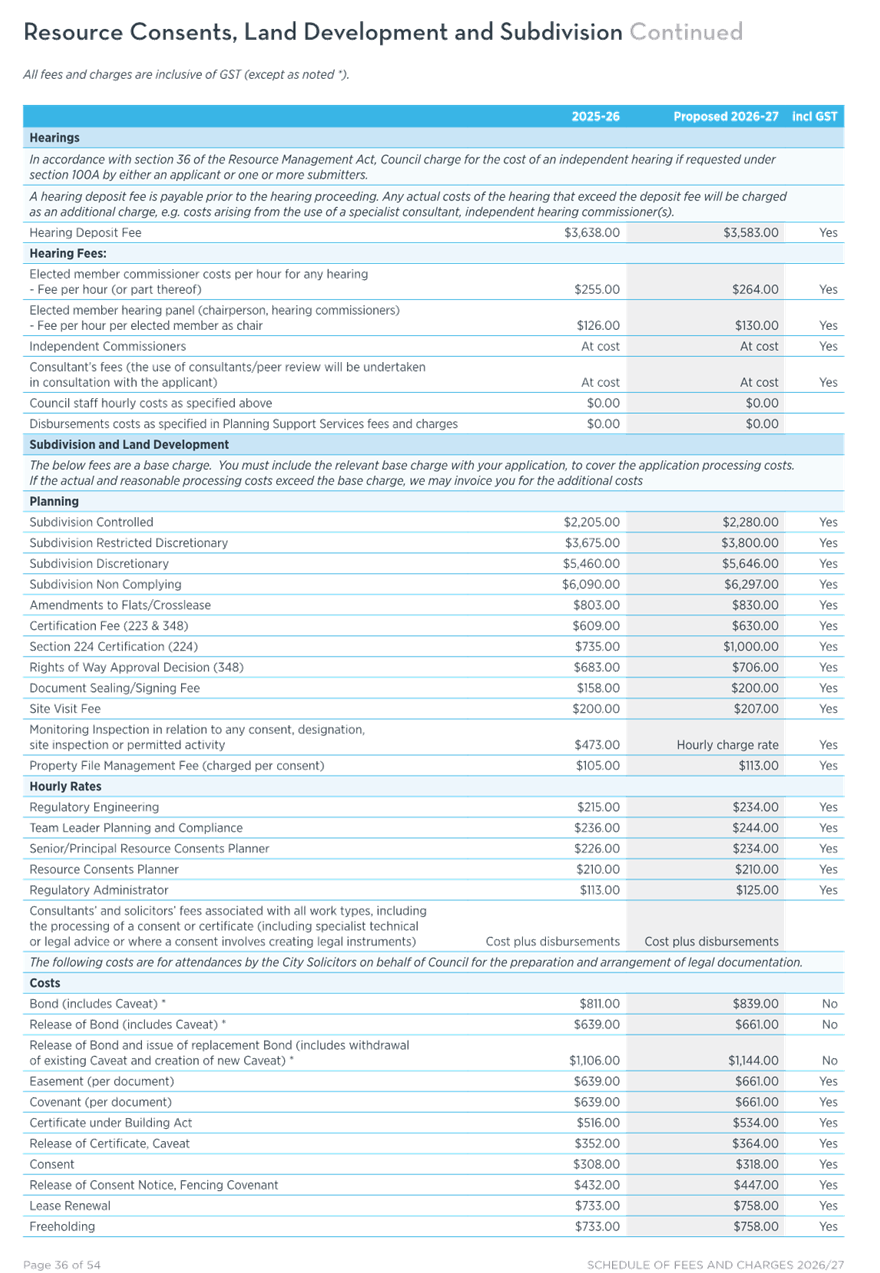
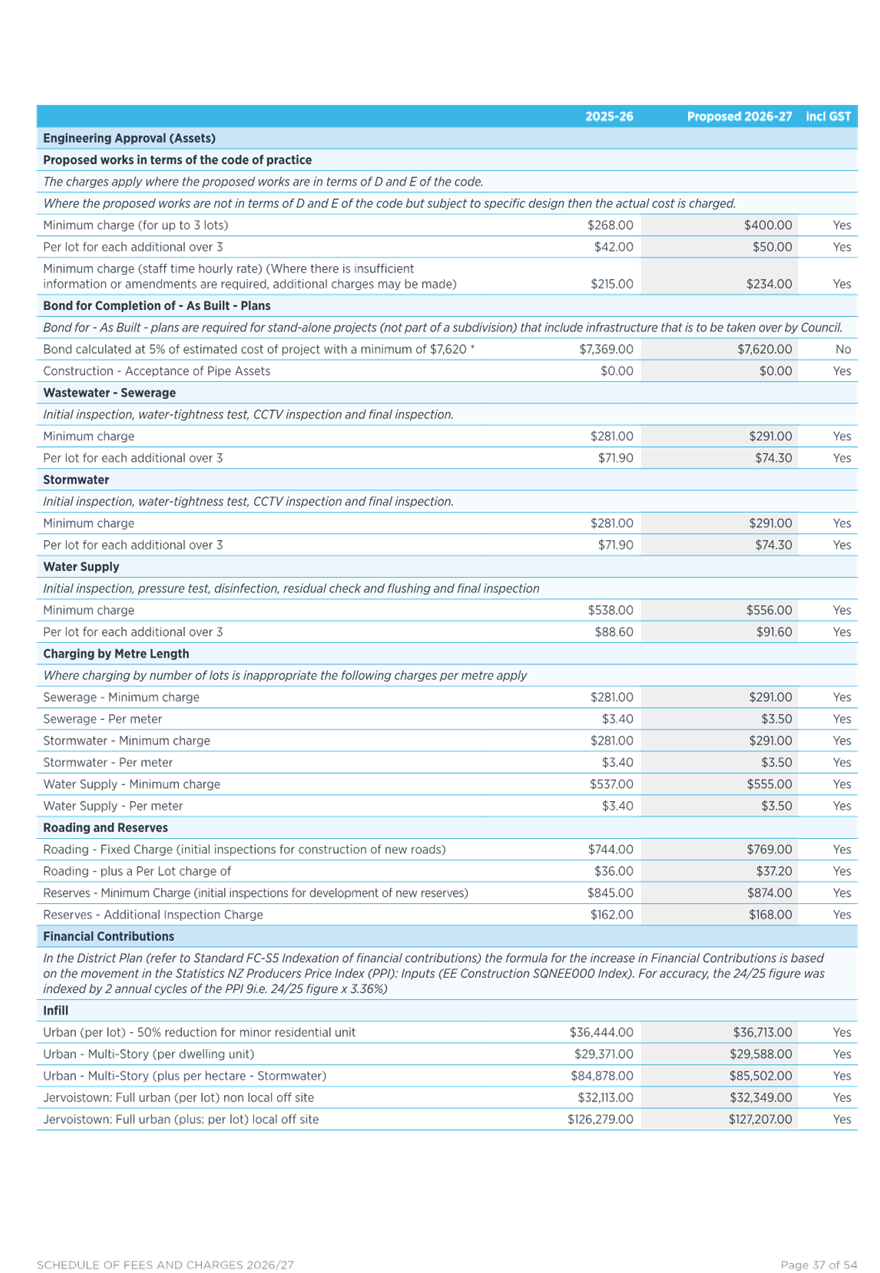
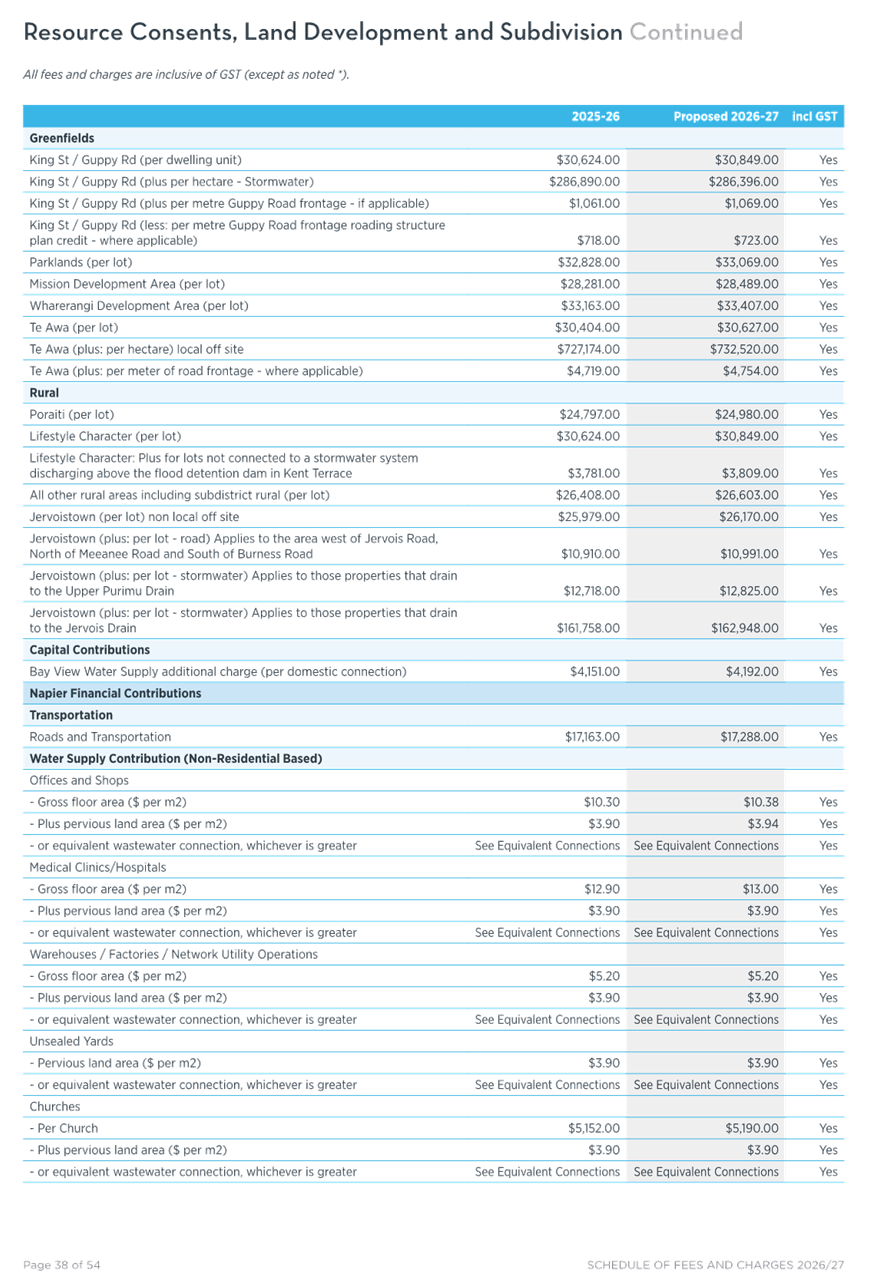
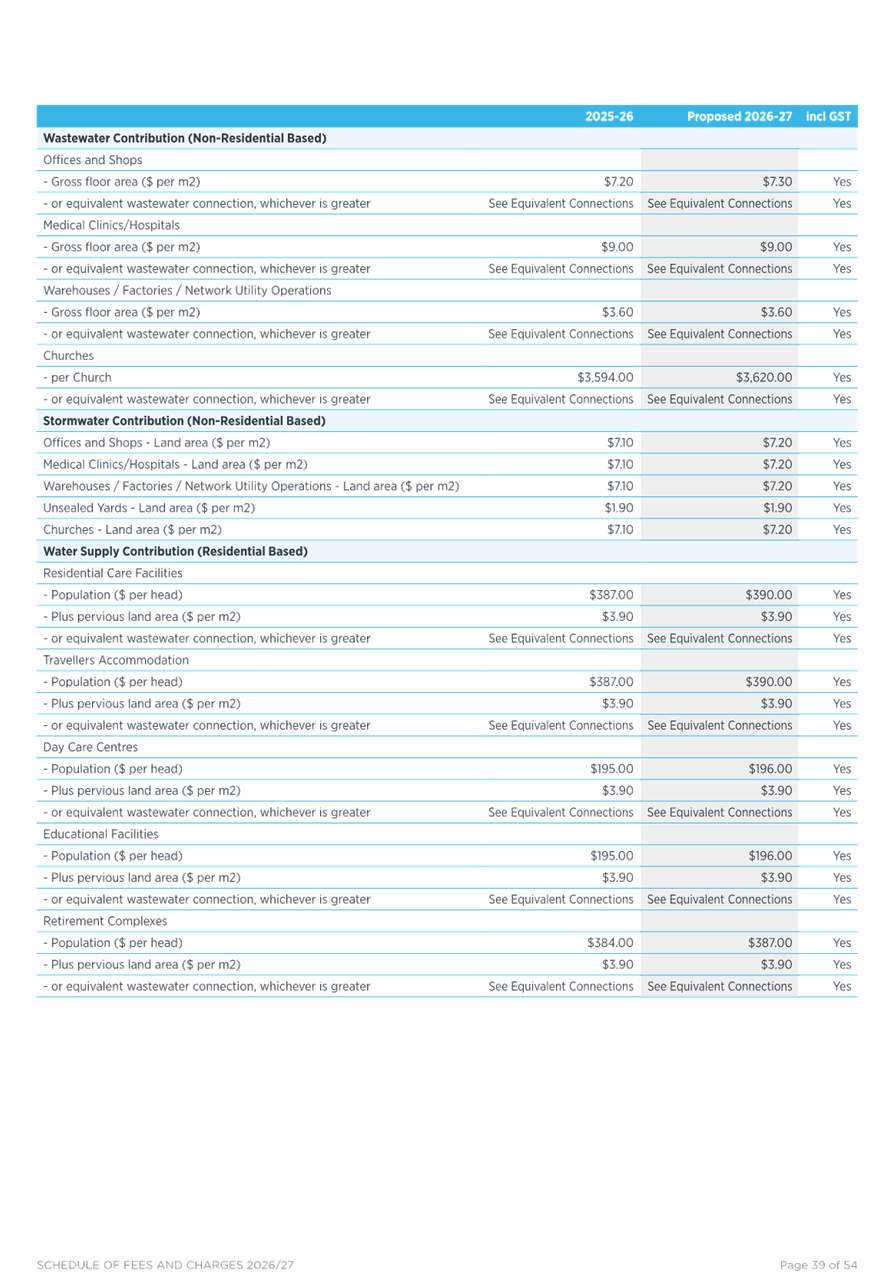
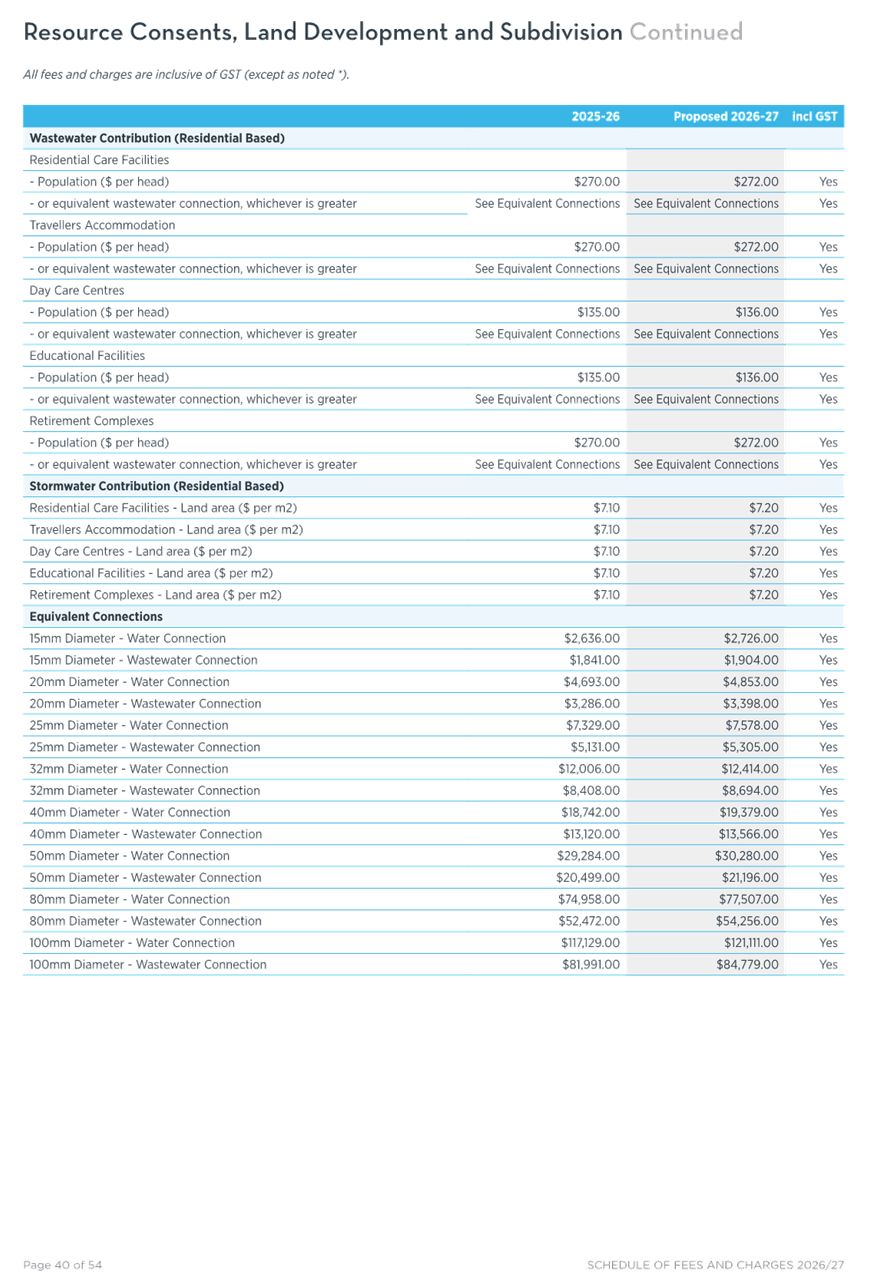
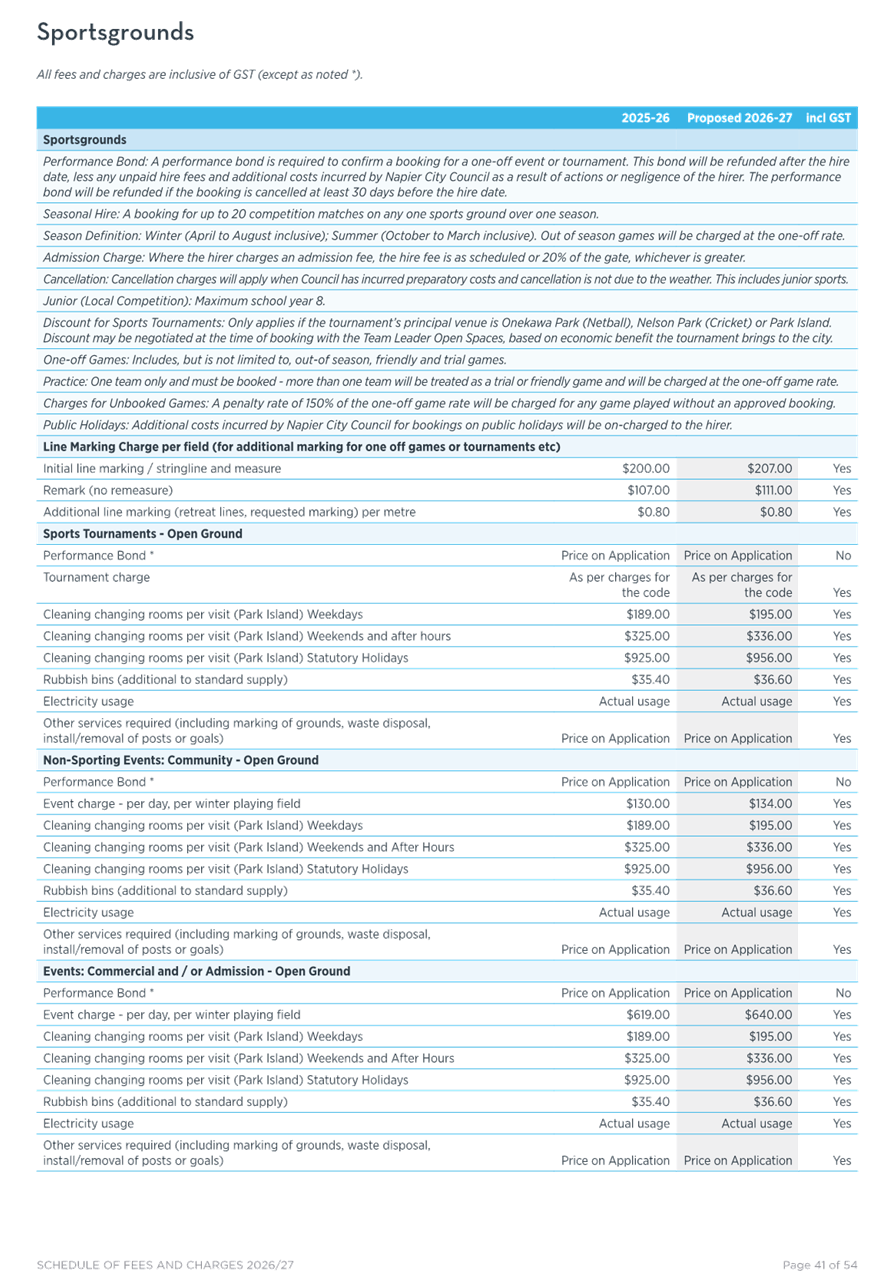
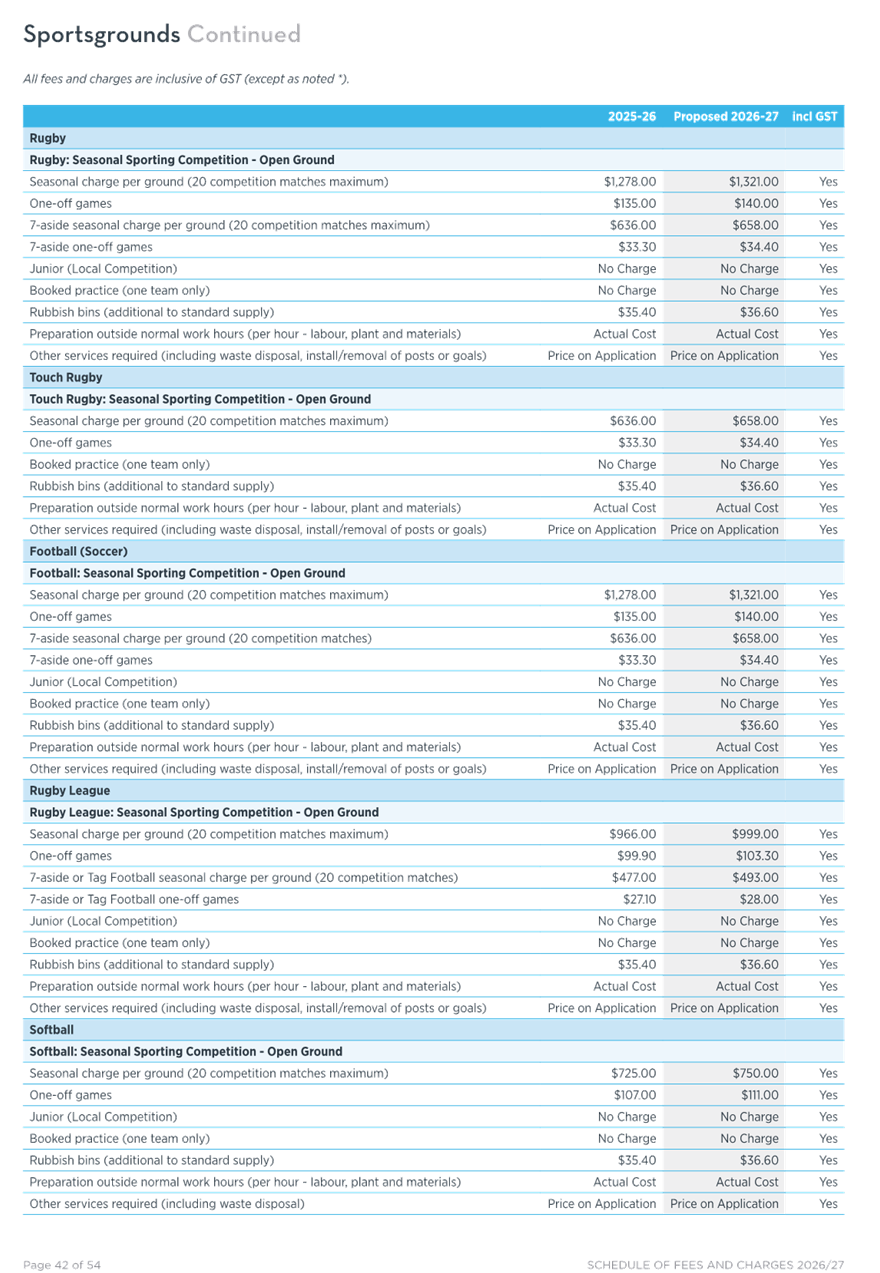
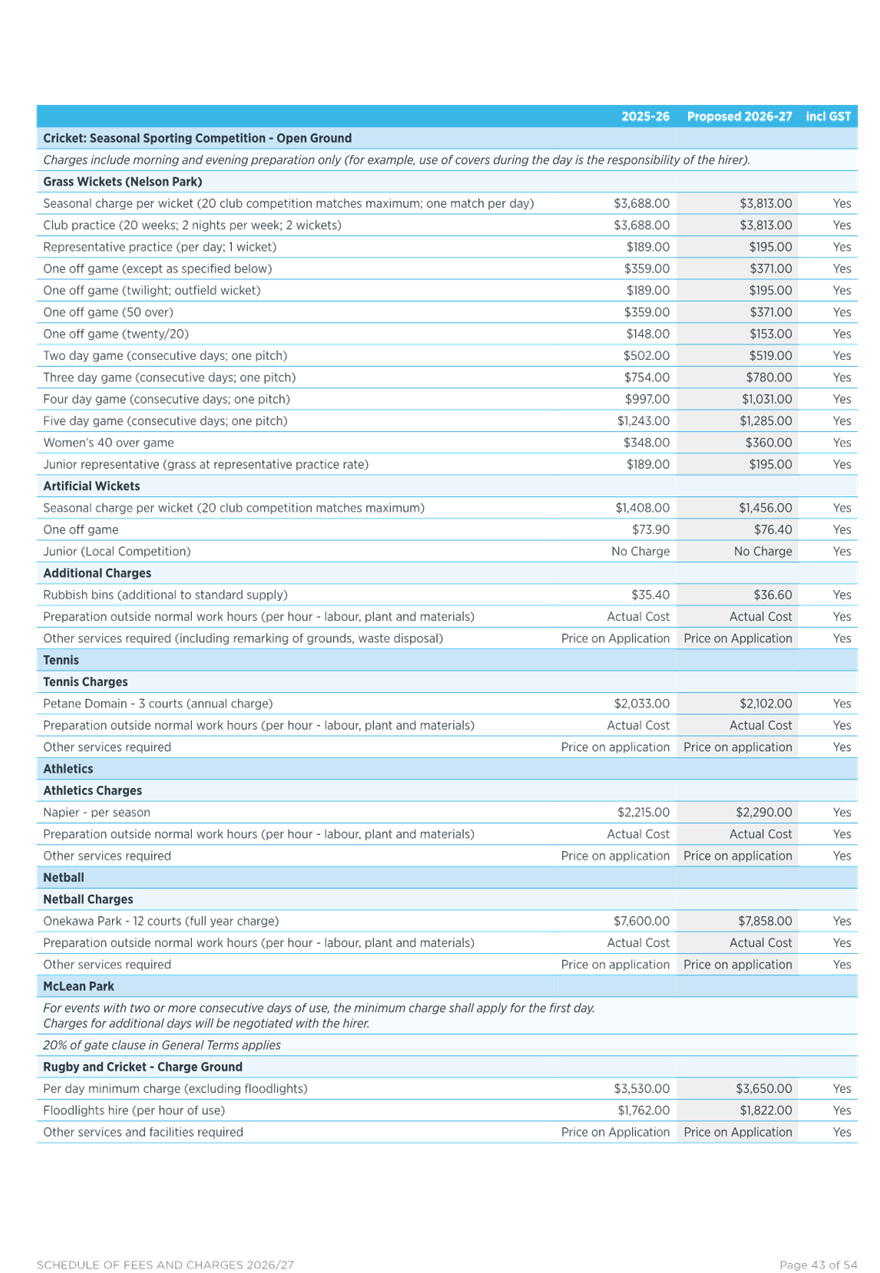
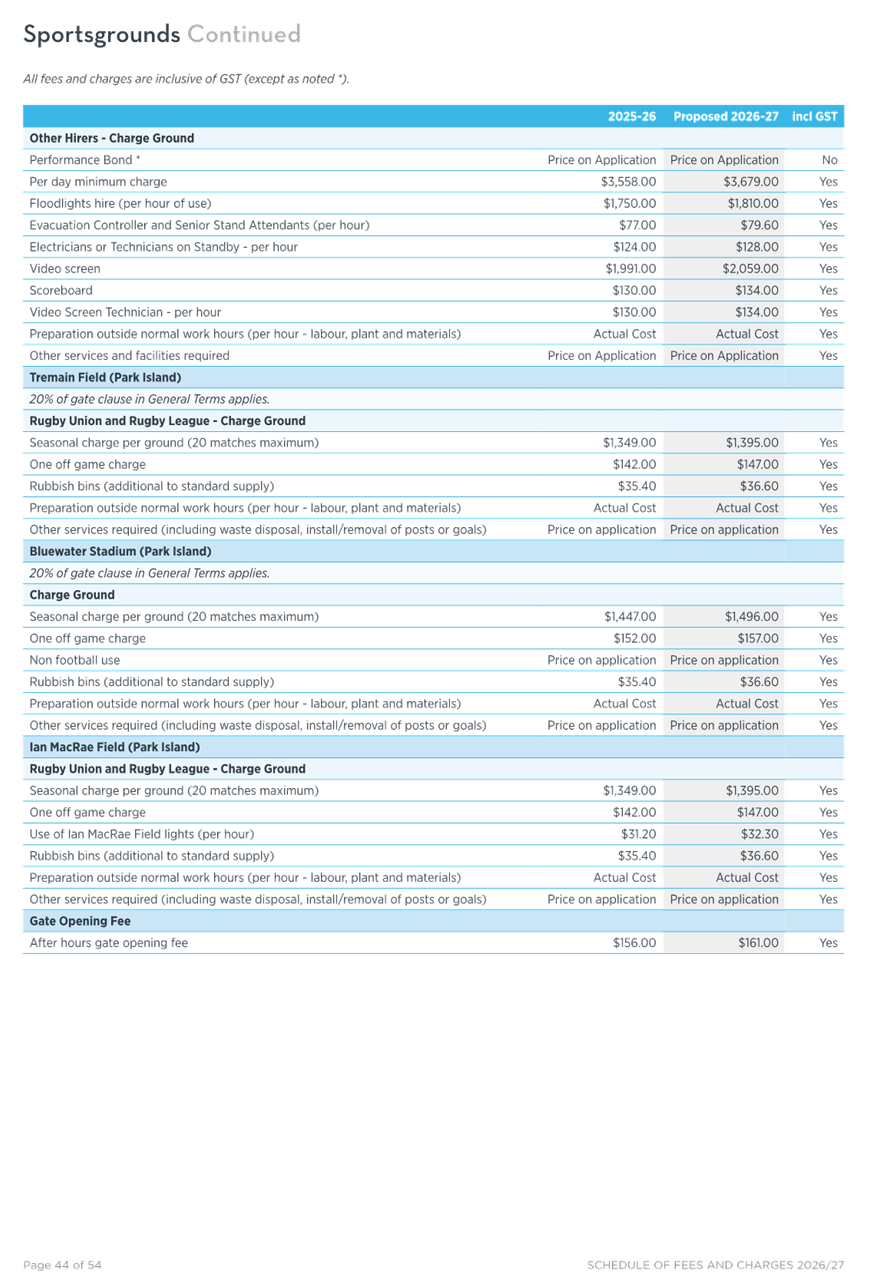
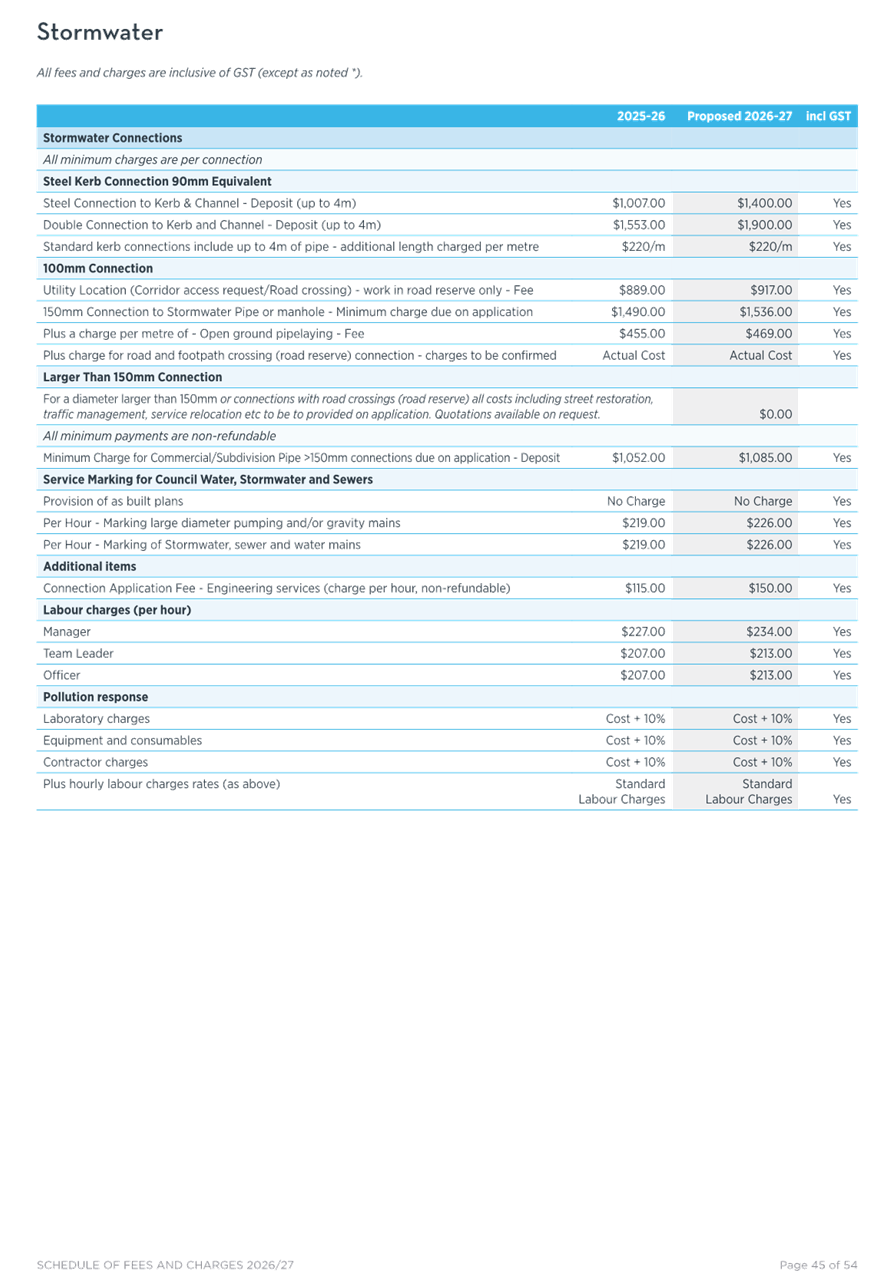
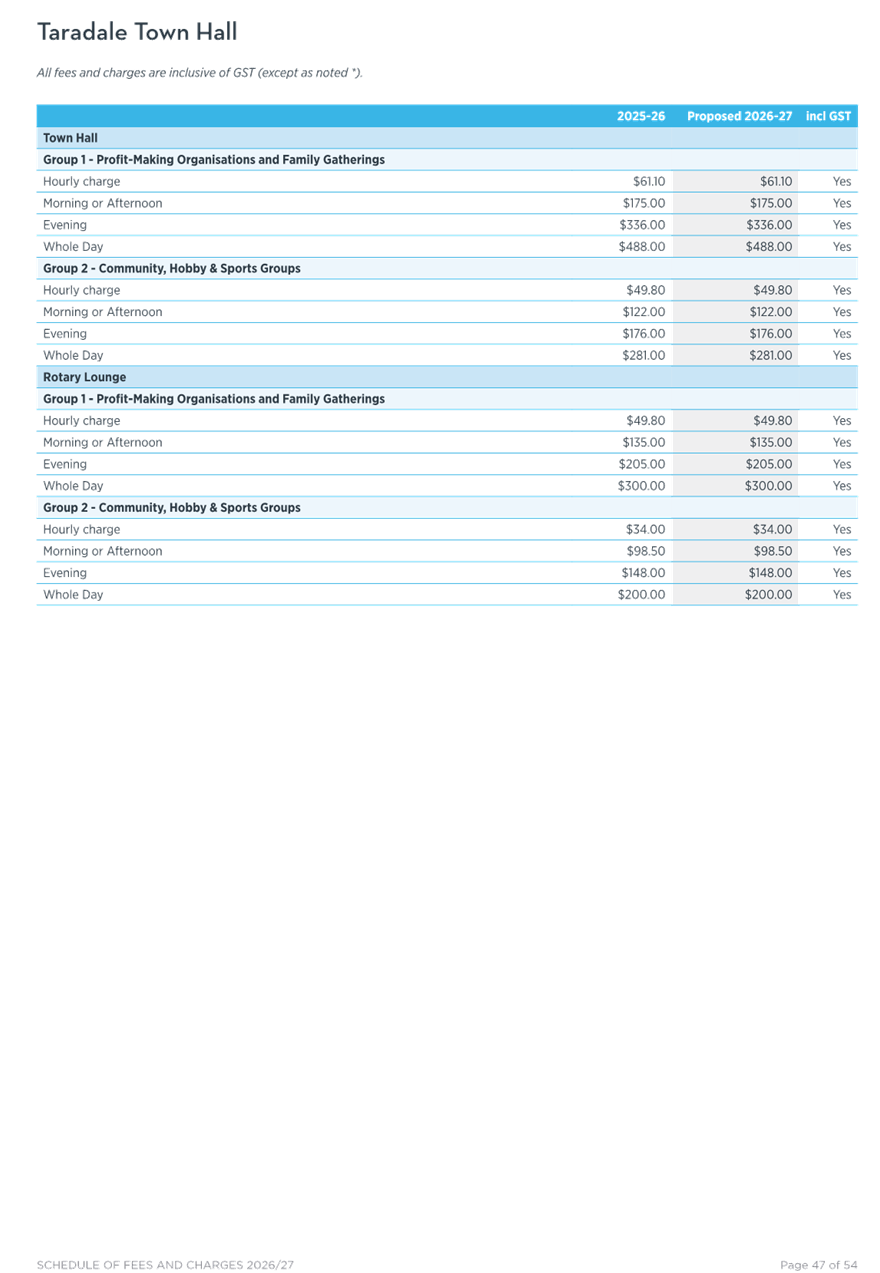
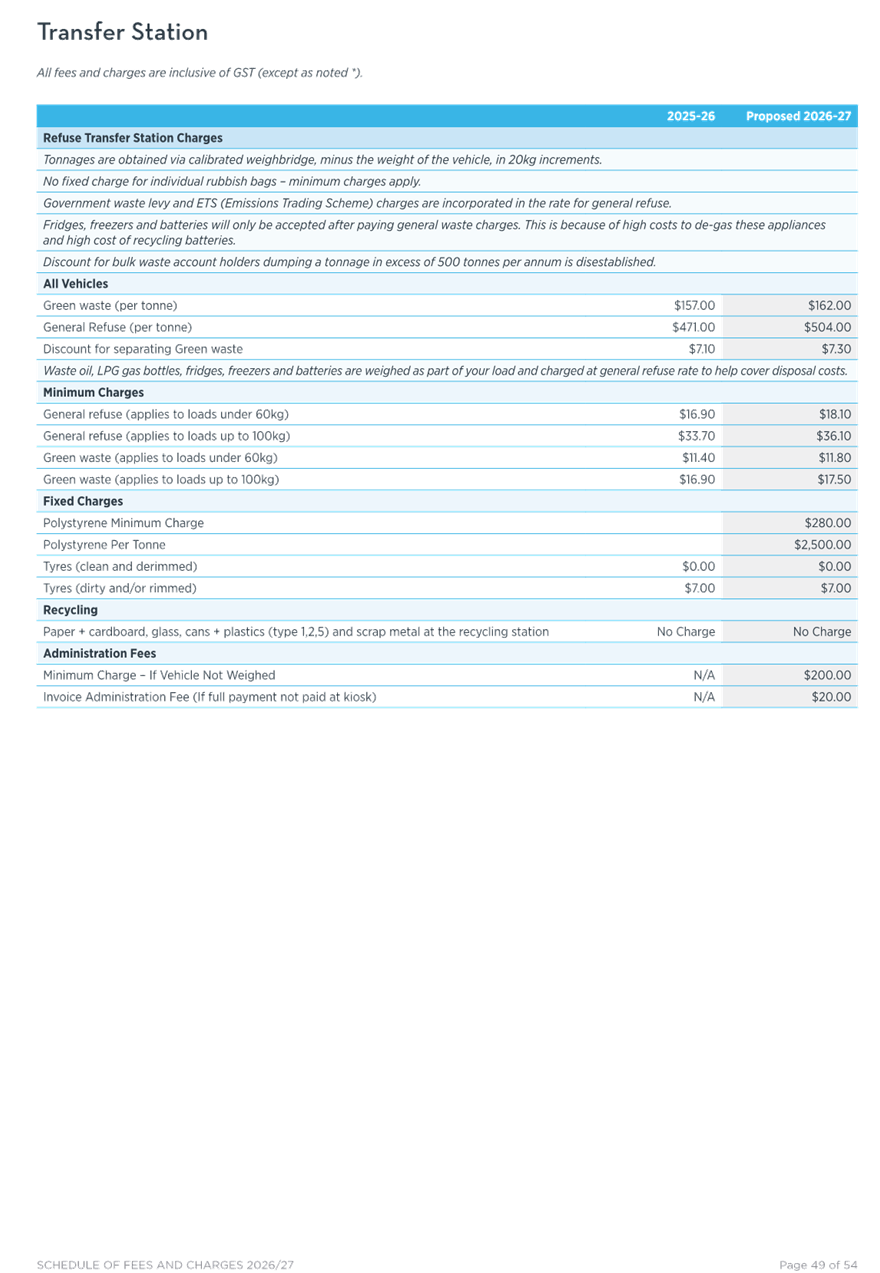
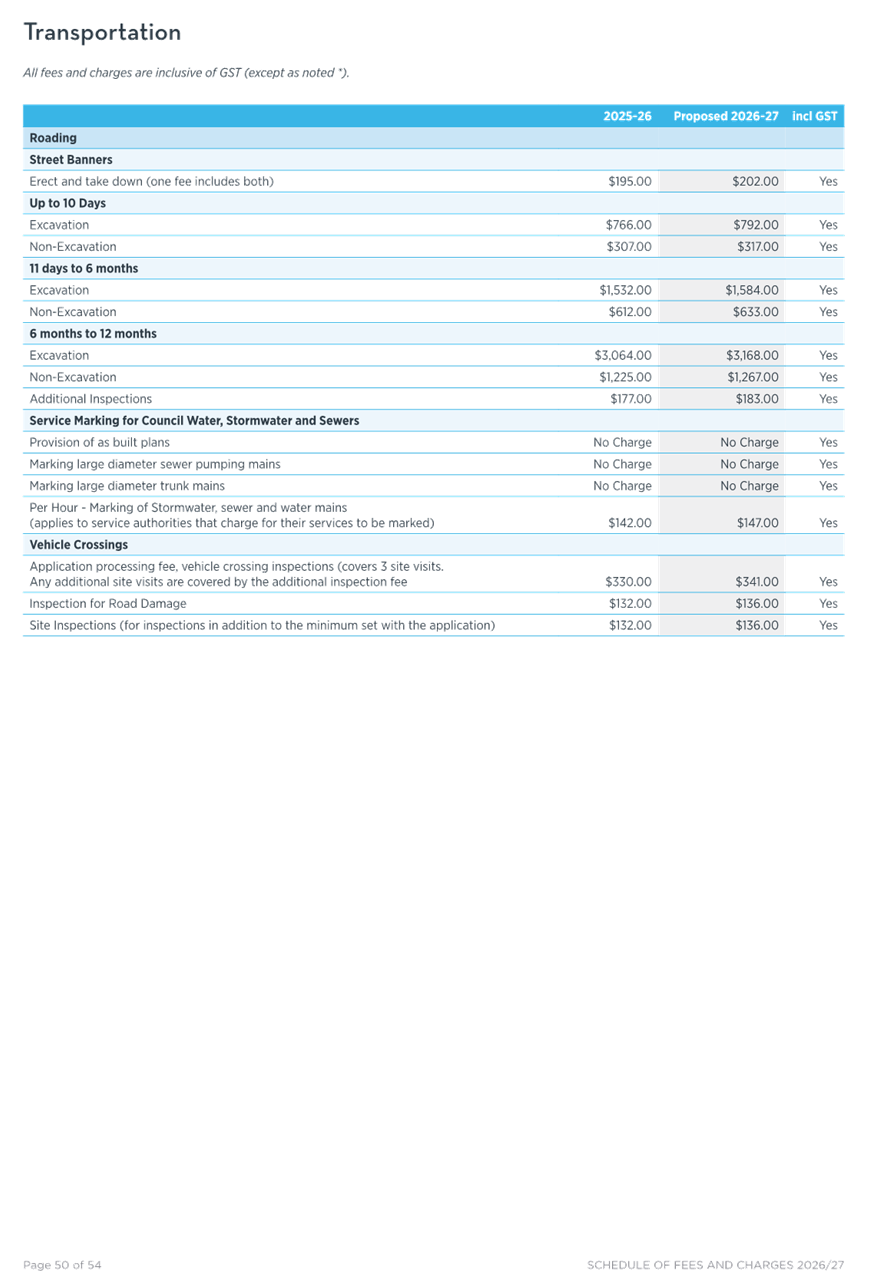
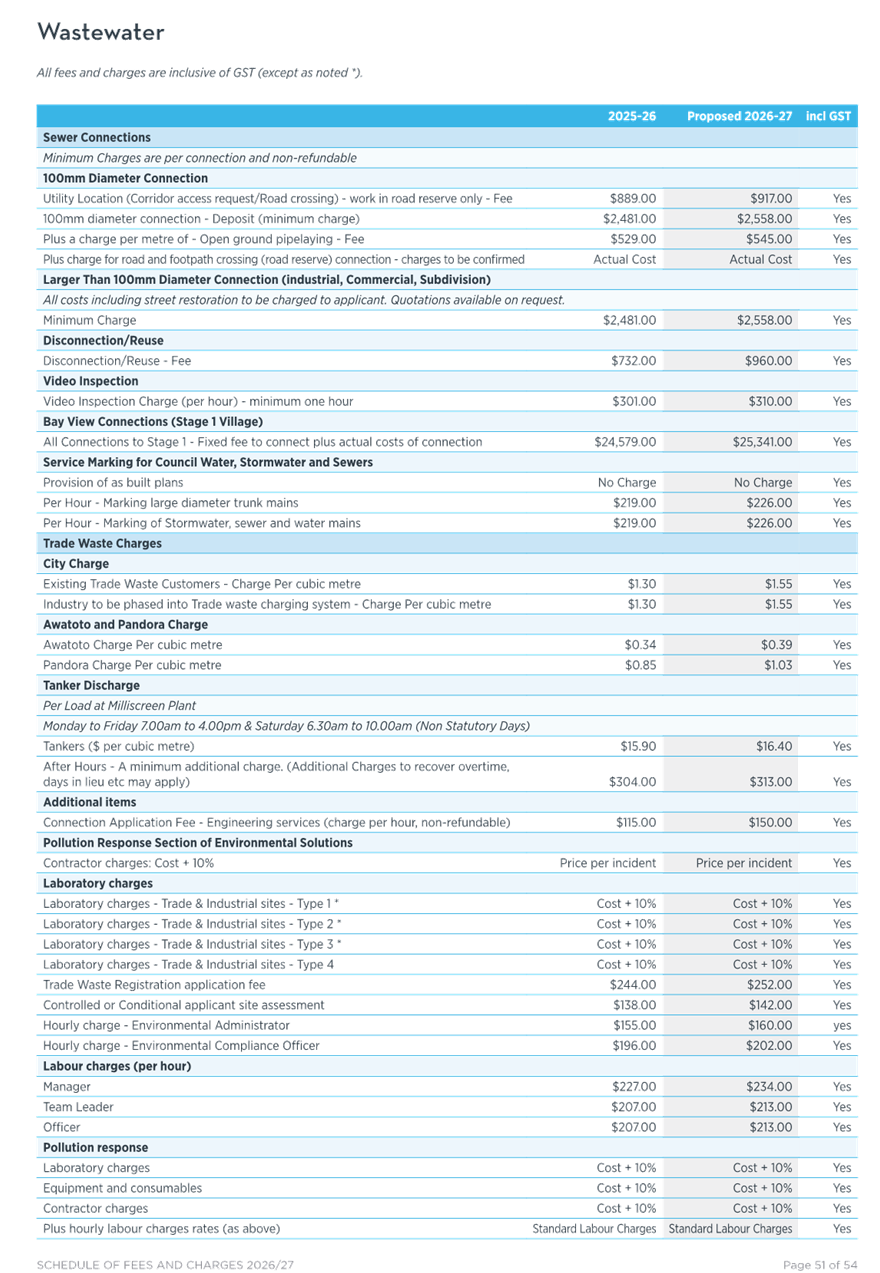
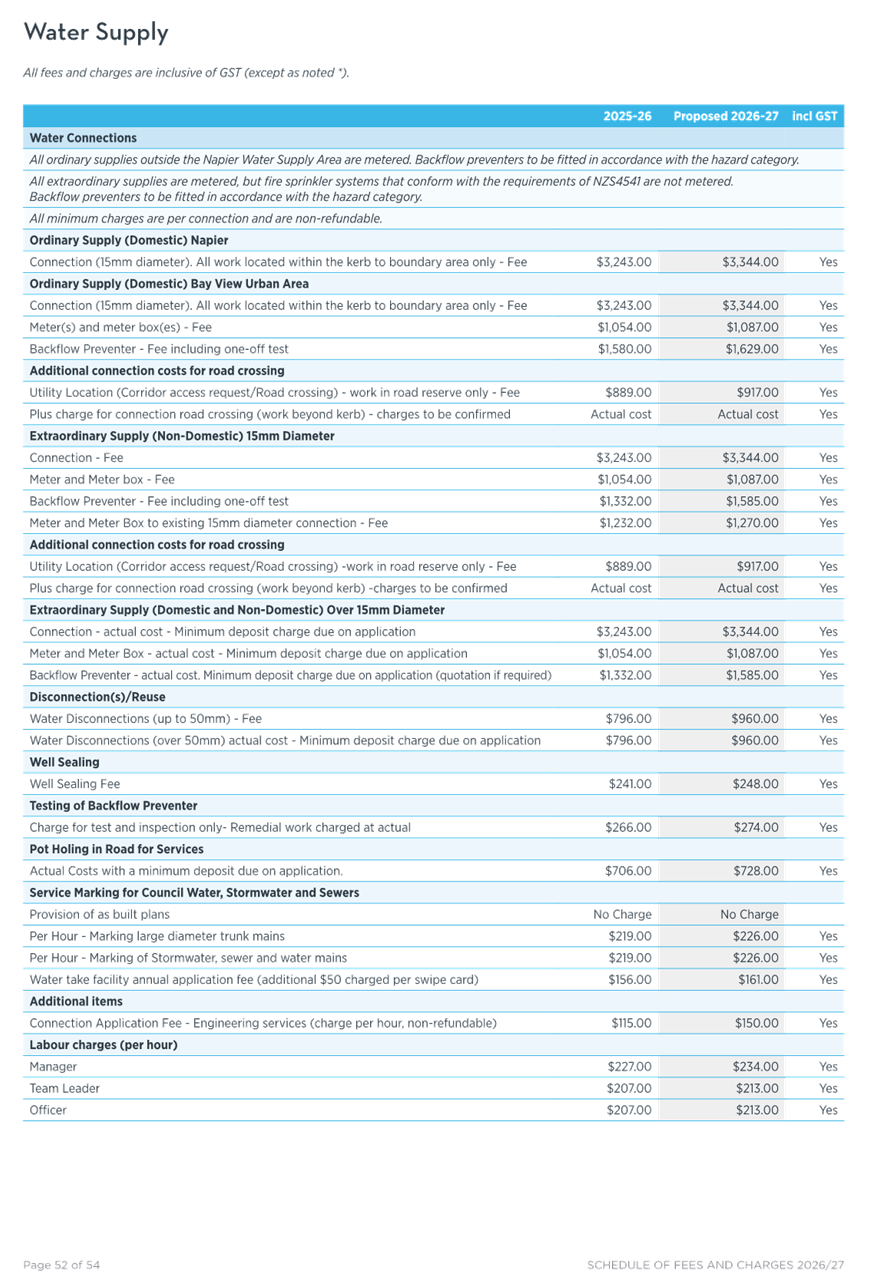
ii. Proposed changes to Fees & Charges 2026/27: Update on general CPI increases. See attached Draft Schedule of Fees & Charges 2026/27 (Doc Id 1900026).
iii. Rephasing of the capital programme: Update on the changes made to the capital programme as summarised in section 4.2.
iv. CCTV targeted rate (Revenue & Financing Policy changes): See Revenue & Financing Policy paper for details.
v. LV to CV for Roading (Revenue & Financing Policy changes): See Revenue & Financing Policy paper for details.
e. Note the proposed capital programme amounts to $167.5M, which is $25.2M more than the capital programme forecast in the Three-Year Plan 2024-27 ($142.3m).
f. Agree to the inclusion of a 20% timing assumption to be applied to the 2026/27 capital programme, noting:
i. That once applied, the assumption brings the total capital programme to $131.6M, and
ii. The assumption recognises that projects don’t always proceed as planned due to external factors beyond Council’s control that have the potential to impact work as planned, while still providing the flexibility needed to maximise delivery.
g. Adopt the attached Draft Schedule of Fees & Charges 2026/27 (Doc Id 1900026).
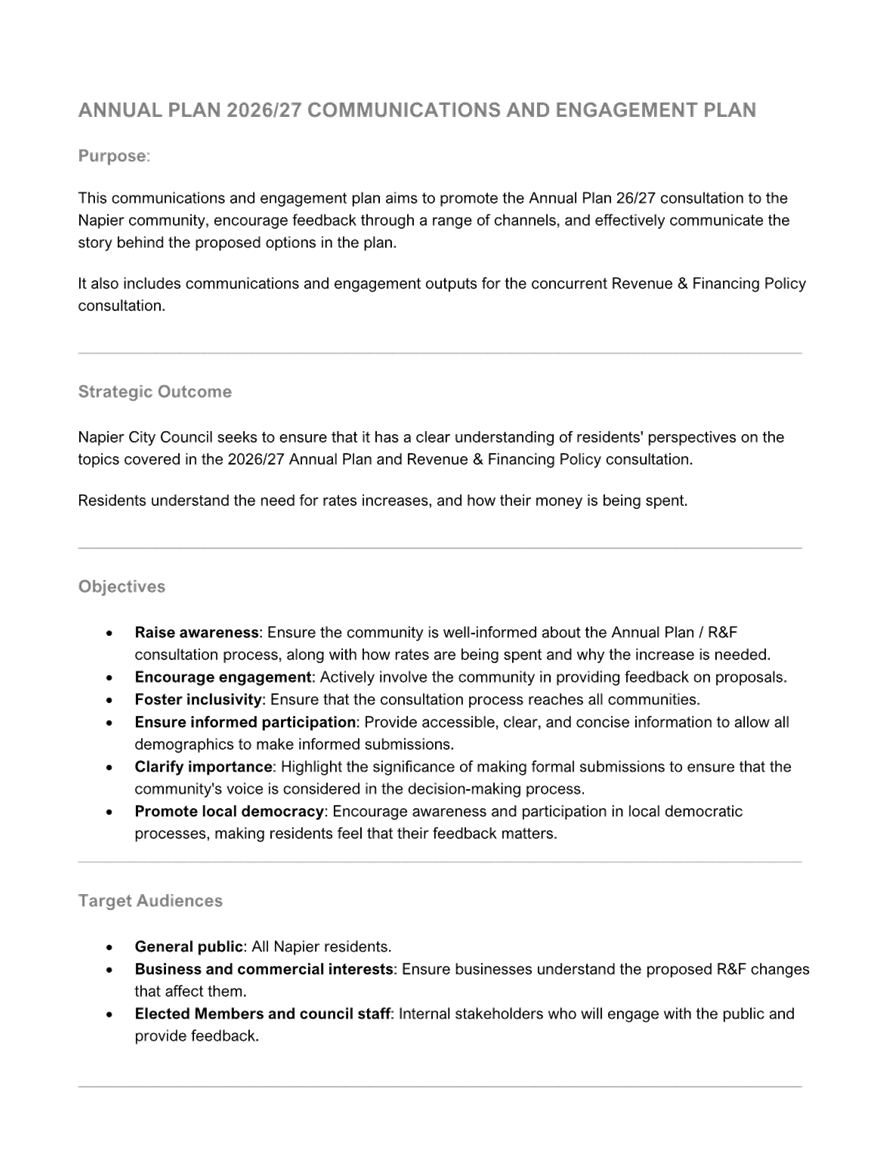
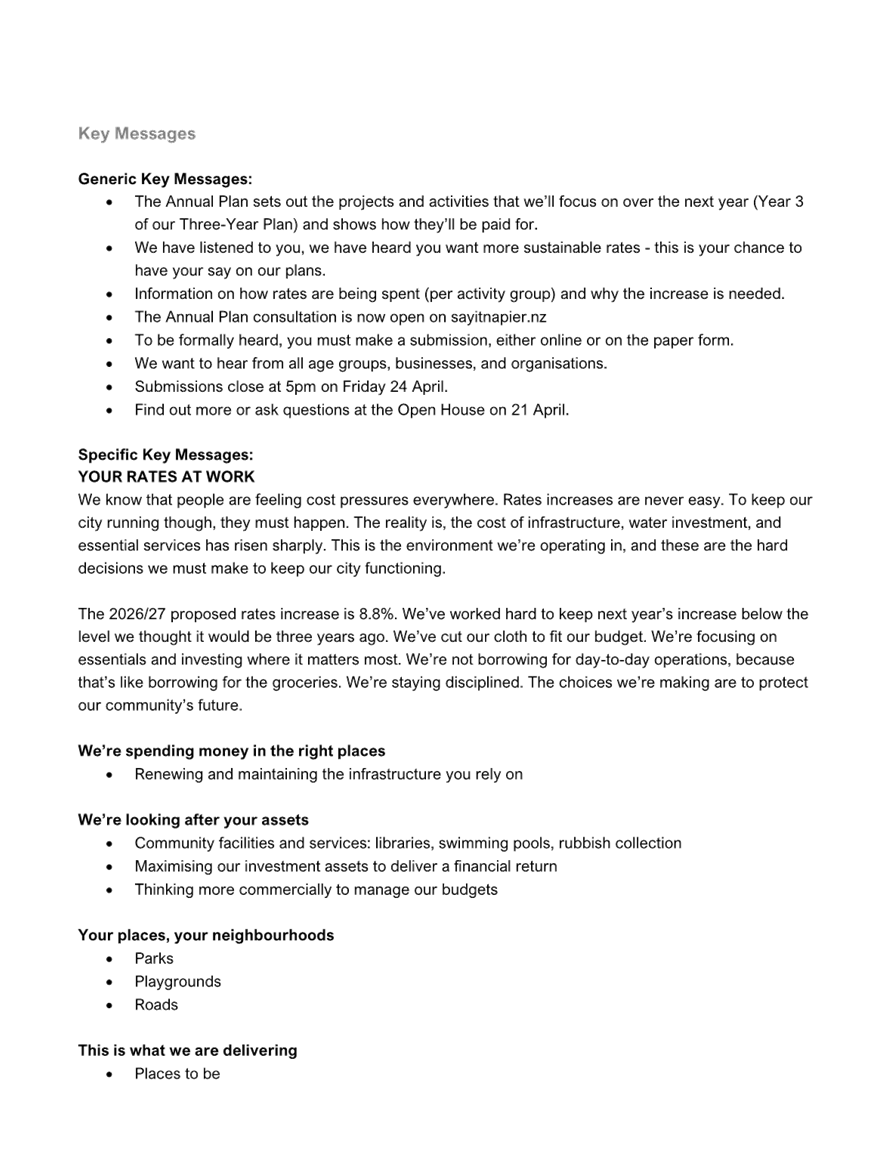
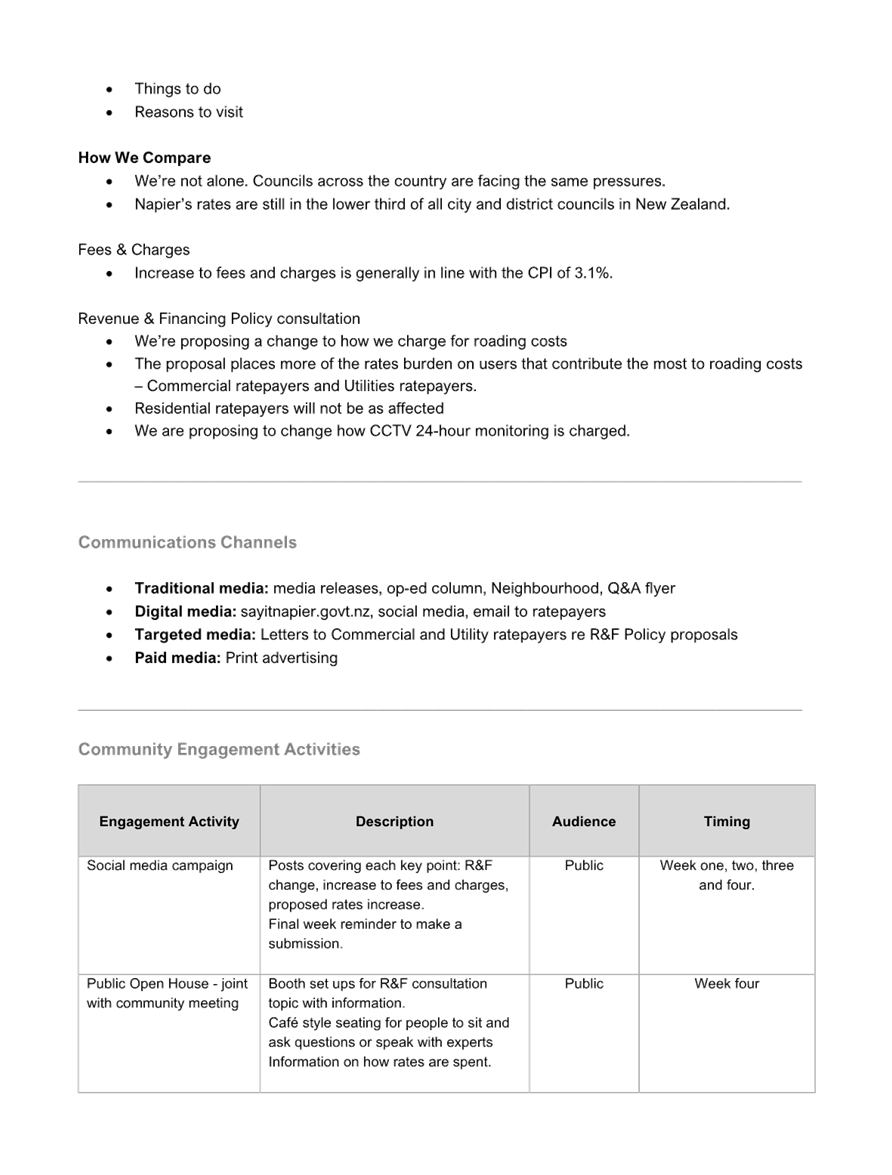
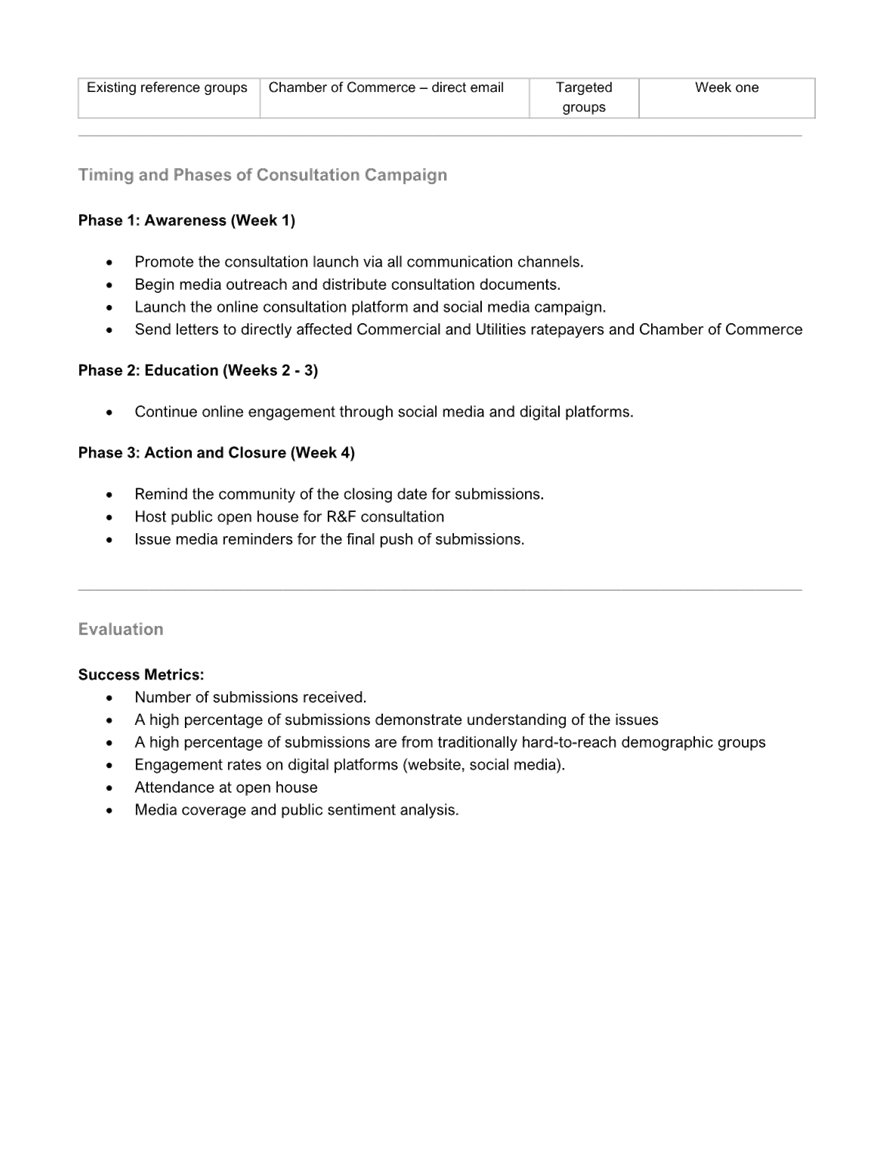
h. Adopt the attached Annual Plan 2026/27 Communications and Engagement Plan (Doc Id 1900025).
3.1 Councils must prepare and adopt an Annual Plan (AP) for each financial year that a Long Term Plan (LTP) is not produced (the two interim years between reviewing the LTP every third year), as per section 95 of the Local Government Act (LGA).
3.2 Napier City Council’s Three-Year Plan 2024-27 (replacing the LTP this cycle due to the disruption caused by Cyclone Gabrielle) was adopted on 27 June 2024. The 2026/27 financial year represents year three of the current Three-Year Plan (TYP).
3.3 As per data sourced from the Taxpayers’ Union website[9], in 2025/26 NCC had the 16 lowest average residential rates out of 58 other non-unitary councils across NZ. For regional context, Wairoa District Council ranked 9, Central Hawke’s Bay District Council 36, and Hastings District Council 47.
|
Council name |
2025/26 |
Rank for 2025/26 |
|
Wairoa District Council |
$3,406 |
9 |
|
Napier City Council |
$3,620 |
16 |
|
Central Hawke's Bay District Council |
$4,172 |
36 |
|
Hastings District Council |
$4,646 |
47 |
3.4 Officers began the AP budget review process in November 2025 and held three workshops with Elected Members over February (3, 19, 24) 2026 to scrutinise capital and operating budgets. This review aimed to identify potential cost savings and efficiencies, while ensuring proposed budgets still enable the delivery of the work Council committed to through the adoption of the TYP.
3.5 Financial sustainability and responsible investment in critical infrastructure were important considerations that remained front of mind throughout the budget review process.
3.6 The direction provided by Council at the February workshops forms the basis of this report.
4.0 Discussion - Ngā Whakamārama:
4.1 Proposed rates increase
The direction provided by Council to date results in an average proposed rates increase of 8.8% for 2026/27, which is 0.3% less than the rates increase of 9.1% proposed in the TYP 2024-27 for the corresponding year.
As noted in the section above, baseline expenditure and financial forecasts were reviewed in detail, and cost savings have been actioned where possible as part of ongoing efficiency programmes. The 8.8% proposed rates increase for 2026/27 is made up of:
· Borrowing costs (5.7%)
· Labour costs reflecting 2025/26 market rates and reduced labour capitalisation following the organisation redesign reflecting slimmer internal delivery teams and a focus on outsourcing (3.4%)
· CCTV targeted rate preferred option (0.2%)
· Growth in rating base assumption as per TYP (0.3%)
· Operating savings (-0.8%)
The 8.8% average rates increase will be socialised with the community through the Annual Plan consultation document.
4.2 Proposed capital programme
4.3 While Council has not deviated from what was set out in the TYP, work on projects have been rephased (brought forward or pushed out) to prioritise investment in critical infrastructure.
The below table provides a summary of the capital plan for year 3 of the TYP compared to the proposed capital plan for the AP 2026/27. The figures include vested assets.
|
Activity Group |
TYP 26/27 |
Annual Plan 26/27 |
Change (+/-) |
Factors contributing to change |
|
Governance and Representation |
$87,200 |
$87,200 |
- |
No change |
|
Property Assets |
$51,825,828 |
$61,108,132 |
+$9,282,304 |
Civic and Library buildings budget rephased to reflect spend forecast. Funding rephased for Nelson Quay repair. |
|
Transportation |
$36,531,126 |
$28,531,126 |
-$8,000,000 |
Brookfields Bridge rephased from 26/27 to 27/28 to reflect spend forecast. |
|
Community and Visitor Experiences |
$19,006,574 |
$15,409,490 |
-$3,597,084 |
Three projects partially rephased from 26/27 to 27/28 to enable preliminary work (Taradale Hall Refurbishment, McLean Park Catering and Refrigeration, Retirement Housing).
|
|
Support Units |
$4,254,930 |
$3,215,682 |
-$1,039,248 |
Internal IT costs rephased from 26/27 to 27/28. |
|
Other Infrastructure |
$3,539,412 |
$3,809,886 |
+$270,474 |
Increased cost of Omarunui Landfill. |
|
City Strategy |
$886,706 |
$3,981,550 |
+$3,094,844 |
Increase due to new animal shelter. |
|
Water Supply |
$11,033,275 |
$29,653,033 |
+$18,619,758 |
Enables delivery of critical drinking water compliance infrastructure, including Water Treatment Plant 2 (Taradale), trunk mains, and the Mataruahou Reservoir (Enfield replacement). Prevents delay to compliance pathway and strengthens network resilience. |
|
Stormwater |
$6,074,569 |
$10,929,457 |
+$4,854,888 |
Maintains delivery of interdependent projects with funding and contractual commitments, including Te Awa Pump Station (part NCC / part NIIF), Taradale Road Culvert, and flood alleviation works. Reduces regulatory and flood risk exposure. |
|
Wastewater |
$9,109,963 |
$10,742,840 |
+$1,632,877 |
Sustains progress on the Wastewater Outfall Renewal and other high-risk assets to manage environmental, health and safety, and future compliance risks. |
|
Grand Total |
$142,349,583 |
$167,468,395 |
+$25,118,813 |
|
|
Timing Assumption |
|
($35,877,735) |
|
|
|
Total Capital Annual Plan 26/27 |
|
$131,590,660 |
|
|
As noted in the table above, officers are recommending the inclusion of a 20% timing assumption to be applied to the 2026/27 capital programme. The assumption recognises that projects don’t always proceed as planned due to unforeseen project changes, resource constraints, and external factors beyond Council’s control. Including a timing assumption recognises that these factors have the potential to impact work as planned, while still providing the flexibility needed to maximise delivery.
4.4 Topics to be included in the consultation document
As per section 95 of the Local Government Act 2002 (LGA), there is a legislative requirement for Council to consult with its community on an Annual Plan if there are significant/material changes from what was set out in the relevant year of the Long Term Plan. Napier City Council’s Significance and Engagement Policy has been used to assess the significance/public interest in matters discussed throughout the Annual Plan development process to date. As a result of this assessment process, the below topics are expected to be included in the Annual Plan consultation document:
· Proposed rates increase: Update on proposed increase.
· Proposed changes to Fees & Charges 2026/27: Update on general CPI increases. See attached Draft Schedule of Fees & Charges 2026/27 (attachment 1).
· Rephasing of the capital programme: Update on the changes made to the capital programme as summarised in section 4.2.
· CCTV targeted rate (Revenue & Financing Policy changes): See Revenue & Financing Policy paper for details.
· LV to CV for Roading (Revenue & Financing Policy changes): See Revenue & Financing Policy paper for details.
5.0 Options - He kōwhiringa anō:
5.1 Option One - Recommended Option
Adopt the content of the report titled ‘Annual Plan 2026/27 – Adoption of Underlying Information’ as the underlying information that will inform the development of the Annual Plan 2026/27 consultation document and supporting information and direct officers to prepare an Annual Plan consultation document to be reported back for Council adoption on 19 March 2026.
Advantages
· Enables officers to prepare the consultation document so community consultation can commence as planned.
Disadvantages
· N/A
5.2 Option Two
Do not adopt the content of the report titled ‘Annual Plan 2026/27 – Adoption of Underlying Information’ as the underlying information that will inform the development of the Annual Plan 2026/27 consultation document and supporting information and do not direct officers to prepare an Annual Plan consultation document to be reported back for Council adoption on 19 March 2026.
Advantages
· N/A
Disadvantages
· Puts NCC at risk of missing legislated adoption deadline for the Annual Plan 2026/27 of no later than 30 June.
Next Steps - Te Koke
5.2 19 March – Council meeting to adopt consultation document
5.3 30 March – Community consultation opens
5.4 24 April – Community consultation closes
5.5 May – Hearings and deliberations
5.6 25 June – Council meeting to adopt final Annual Plan 2026/27
|
Draft Schedule of Fees & Charges 2026/27 |
Doc Id: 1900026 |
|
|
Annual Plan 2026/27 Communications and Engagement Plan |
Doc Id: 1900025 |
|
Summary of Considerations - Tuhinga Whakarāpopoto: |
|
Fit with purpose of Local Government - Ngā aronga tā te Kaunihera- ā-rohe kōrero Council is required to give effect to the purpose of local government as set out in Section 10 of the Local Government Act 2002. That purpose is to enable democratic local decision-making and action by (and on behalf) of communities in the present and for the future. The Annual Plan involves community consultation and so enables democratic local decision-making. |
|
Māori Impact Statement - He kōrero whaitake tā te māori kōrero: Council holds and maintains strong relationships with mana whenua of Te Whanganui-a-Orotu, working in partnership with their mandated Māori entities. These relationships are maintained at both governance and operational levels through the Mayor, Chief Executive, Elected Members, and Te Waka Rangapū. Additionally, the Annual Plan process enables Māori to contribute to decision making through community consultation. |
|
Climate Change - Te Huringa o te āhuarangi This decision does not have an impact on: • Greenhouse gas emissions (from council operations, community activities, or associated infrastructure), • Napier’s adaptation to a changing climate (e.g. flooding, sea level rise, coastal erosion, inundation, drought, heatwaves), • Or is it itself likely to be impacted by these climate-related risks While projects and decisions made as part of the Annual Plan may have an impact, the process undertaken to develop the plan does not.
|
|
LTP/ Annual Plan/ Financial Strategy/ Infrastructure Strategy - Te Pae Tawhiti/ ā-tau / ā- Taunaki Ahumoni /ā- Taunaki Hanganga N/A – this is related to Annual Plan development. |
|
Financial considerations - Whai whakaaro Ahumoni: Financial considerations are outlined in sections 4.1 & 4.2. |
|
Significance and Engagement - Ko te Hiranga me te Hiwaia o te whakaaro: Annual Plan consultation will comply with the requirements set out in the LGA and Council’s Significance and Engagement Policy. As noted above, the Annual Plan consultation document will be reported back for Council adoption on 19 March 2026. Community consultation is planned for 30 March to 24 April 2026 and the Annual Plan 2026/27 Communications and Engagement plan (attachment 2) outlines the approach that will be followed. |
|
Consultation (internal/external) - Ngā Uiuinga (Ki te Kaunihera /ki ngā tāngata katoa) The information being proposed in relation to the Annual Plan 2026/27 has been developed with input from officers from across the organisation and is based on the direction Council provided at the three workshops that took place in February 2026. |
|
Risks: Legal/ Health and Safety etc. - Whaktūpato Ture/ Hauora me te Haumaru Failure to meet the Annual Plan legislated adoption deadline of no later than 30 June 2026. Control – following the timeline outlined in section 6.0. |
Ordinary Meeting of Council - 03 March 2026 - Open Agenda
2. Whiria Ahuriri- Napier's Multicultural Strategy
|
Type of Report: |
Operational |
|
Legal Reference: |
N/A |
|
Document ID: |
1892439 |
|
Reporting Officer/s & Unit: |
Rebecca Peterson, Senior Policy Analyst Margot Wilson, Community Resilience Manager |
1.0 Executive Summary - Te Kaupapa me te Whakarāpopototanga:
1.1 The purpose of the report is to seek Council’s approval to adopt the finalised Whiria Ahuriri - Napier’s Multicultural Strategy, which incorporates feedback on the draft received from the community. Developed in partnership with mana whenua, government, non-government organisations and diverse cultural community representatives, the Strategy establishes a framework for building social cohesion across Napier’s increasingly diverse population.
1.2 In September 2025, Council approved the draft Strategy for community consultation. Community feedback on the Strategy was positive, with strong support for the Strategy’s vision and five focus areas.
1.3 An Advisory Group (to be established) will guide implementation through a phased action plan over the next five years, ensuring the Strategy remains community-driven with Council as an enabling partner.
2.0 Recommendations - Ngā Tūtohunga
That the Council
a. Receive the report titled Whiria Ahuriri- Napier's Multicultural Strategy dated 03 March 2026.
b. Adopt the final Napier Multicultural Strategy - Whiria Ahuriri (Doc ID:1892439).
3.1 Napier’s Cultural Communities
Napier is becoming increasingly diverse. The 2023 Census shows nearly one in five residents identify with an ethnicity other than New Zealand European or Māori, while one in ten identify as Asian, Pacific, Middle Eastern, Latin American, African, or another ethnicity. Although Napier City's ethnic diversity remains below the national average, census data reveals steady growth across all ethnic groups. Key demographic trends between 2013 and 2023 include:
· Overseas-born residents increased from 14% to 18%
· Overall residents identifying with ethnicities other than NZ European or Māori increased to nearly 20%
· Asian residents increased from 3.5% to 4.2%
· Pacific peoples increased from 3.1% to 4.2%
· Middle Eastern, Latin American and African residents increased from 0.5% to 1.3%.
These trends demonstrate Napier’s evolving cultural landscape and provide the context for Whiria Ahuriri - Napier’s Multicultural Strategy.
3.2 Strategy Development
Napier City Council has a longstanding commitment to supporting newcomers and migrants. Prior to 2014, Council was funded by Immigration New Zealand to deliver Settlement Support Services. Following the end of this funding arrangement, Council established and coordinated the Hawke's Bay Settlement Forum, which continues to operate today. The Forum has been instrumental in leading the annual DiverCity cultural event, which celebrates and showcases Napier's diverse cultures.
The Strategy was developed in collaboration with two Advisory Groups:
· A Steering Group comprising local representatives from government and non-government organisations that provide services to Napier's cultural communities.
· A Reference Group of Napier residents representing diverse ethnicities and cultural backgrounds.
Both groups participated in several workshops throughout 2024, providing insights and advice that shaped the Strategy's vision, values, principles, and focus areas. Workshop discussions explored multicultural concepts and terminology, leading to consideration of the Strategy's name. This process resulted in 'Whiria Ahuriri', meaning 'to weave' which conveys the coming together of different strands and cultures to form the social fabric of Ahuriri-Napier.
The Strategy was informed by extensive community input from people representing diverse cultures, young people, businesses, organisations and community groups. Engagement methods included workshops, hui, presentations at meetings, discussion groups, and a survey distributed through multiple channels.
Details of pre-engagement are outlined in the Napier Multicultural Strategy Background Document (Attachment 1).
3.3 Community Consultation
Community consultation occurred between October and December 2025, using multiple engagement channels. Fifty-one submissions were received from individuals and community organisations with the majority of respondents identifying with non-European ethnicities.
Feedback was positive, with most submitters supporting the Strategy’s vision and five focus areas. Submitters also provided input on implementation. Full details of the substantive feedback received and responses are in the Summary of Feedback (Attachment 2).
4.0 Discussion - Ngā Whakamārama:
4.1 Strategy Focus
Whiria Ahuriri - Napier’s Multicultural Strategy (Attachment 3) focuses on community-wide priorities to support social cohesion, moving beyond simply celebrating multiculturalism. It identifies five key focus areas that contribute to the Strategy’s overall vision: “Together We Thrive – Napier is a city where people from all cultures can belong and thrive”.
The five focus areas are:
· Community connection and cohesion
· Cultural expression and pride
· Wellbeing and safety
· Access and support
· Engagement and participation.
4.2 Strategy Implementation
An action plan will be developed following adoption by Council. This will be led and monitored by a Napier Multicultural Strategy Advisory Group comprising:
· Community organisations connected with Napier’s cultural communities.
· Representatives from organisations and groups providing services and support to cultural communities in Napier.
· Community representatives who identify with specific cultural groups.
The Advisory Group will assist officers to identify and prioritise actions under each focus area, provide leadership and guidance for implementation, and lead the delivery of key projects and activities. The Group will proactively share resources, information and experience to achieve the Strategy's vision and keep the community updated and involved.
Implementation will be phased over the five-year period, with prioritised actions under each focus area to ensure delivery is manageable and achievable. Regular monitoring of progress will ensure the Strategy remains relevant and responsive to current Council and community priorities.
5.0 Options - He kōwhiringa anō:
5.1 Option One - Recommended Option
Adopt Whiria Ahuriri - Napier’s Multicultural Strategy.
5.2 Option Two
Reject Whiria Ahuriri - Napier’s Multicultural Strategy and recommend further amendments to the draft before adoption.
6.0 Next Steps - Te Koke
6.1 Following Council's adoption of the Strategy, officers will work with the Advisory Group to develop a phased action plan. The plan will prioritise actions under each focus area, identify external funding opportunities, and establish clear timeframes and accountability measures. Progress will be regularly monitored and reported to Council to ensure alignment with evolving Council priorities, and local government reforms. Implementation will be managed by existing Community Resilience staff with community leadership from the Advisory Group.
|
Napier Multicultural Strategy Background Document (Under separate cover 1) |
Doc Id: 1894870 |
|
|
Multicultural Strategy Summary of Feedback (Under separate cover 1) |
Doc Id: 1894871 |
|
|
Whiria Ahuriri - Napier’s Multicultural Strategy (Under separate cover 1) |
Doc Id: 1894872 |
|
Summary of Considerations - Tuhinga Whakarāpopoto: |
|
Fit with purpose of Local Government - Ngā aronga tā te Kaunihera- ā-rohe kōrero This proposal enables local decision-making and action informed by Napier communities, organisations and groups who have shaped the Strategy. It highlights the importance of partnerships in shaping public services creating inclusive spaces, celebrating cultural diversity and ensuring equitable access to services, while embedding Treaty principles. This is Napier’s first Multicultural Strategy. The Social Monitor survey measures community attitudes toward diversity. Less than half of Napier residents (45%) believe diversity makes the city a better place to live, down from 47% in 2023 and 53% in 2022. Meanwhile, one-third of residents, (32%) view diversity as having no impact, and 15% believe it makes Napier worse. As a community-wide Strategy with shared responsibility for delivery, the approach is considered good-quality and cost-effective. |
|
Māori Impact Statement - He kōrero whaitake tā te māori kōrero: Te Tiriti o Waitangi is central to the Strategy. The Strategy places Te Tiriti o Waitangi at its core, as the foundation for Tangata Whenua and Tauiwi to live together. At the very beginning of project initiation, Council officers engaged with Mana Ahuriri Trust and Te Taiwhenua o Te Whanganui ā Orotu to share the intention to develop a Multicultural Strategy for Ahuriri-Napier. Mana whenua representatives provided active leadership throughout the Strategy’s development during 2024, working alongside Te Waka Rangapū (Council’s Māori Partnerships team) and with regular feedback from Ngā Mānukanuka o te Iwi Komiti. The draft Strategy was shared with Ngā Mānukanuka o Te Iwi Komiti on August 15, 2025. |
|
Climate Change - Te Huringa o te āhuarangi The decision to adopt the Strategy does not have climate related implications.
This decision does not have an impact on: • Greenhouse gas emissions (from council operations, community activities, or associated infrastructure), • Napier’s adaptation to a changing climate (e.g., flooding, sea level rise, coastal erosion, inundation, drought, heatwaves), • Or is it itself likely to be impacted by these climate-related risks
|
|
LTP/ Annual Plan/ Financial Strategy/ Infrastructure Strategy - Te Pae Tawhiti/ ā-tau / ā- Taunaki Ahumoni /ā- Taunaki Hanganga Strategic Alignment The Strategy was developed in response to formal and informal Council submissions and has been developed in partnership with the Napier community. The Strategy aligns with Council’s current Vision and Strategic Priorities, which guide decision making and inform annual and long-term planning. This includes, ensuring spaces and places for all, nurturing authentic relationships with our community partners, and a resilient city capable of thriving and withstanding impacts, knocks and shocks.
The Strategy acts as an umbrella for Immigration New Zealand’s Welcoming Communities programme, which Council has committed to implementing. This programme supports Council and communities to work together in making Napier more welcoming for newcomers, migrants, and international students who have lived here for five years or less. The Strategy covers a five-year period. It reflects the Ministry for Ethnic Communities’ strategic priorities and the Ministry of Pacific Peoples’ strategic intentions. The Strategy is identified in Council’s Three-Year Plan 2024-27. An outcomes framework has been developed to assist with measuring performance including key population and other relevant indicators.
|
|
Financial considerations - Whai whakaaro Ahumoni: Council officers will develop a phased action plan that ensures flexibility to align with upcoming local government reforms while maximising opportunities for strategic partnerships. Projects and associated costs identified in the action plan may incur additional costs for lead or contributing organisations. These will need to be built into project plans with additional funding sought through community or agency-relevant mechanisms. Some projects may also attract external funding such as through the Ministry for Ethnic Communities’, Ethnic Communities Development Fund. It is anticipated that some project costs will be incurred by Council and accommodated through community funding channels and existing budgets. The Strategy’s implementation, including providing support for the Advisory Group, will be overseen by existing staff in the Community Resilience team.
|
|
Significance and Engagement - Ko te Hiranga me te Hiwaia o te whakaaro: This report has been assessed under the Council's Significance and Engagement Policy as being of low significance. While the Strategy has the potential to make a substantial positive impact for Napier’s ethnic communities, its effect on other factors of significance is considered low, resulting in an overall low rating.
|
|
Consultation (internal/external) - Ngā Uiuinga (Ki te Kaunihera /ki ngā tāngata katoa) Council approved the draft Strategy for release for community wide feedback on 25 September 2025. Fifty-one responses were received, 46 online and five using the paper feedback form. Forty-one were from individuals and ten were from groups such as the Hindu Council, Safer Napier Strategic Group, English Language Partners and Napier Citizens Advice Bureau. The majority of those responding (77%) identified with ethnicities other than NZ European. Feedback was positive - 94% of all submitters agreed with the Strategy’s vision, and the large majority (between 93 and 95%) agreed with each of the five focus areas. The majority of submitters provided ideas for contributing to the Strategy. These have been captured for consideration during development of an Action plan. Full details of the substantive feedback received are in the Summary of Feedback (Attachment 2). |
|
Risks: Legal/ Health and Safety etc. - Whaktūpato Ture/ Hauora me te Haumaru From the outset, it was determined that the Strategy needed to span a range of sectors, services, and activities to achieve broader community outcomes. It will require leadership and collaboration amongst multiple agencies, organisations, and community to achieve its vision. Implementation will require ongoing commitment from the organisations who have been involved, along with guidance from the Advisory Group (to be established following adoption of the Strategy), and oversight and support from the Napier City Council. There is a high level of interest in the Strategy being adopted so it can move into the implementation phase.
|
Ordinary Meeting of Council - 03 March 2026 - Open Agenda
3. Declaration and Consent of land to be accessway - Onslow Steps
|
Type of Report: |
Legal and Operational |
|
Legal Reference: |
Public Works Act 1981 |
|
Document ID: |
1898360 |
|
Reporting Officer/s & Unit: |
Bryan Faulknor, Property Advisor Richard Munneke, Commercial Property Manager |
1.0 Executive Summary - Te Kaupapa me te Whakarāpopototanga:
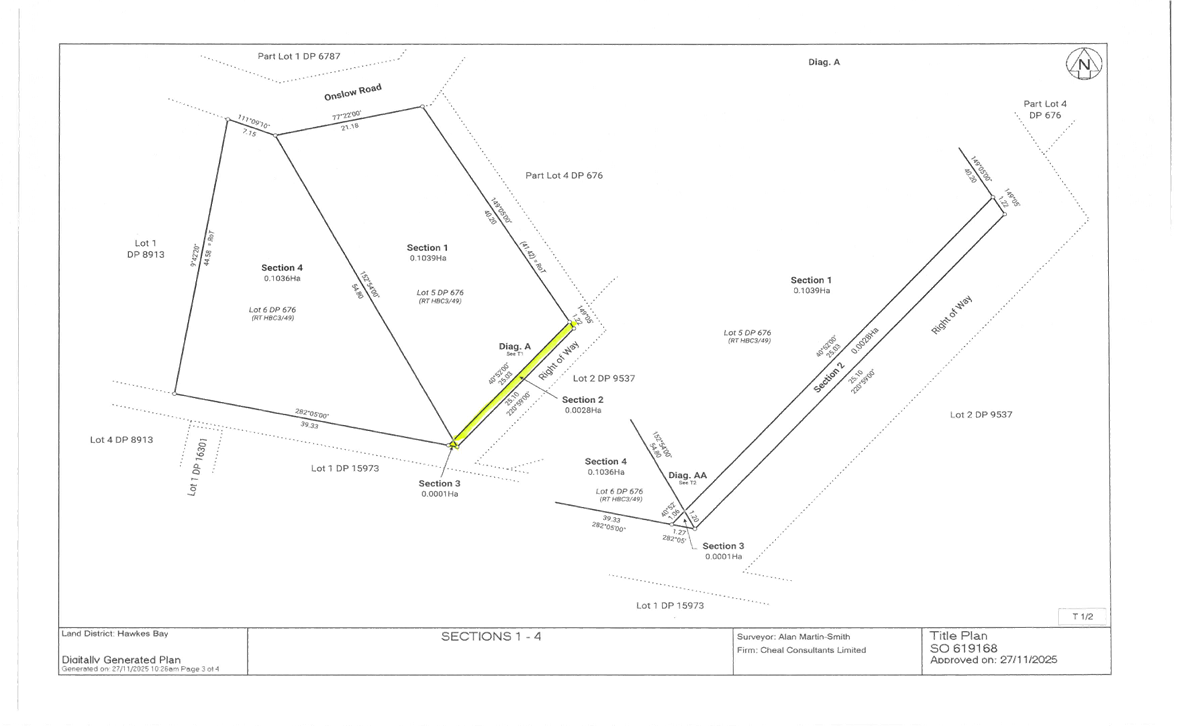
1.1 The purpose of the report is to seek a resolution, pursuant to the Public Works Act, declaring and consenting to land becoming accessway and vested in Council.
1.2 The subject land relates to a small section of private land on which the now closed Onslow Steps encroach.
1.3 The closed steps run between Brewster Street and Onslow Road, Mataruahou.
1.4 Subsequent to the closure of the steps, on 29th April 2025 Council signed a binding agreement with the landowner that Council would purchase the land subject to the encroachment..
1.5 The owner now requests Council to honour the Agreement and complete the purchase.
1.6 Council is bound to honour the Agreement.
1.7 To complete legal matters a resolution pursuant to the Public Works Act is required.
1.8 Passing the resolution will conclude matters.
1.9 It should be noted that the required resolution relates solely to the land legalisation matter.
1.10 Any future operational decisions regarding the steps, or accessway are a separate issue and are being assessed currently by the Transport team. If decisions of Council are required, they will be brought to an appropriate Committee or Council meeting as a separate item.
2.0 Recommendations - Ngā Tūtohunga
That Council
a. Approves That in accordance with provisions of Section 114(2) of the Public Works Act 1981, the Napier City Council resolves to consent to the land described in the Schedule below to be declared an accessway and vested in the Napier City Council.
Schedule
Hawkes Bay Land District – Napier City
|
Area |
Legal Description |
Part of Record of Title |
|
0.0028 Ha |
Section 2 SO 619168 |
HBC3/49 |
|
0.0001 Ha |
Section 3 SO 619168 |
HBC3/49 |
3.1 Council resolved on 2/06/2022 (Public Excluded) to purchase the subject land to enable the then planned rebuild of the Onslow Road Steps, and a binding agreement was entered into with the landowner.
3.2 Subsequently the walkway was closed to the public in November 2020 following a slip which damaged the middle section.
3.3 Council resolved on 12/09/2024 (Public Excluded) to approve the permanent closure of the walkway and retain the corridor in Council control.
Council was advised that difficult ground conditions and access constraints mean that significant resources were required to complete the reinstatement of the affected section. Further the steps above and below the failed section will remain susceptible to ground movements and structural failure.
It was submitted that it would not be a good use of ratepayers’ money to continue investing in the walkway and is cost prohibitive.
Officers were directed to publicly release the notification of the closure of the walkway.
Communication was undertaken with residents and a meeting held between residents and Ward Councillors.
3.4 Irrespective of the future of the walkway the land owner requires Council to complete the purchase.
4.0 Discussion - Ngā Whakamārama:
4.1 As mentioned, the resolutions are required to finalise matters and complete Council’s obligations under a binding agreement.
5.0 Options - He kōwhiringa anō:
6.0 Next Steps - Te Koke
6.1 Once the resolution is passed Council will sign the required declarations and consents, Council Solicitors will then finalise legal and title work.
|
Plan showing land to be declared accessway highlighted in yellow. |
Doc Id: 1894461 |
|
Summary of Considerations - Tuhinga Whakarāpopoto: As previously mentioned Council is bound to complete the land legalisation. |
|
Fit with purpose of Local Government - Ngā aronga tā te Kaunihera- ā-rohe kōrero Relates to land issues with regards the provision of Local Infrastructure. |
|
Māori Impact Statement - He kōrero whaitake tā te māori kōrero: There are no known impacts for |
|
LTP/ Annual Plan/ Financial Strategy/ Infrastructure Strategy - Te Pae Tawhiti/ ā-tau / ā- Taunaki Ahumoni /ā- Taunaki Hanganga There are no implications. |
|
Financial considerations - Whai whakaaro Ahumoni: The land purchase amount was agreed based on a valuation carried out by Council Valuers. The total cost of this matter including purchase cost, legal and survey costs is estimated at $40,000. The cost will be met from the Roading Property Reserve Account which has sufficient funds. |
|
Significance and Engagement - Ko te Hiranga me te Hiwaia o te whakaaro: This decision/report has been assessed under the Council's Significance and Engagement Policy as not coming within the policy requirements. |
|
Consultation (internal/external) - Ngā Uiuinga (Ki te Kaunihera /ki ngā tāngata katoa) Consultation not required. |
|
Risks: Legal/ Health and Safety etc. - Whaktūpato Ture/ Hauora me te Haumaru No Risks
|
|
Draft Schedule oPlan showing land to be declared accessway highlighted in yellow. 1894461 |
Item 3 - Attachment 1 |